 Constructive Voices


Nature Needs Us to Interfere
Conservation usually starts from the idea that nature does best when we leave it alone. Rob Avis thinks that instinct is the problem.
27th October 2026
▶ Listen to Part 1
Listening Time · 38:12
In the first of a two-part series, Jackie De Burca talks to Rob Avis — a mechanical engineer who left the Alberta oil patch to spend the last two decades designing regenerative farms, homesteads and buildings — about beavers, entropy, and why the instinct to keep our hands off nature may be doing more damage than the interference it was meant to prevent.
About this episode
Rob Avis was clearing forest for oil pipelines when he started doing arithmetic. He worked out roughly how many hours a human life contains — about 600,000 — realised he had spent a third of his, and asked what he wanted to do with the rest. In 2008, with oil at record highs and almost nobody interested in energy descent, he and his wife Michelle left engineering careers worth three hundred thousand dollars a year between them and moved in with her mother.
What he came back with is an argument that cuts against most environmental messaging. Humans are not inherently destructive, he says — we simply lack feedback. We are the first people in history able to see the damage we have done from orbit, and the same capacity that shows us the wreckage is the one we will use to repair it.
The centrepiece of this episode is a creek on his own farm in central Alberta, and the beavers the previous owner used to kill. To an untrained eye they have made a mess: trees down, land flooded. Rob's contention is that they are increasing the complexity of that landscape dramatically — and that the difference between damage and regeneration is not whether you disturb a system, but the scale, timing, placement and form of the disturbance.
From there the conversation widens into a genuine challenge to conservation by exclusion: national parks, Allan Savory's elephant cull, and the wolves of Yellowstone. In the next episode we get into method — how Rob actually designs a property, and what any of this means for roofs, streets and gardens.
In this episode
Meet the guest
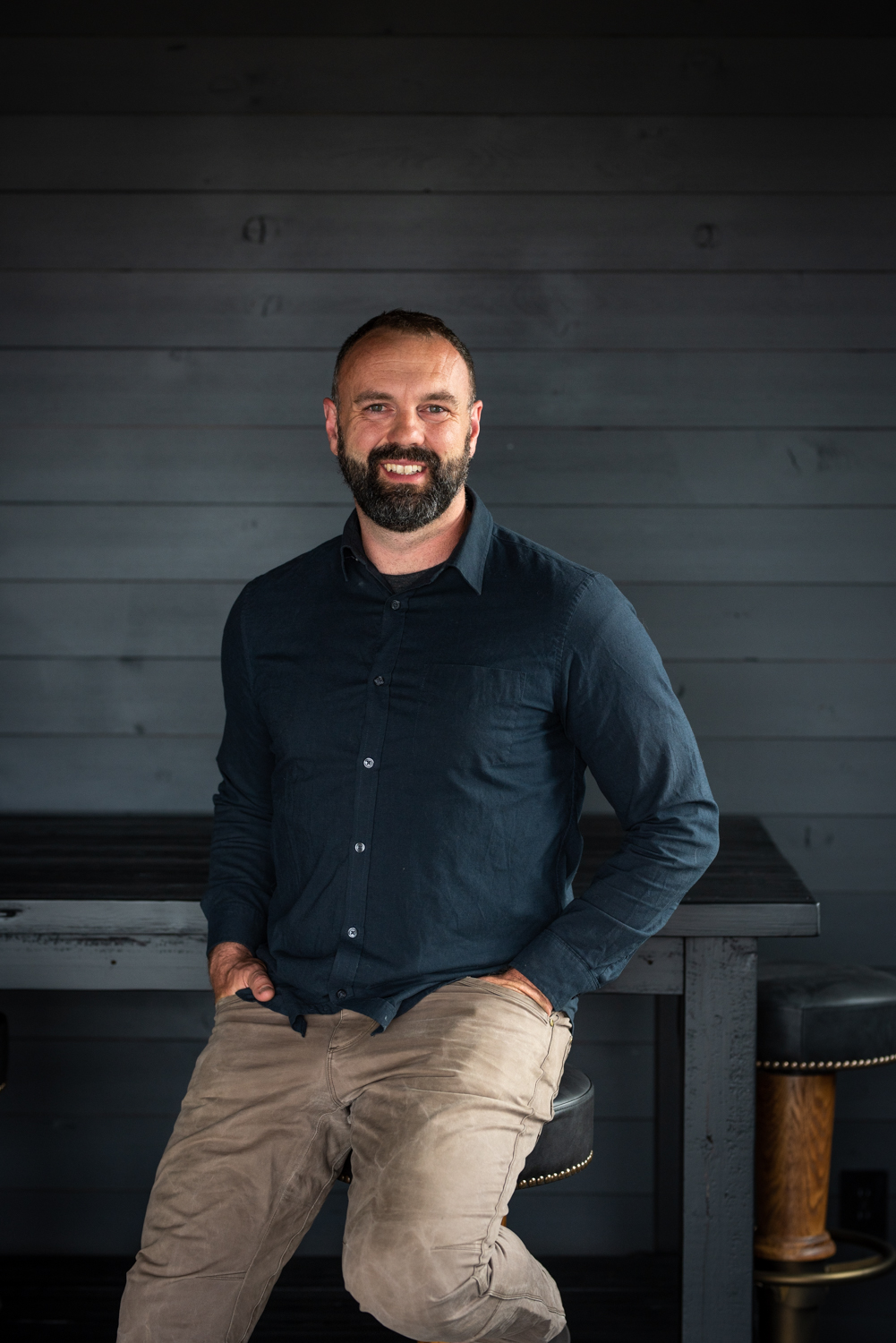
Rob Avis
Mechanical engineer, P.Eng. · Co-lead, 5th WorldRob Avis, P.Eng., is a mechanical engineer who left oil and gas in 2008 to learn how land could be managed better. He co-leads 5th World, designing properties that produce their own food, water and energy, with a focus on cold climates. His team has worked on more than 100 properties across five continents and roughly 40,000 acres. He is the author of two books with New Society Publishers and lives on a 160-acre farm in central Alberta.
In his words
We live amongst our own ruins. It's easy for us to believe that humans are inherently destructive. I actually don't believe that to be true. I think that we just lack feedback.
— Rob Avis, on why the guilt is misplaced
When something is native and we don't want it, we call it vermin. When something is non-native and we don't want it, we call it invasive.
— Rob Avis, on the beavers
It's the climate between our ears more than it's the climate in our atmosphere that's the problem.
— Rob Avis, on coordination
Explore further
- 5th World — Rob's design-build practice
- 5th World case studies — including passive solar greenhouses and the McCauley Community Orchard
- Building Your Permaculture Property (New Society Publishers) — the five-step design process discussed in Part 2
- Verge Permaculture — the teaching practice Rob and Michelle ran, discussed in the episode
- Howard T. Odum — the ecologist behind the maximum power principle
- Allan Savory — on the Zimbabwe elephant cull he describes as his worst decision
Continue the series
Your Lawn Is a Farm
Coming 3rd November 2026Guest: Rob Avis, P.Eng. (5th World)
Host: Jackie De Burca
Series: Season 7, Episodes 2–3 — a two-part Constructive Voices interview
Constructive Voices is an independent podcast on sustainability and the built environment. If you enjoyed this episode, please rate and review us on your podcast app — it helps others find the show.