 Constructive Voices

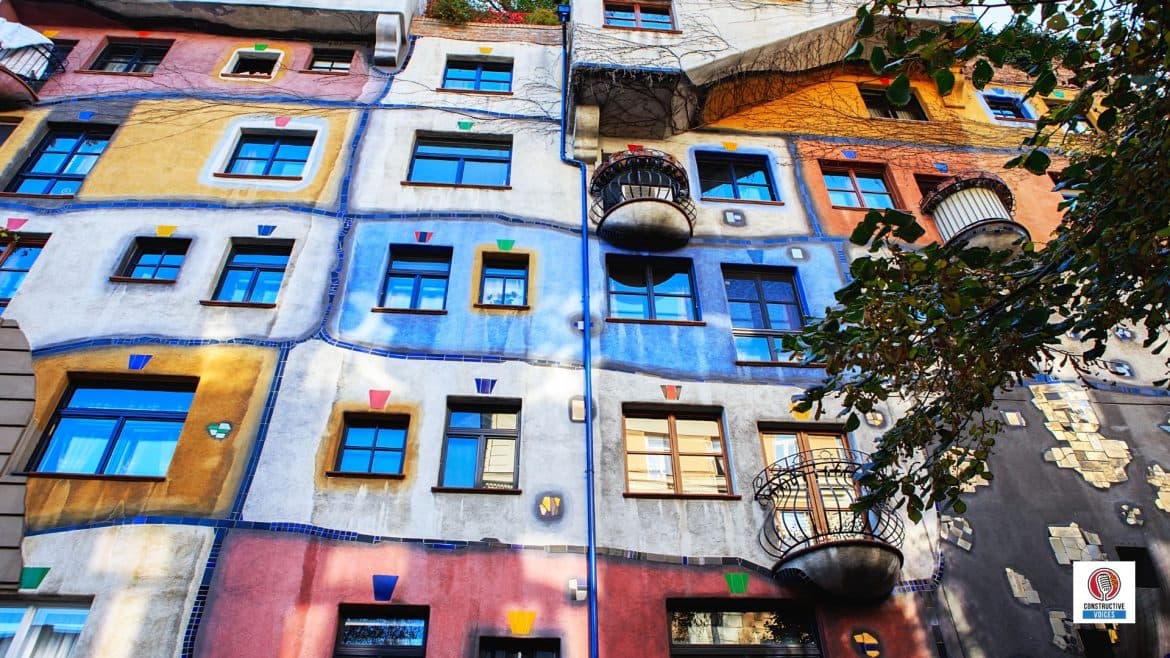
Vienna's Housing Revolution: How 43% Social Housing Built the World's Second-Most Liveable City
9/7/2026

Vienna's Housing Revolution: How 43% Social Housing Built the World's Second-Most Liveable City
Infrastructure, Affordability, and the Viennese Model
1. Aspern Seestadt: Europe's Largest Urban Development in Practice
On 240 hectares of former Wien-Aspern Airport—a site that served Vienna and Central Europe for over 50 years before its closure in 1977—one of Europe's largest urban development projects is methodically rising. By 2036, Aspern Seestadt will house 25,000 residents, provide 20,000 jobs and educational places, and establish a complete urban district with schools, parks, cultural facilities, and commercial space. Yet unlike sprawling suburban developments or even many European urban renewal projects, Seestadt is engineered as an integrated urban ecosystem, not a collection of buildings on a former industrial site.
The development's origins lie in Vienna's 2004 post-EU-enlargement planning horizon. With Eastern European accession opening markets and shifting migration flows, Vienna's political leadership projected significant population growth. Yet Vienna is simultaneously a city and a federal state—surrounded by Lower Austria—which meant horizontal expansion was politically and geographically constrained. The airfield, abandoned since 1977, represented the largest contiguous vacant land within city boundaries. Rather than wait for market forces to drive informal development, Vienna's city council (under mayor Michael Häupl) initiated a comprehensive master plan process that would establish Seestadt as a test bed for 21st-century urbanism.
The 40-40-20 Transport Mode Split: Policy as Design Principle
Seestadt's defining innovation is not architectural but governance: the development is required by city ordinance to maintain a transport mode split of 40% public transit, 40% active travel (walking and cycling), and only 20% personal vehicles. This allocation is not advisory or aspirational—it is binding and enforced through both infrastructure investment and regulatory design.
This commitment inverts the typical development sequence. In most cities, developers build housing first and respond to demand later; roads, transit, and cycling infrastructure follow market pressure. Vienna inverted this logic entirely. Before the first residential unit was approved, the city invested in metro expansion and station construction. The U2 line extension to Seestadt was completed in phases (2005-2013), with the transfer station Aspern Nord opening in 2018. This station connects U2 metro, S-Bahn regional rail, bus, and long-term cycling facilities—creating a multi-modal hub before any residential density arrived.
The strategic calculation is clear: build transit-first, then residents have no reason to purchase cars. If transit is reliable, affordable, and faster than driving (as it is from Seestadt to Vienna's city centre—17 minutes by U2), car ownership becomes optional. The city reinforces this through zoning: parking is strictly limited (maximum 0.4 spaces per dwelling in most zones), carsharing is mandated as the primary vehicle-access mode, and car-free zones are extensive.
Density Without Towers: Building Typology and Housing Mix
Seestadt achieves urban density without resorting to tower-block typologies or the "luxury high-rise" model common in North American expansion. The development mandate requires 50% of the total area to remain undeveloped green and open space. Yet despite this conservation requirement, Seestadt's completed areas achieve population densities near 5,000 people per km²—nearly double Vienna's city-wide average of ~4,100 people/km².
This density is achieved through a building typology that Vienna perfected in the 1920s and 30s: mid-rise mixed-use blocks, typically 6-8 storeys, organised around shared courtyards. Each block contains commercial ground floors (shops, cafes, services), residential units above (ranging from studios to 4-bedroom family apartments), and internal courtyards providing green space, play areas, and community facilities. This typology creates what urbanists call a "active street"—continuous frontage, mixed uses, natural surveillance—while avoiding both the sprawl of detached houses and the isolation of high-rise towers.
As of 2024, Seestadt housed 12,500 residents and approximately 5,000 employees, with the district projected to reach 25,000 residents by 2036. The development proceeds through distinct quarters, each with integrated housing, employment, and services:
- Pioneer Quarter (Maria Tusch Straße, 2015): The first phase, establishing retail patterns and initial residential units. By 2015, 14 shops had opened on approximately 2,000 m² of commercial space, setting the template for future retail strips.
- Seepark Quarter (2018-2022): Lakeside residential and expanded commercial development. This phase introduced the artificial lake (created through excavation), around which the district's public realm pivots. Mixed-tenure housing was the priority: subsidised rental units, owner-occupied flats, and luxury units coexist.
- Lakeside Crescent Quarter (2022-2026): Designated as part of Vienna's International Building Exhibition 2022 (IBA_Vienna), this phase emphasises mixed-income integration. Approximately 2,500 residents will be housed in a deliberate tenure mix: subsidised rental, owner-occupied with affordability covenants, and private market units.
- South Lake Quarter & Commercial Expansion (2024 onwards): Focus on office, retail, and productive space. By mid-2030s, Seestadt is projected to offer 30,000 m² of retail, gastronomy, and service space, compared to current 8,200 m².
Housing Affordability: Vienna's Decommodified Housing Model
A critical question haunts new urban developments: does density benefit existing residents, or does it simply create gentrification pressure? Vienna's response is structural decommodification—treating housing as a social good rather than pure commodity. As The Guardian notes, "Social housing makes up almost half of the city's 1m homes." The scale is striking: Vienna's one million housing units include approximately 43% that are publicly supported or municipally owned. Specifically: the City of Vienna owns approximately 220,000 apartments directly (Gemeindebau municipal stock), and subsidises another 200,000 units managed by limited-profit housing associations (LPHAs). This decommodified stock stays outside free-market speculation, enabling rent stability and mixed-income integration across the city.
Vienna's housing model rests on three policy pillars, each fundamental to affordability:
- Decommodified Stock: A large portion of housing remains outside market speculation. Municipal ownership (220,000 units) and LPHA subsidy (200,000 units) create a stable affordable base comprising 43% of Vienna's total housing. When property values spike in desirable neighbourhoods, the city captures appreciation through lease revenues or reinvests it in new affordable construction, rather than allowing speculative pressure to inflate rents city-wide.
- Rent Controls: Vienna imposes rent controls in both public and private sectors, preventing extreme price jumps. As documented by the IURC (International Urban Regeneration Council), new tenancies in controlled sectors see rent increases capped at inflation + a modest percentage; existing tenancies are frozen or rise minimally. This contrasts sharply with unregulated markets where landlords can raise rents 20-30% annually when demand spikes.
- Mixed-Income Living: Social housing blocks integrate residents across income levels. Schoolteachers, nurses, students, retirees, and low-wage workers inhabit the same courtyard, shopping at the same corner store. This integration is deliberate policy, encoded in building design (mixed tenure within single blocks and neighbourhoods) and housing allocation criteria (income limits set generously at ~3x median income, ensuring middle-class access).
The result in Seestadt demonstrates the model in practice: economically diverse residents coexist. A public-sector employee rents a municipal flat at €12-15/m²/month; a professional occupies a limited-profit unit at €16-20/m²; luxury units command €25-30/m². All within the same neighbourhood, often the same building block. Academic analysis from the International Journal of Urban and Regional Research confirms this mixed-income integration reduces socioeconomic segregation—a hallmark of Vienna's model. This mix is enforced through city ordinance and land-tenure control: Vienna owns or long-leases (99 years) much of Seestadt's land. When the district becomes desirable and property values rise, the city captures appreciation through lease revenues and mandates affordability maintenance in future development.
Vienna's municipal ownership model—accumulated over decades with consistent political commitment—is unavailable to most cities. But the policy logic is universally applicable: decommodify housing through public and non-profit tenure, enforce affordability through rent controls and mixed-income mandates, and use land control to prevent speculative escalation. Cities lacking public land can achieve similar effects through inclusive zoning requirements, community land trusts, and rent regulation, though with higher costs and greater political friction.
Smart City Systems and Climate Integration
Seestadt is instrumented. Wien3420 AG, the municipal development agency, operates a comprehensive GIS dashboard tracking building performance, embodied carbon emissions, occupancy patterns, and modal shift in real time. Every building undergoes lifecycle carbon assessment, comparing performance against baseline efficiency standards and more stringent contemporary requirements. This data-driven approach enables continuous improvement and allows Vienna to learn what works before scaling.
Climate integration is not an afterthought. The Climate Protection Act mandates carbon neutrality by 2040; Seestadt's design must align with this trajectory. Buildings are required to minimise operational emissions (through renewable energy, heat recovery, insulation standards) and embodied carbon (through material choices, reuse, and circular design). The city incentivises above-code performance through tax incentives and preferential leasing of municipal land.
2. Transit Expansion: The U-Bahn and S1 Railway Projects
Seestadt is enabled by transit infrastructure, but it is not the only driver of Vienna's transport strategy. The broader U-Bahn network and the ambitious S1 railway project represent a €2+ billion commitment to shifting Vienna and Austria from car-dependence to multi-modal mobility.
Vienna's U-Bahn: Scale and Expansion Logic
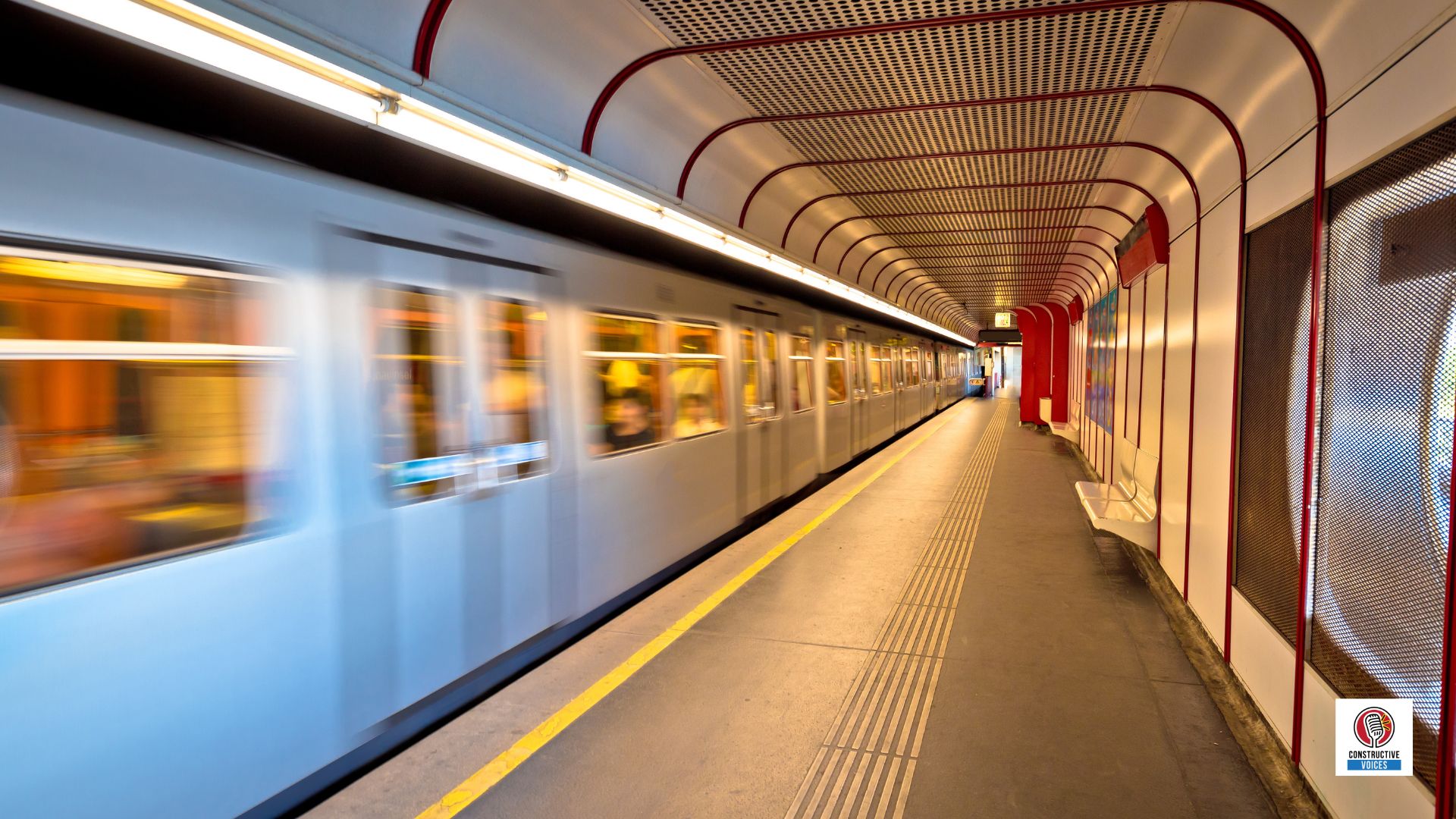
Vienna's U-Bahn is one of Europe's most extensive underground metro networks: 92 km of track, 110 stations, serving a metropolitan area of approximately 2 million residents. Annual ridership exceeds 400 million journeys. Yet unlike many mature European transit systems, Vienna continues to expand rather than merely maintain.
The U2xU5 metro extension represents one of Europe's largest ongoing infrastructure projects. The challenge is engineering intensity in a constrained urban environment: building new tunnels underground while navigating Vienna's existing utilities, heritage structures, groundwater, and resident communities living directly above. Construction techniques include micro-tunnelling (minimising surface disruption), staged excavation, and innovations in noise and vibration control.
The strategic logic is straightforward: Vienna's radial metro network (lines radiating from the centre) was designed for 20th-century commute patterns (suburb to centre to suburb). The U2xU5 project fills gaps and creates tangential connections, allowing cross-city travel without passing through the congested centre. This shift from radial to latticed connectivity is fundamental to reducing road traffic and enabling districts like Seestadt to function without car-centricity.
Vienna's commitment to 24-hour service on weekends further illustrates its transport philosophy. Express bus services provide 24-hour coverage on major routes. This service level—unusual in Europe—exists because Vienna's transit authority (Wiener Linien) is municipally owned and operated as a public utility, prioritising accessibility and equity over shareholder returns. Night shift workers, service sector employees, and those returning late from entertainment venues all benefit.
The S1 Railway: Regional Mode Shift
The S1 railway project represents a different scale and strategic scope. ASFINAG (Austria's motorway authority) is implementing a €500 million investment to create a regional rail connection linking Vienna to surrounding communities in Lower Austria and Burgenland. The S1 is explicitly framed as an alternative to highway expansion—a choice of rail over automotive infrastructure.
The project consists of two phases:
- Phase 1 (2026-2032): Open-air section between Groß-Enzersdorf and Süßenbrunn, 8.3 km. Investment: €500 million. This phase connects commuter communities north of Vienna, providing 30-minute access to Vienna's city centre via rail instead of the current 45-60 minute car commute through congested suburbs.
- Phase 2 (2030 onwards): Donau-Lobau tunnel, 8.3 km of underground section connecting to Vienna's dense core. Environmental impact assessment ongoing. Construction may begin 2030 if approvals proceed. The tunnel represents the highest-cost and most controversial portion, as it passes beneath existing settlements and wetland areas.
The economic case is compelling. Federal ministry projections estimate €4 billion in cumulative economic benefits over the project lifespan—employment growth in connected areas, property value uplift in transit-accessible locations, and reduced transport costs for commuters. The cost-benefit ratio (8:1) justifies public investment under standard transport economics frameworks.
Politically, the S1 illustrates a crucial point: Austria's 2030 Mobility Master Plan commits to reducing private car use by 16% by 2040 while increasing public transit's share from 27% to 40%. Rail investment is the primary lever for achieving this mode shift. Every €500 million spent on rail is €500 million not spent on highway expansion—a deliberate policy choice that reflects climate commitments and urban congestion realities.
The KlimaTicket: Pricing as Modal Shift Tool
No transit expansion succeeds if fares remain expensive. Austria's innovation is the KlimaTicket (Climate Ticket), launched October 2021: a yearly pass costing approximately €1,100 (roughly €3/day) providing unlimited access to all Austrian public transport—trains, buses, trams, metros—across all regions and providers.
The uptake was immediate and dramatic. In the first 8 months, 170,000 tickets were sold; 85% of buyers reported replacing car journeys with public transit. The ticket's success rests on three factors: price (€3/day is cheaper than fuel and parking for many commuters), geographic scope (eliminating friction at regional boundaries), and reliability (Vienna's transit system is frequent and punctual).
The KlimaTicket exemplifies pricing as infrastructure policy. When transit is cheap and reliable, behavioural change follows. The ticket enabled mode shift that would have required years of infrastructure investment alone.
3. Policy Framework: Laws, Standards, and Governance
Austria's infrastructure achievements rest on policy clarity. The 2030 Mobility Master Plan and Vienna's 2040 Climate Neutrality Strategy set binding objectives; building codes and transport standards translate them into concrete requirements. Implementation succeeds because Austria combines federal coordination with local execution.
| Instrument | Scope | Key Requirements | Authority |
|---|---|---|---|
| Climate Protection Act (Klimaschutzgesetz) | National; all sectors | Carbon neutral by 2040; sectoral targets; mandatory GHG monitoring and reporting | Federal Ministry for Climate Action (BMK) |
| 2030 Mobility Master Plan | National transport policy | Reduce car use 16% by 2040; increase PT share to 40%; double active travel (3→6%); 100% rail electrification by 2035 | BMIMI (Federal Ministry of Innovation, Mobility, Infrastructure) |
| OIB Guidelines 6:2025 (Energy) | Building energy performance; national with state adoption | Max U-value 0.35 W/m²K (insulated walls); EV pre-wiring mandatory; renovation passports; lifecycle GHG assessment; adoption by states by May 2026 | OIB (Austrian Institute of Construction Engineering) + 9 Länder |
| KlimaTicket Regulation | Public transport pricing; nationwide | ~€1,100/year for unlimited rail, bus, tram, metro; accessibility for lower-income groups; promotion of mode shift | BMIMI + regional transit authorities |
| Vienna Climate Neutrality Strategy 2040 | Municipal; Vienna only | Expand metro by 42 km; increase walking/cycling modal share to 40%; decarbonise all heating; 100% renewable electricity | Vienna City Council (Magistrat); Vienna Climate Protection Authority |
| Parking Ordinance (Vienna) | Residential and commercial zoning | New residential: max 0.4-0.6 spaces/dwelling; office: max 0.3 spaces/100m²; carsharing mandated as primary vehicle access | Vienna City Planning Office (MA 18) |
| Environmental Impact Assessment (UVP) | Major infrastructure; roads, rail, water projects | Mandatory EIA for projects exceeding size/sensitivity thresholds; public consultation; climate impact assessment | Federal & regional environmental authorities |
Federal-State Coordination and Implementation
Austria's federal structure—nine Länder (states) with significant autonomy—could create fragmentation. Instead, coordination mechanisms align local implementation with national objectives. The OIB (Austrian Institute of Construction Engineering), founded 1992 by the nine Länder, publishes harmonised building guidelines while permitting state-level adaptation. Transport policy is federal, but Vienna and other cities have statutory authority over local mobility (cycling infrastructure, public space management, parking policy, local transit coordination). This division creates clear accountability: national targets set the frame; cities execute locally with flexibility.
Vienna's political dominance aids this coordination. As the capital and largest city, Vienna's decisions (especially housing and transport) influence national policy and other cities' strategies. The SPÖ-NEOS coalition governing Vienna since 2020 prioritises housing, climate, and transit—aligning municipal governance with federal mandates. This alignment is not automatic; it reflects political choice and electoral pressure for liveable urban conditions.
4. Challenges and Implementation Realities
Seestadt and Austria's transport strategy are not without criticism or implementation challenges. Understanding these tensions is essential for assessing the model's transferability and sustainability.
Housing Affordability Pressures
Despite Vienna's social housing mandate, Seestadt has not entirely escaped affordability pressures. As of 2026, Austria's real estate market shows supportive but not explosive outlooks, with affordability remaining a constraint on price growth. In Seestadt, social rental units at €12-15/m²/month represent genuine affordability for lower-middle-income residents. But private market units at €25-30/m² are accessible only to higher-income households, and property purchase prices have climbed as the district becomes established and desirable.
Vienna's response is policy deepening: the 2020-2030 housing programme committed to 1,500 new municipal apartments annually and renovation of existing Gemeindebau (municipal housing) stock. But construction rates lag demand, and the ratio of social housing has eroded slightly (now ~58% of total stock vs. historical 60%). Maintaining affordability in a desirable, transit-rich district requires continuous intervention.
Environmental Impact of Metro Expansion
The U2xU5 metro extension involves significant excavation in a dense urban environment. Groundwater management is complex; vibration and noise affect nearby residents during construction; archaeological considerations arise (Vienna sits atop Roman ruins and medieval structures). The project has experienced delays and cost overruns typical of underground construction in dense cities. These real-world constraints complicate the narrative of seamless transit expansion.
S1 Railway Environmental Controversy
The S1's second phase (Donau-Lobau tunnel) is controversial environmentally. The tunnel route passes beneath the Lobau wetland—a Natura 2000 protected area and critical habitat for aquatic species. Environmental groups have challenged the project, arguing that a regional rail connection does not justify damage to irreplaceable wetland ecosystem. This reflects a genuine tension: climate mitigation (mode shift from cars to rail) can conflict with biodiversity conservation. Resolving this requires either route redesign or stronger justification that the rail project's modal-shift benefits outweigh ecosystem costs.
Key Takeaway: Infrastructure as Anti-Sprawl Strategy
Austria's infrastructure approach succeeds by inverting the typical development sequence: build transit and density simultaneously, then residents have options beyond car ownership. The Aspern Seestadt model—transit-rich, mixed-tenure, 50% green space—is not Vienna-specific; it reflects deliberate policy choices (land tenure, housing mandates, parking restrictions) transferable to other European cities. The strategy works because it combines hard infrastructure (metro, rail) with soft policy (affordable housing, pricing, zoning) and political commitment to climate goals. Vienna's liveability rankings reflect not glamour but infrastructure: density without sprawl, affordability amid growth, transit without car-dependency. This model's principal constraint is governance: it requires stable municipal ownership of land, consistent public funding, and political will to prioritise liveability over speculation. Where these conditions exist, Seestadt offers a replicable blueprint.
Frequently Asked Questions
Methodology & Sources: This report synthesises data from Vienna's municipal development agency (Wien3420 AG), ASFINAG, Austria's Federal Ministry of Innovation, Mobility and Infrastructure (BMIMI), the Austrian Institute of Construction Engineering (OIB), Vienna's City Planning Office (MA 18), Wiener Linien (Vienna public transport), and peer-reviewed research on urban sustainability. Aspern Seestadt statistics (target 25,000 residents by 2036, 20,000 jobs, 50% green space, current 12,500 residents as of 2024) reflect official project documentation and SES retail management data. Metro and S1 project details reflect implementation timelines and budgets current as of September 2026. The KlimaTicket uptake figures (170,000 tickets sold in 8 months, 85% replacing car journeys) are from federal ministry announcements. Climate and modal-shift targets reference Austria's 2030 Mobility Master Plan and Vienna's Climate Neutrality Strategy 2040. Housing tenure and affordability data reflect Vienna's 2020-2030 housing programme and social housing administration records. All figures and policies are current as of September 2026; infrastructure projects and policy timelines may shift beyond this date.
Photo Credit: Images represent Vienna's urban development, transit infrastructure, neighbourhood design, and Seestadt landscapes. Photo: Constructive Voices with Canva (or specific attribution to Wien3420, Vienna City Council, ASFINAG, Wiener Linien, or academic research institutions as applicable).

Latest Episode
S7, E4: Infrastructure vs Nature Is the Wrong Fight: Joel Humphreys