



Afghanistan Biodiversity: Animal and Plant Species and What Is Under Threat
Constructive Voices · Country Data Report
Afghanistan Biodiversity: what the country still has, and what is under threat
Afghanistan is not a species-rich country, and it has never claimed to be. What it holds instead is a set of ecosystems found almost nowhere else, roughly 1,500 plant species that exist only within its borders, and a conservation system that exists on paper more securely than it exists on the ground.
Afghanistan's revised National Biodiversity Strategy and Action Plan (NBSAP) for 2024–2030 was completed in 2023 and submitted to the Convention on Biological Diversity. It is the single most authoritative account of the country's living systems in decades, and it changes several of the numbers that have circulated for years.
It records 65 species in the three IUCN Threatened categories, not 39. It records nine declared protected areas covering 4.2% of the country, not fifteen. And it records that none of them has been gazetted — the designations from the 1970s lapsed, and the new ones have not yet been established in law.
Editor's note on this revision. This report replaces an earlier version of the article. Three changes are worth flagging openly, because readers may have cited the older text:
The previous species-count figures came from the CBD country profile, which draws on pre-1980 datasets; they have been replaced with the 2024 NBSAP figures. A table of "endangered species in Afghanistan" in the earlier version listed animals that do not occur in Afghanistan and has been removed entirely and replaced with the IUCN Red List assessment reproduced in the NBSAP. Two attributed expert quotations could not be verified against any source and have been removed rather than left standing.
The cultural and historical material, and all the original photography, is retained.
01 · READING THE LANDWhere biodiversity is not an abstraction
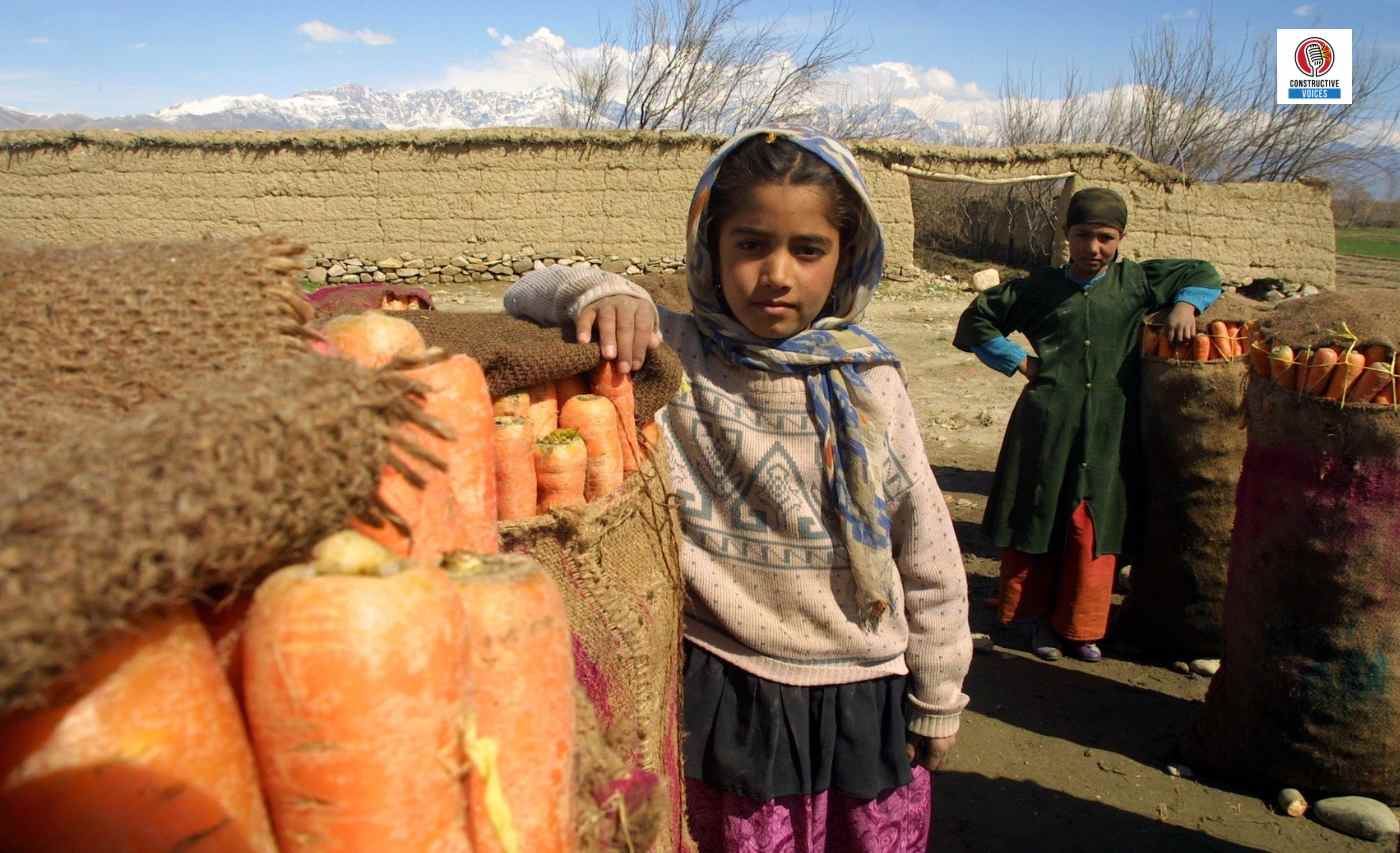
Afghans have long read the land like a living text. Mountain villages, river oases and high pastures set the rhythm of work and ceremony. Seasons decide when to sow wheat and barley, when orchards of pomegranate, apricot and mulberry come in, and when families move flocks toward cooler grazing.
Water sits at the centre of it. The underground karez tunnels and hand-dug channels that feed fields also bind neighbours together through shared maintenance and careful rules about who draws when. This is not folklore. It is a functioning common-property institution, and it is the closest thing Afghanistan has to a nature-based water system that already works.
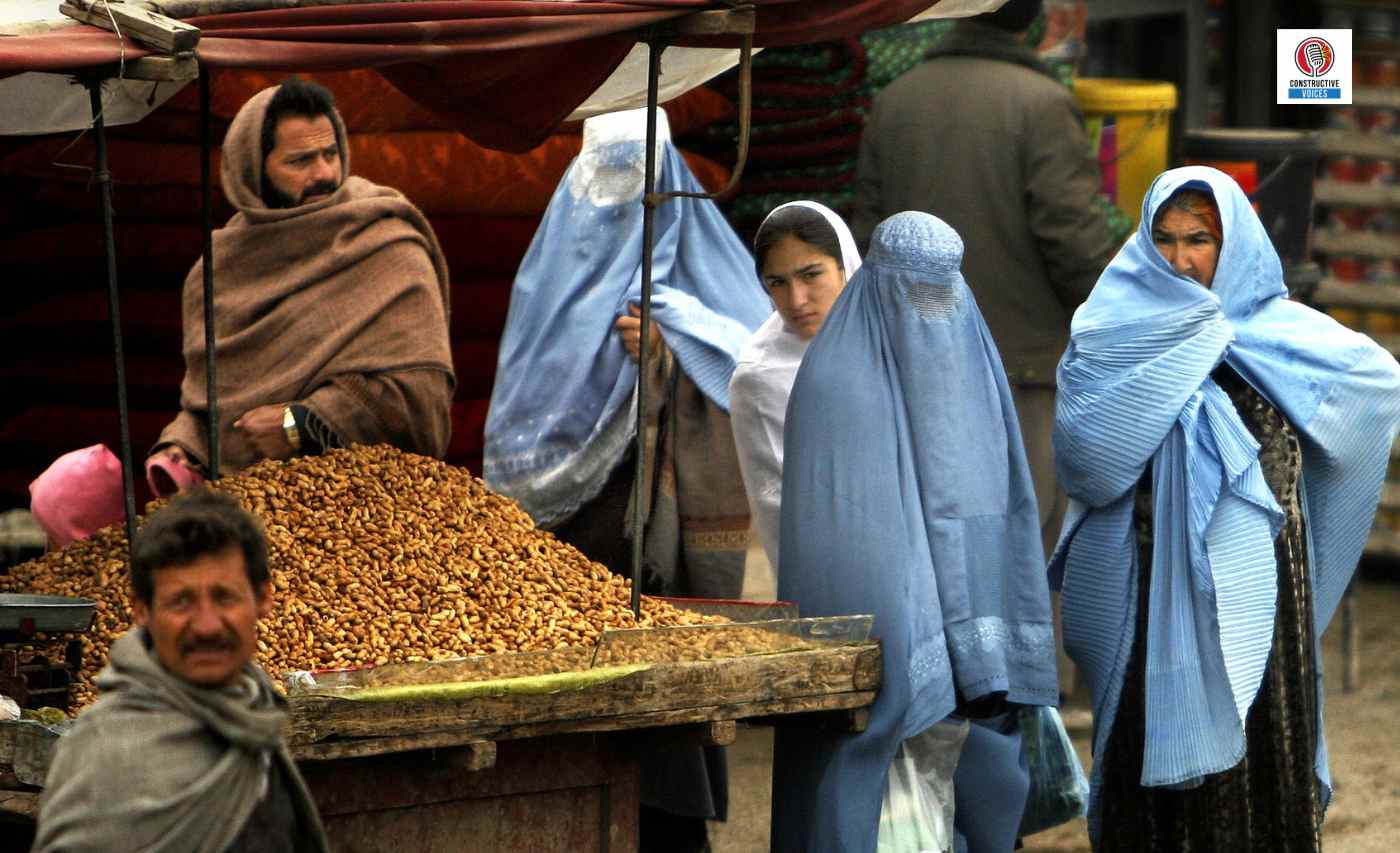
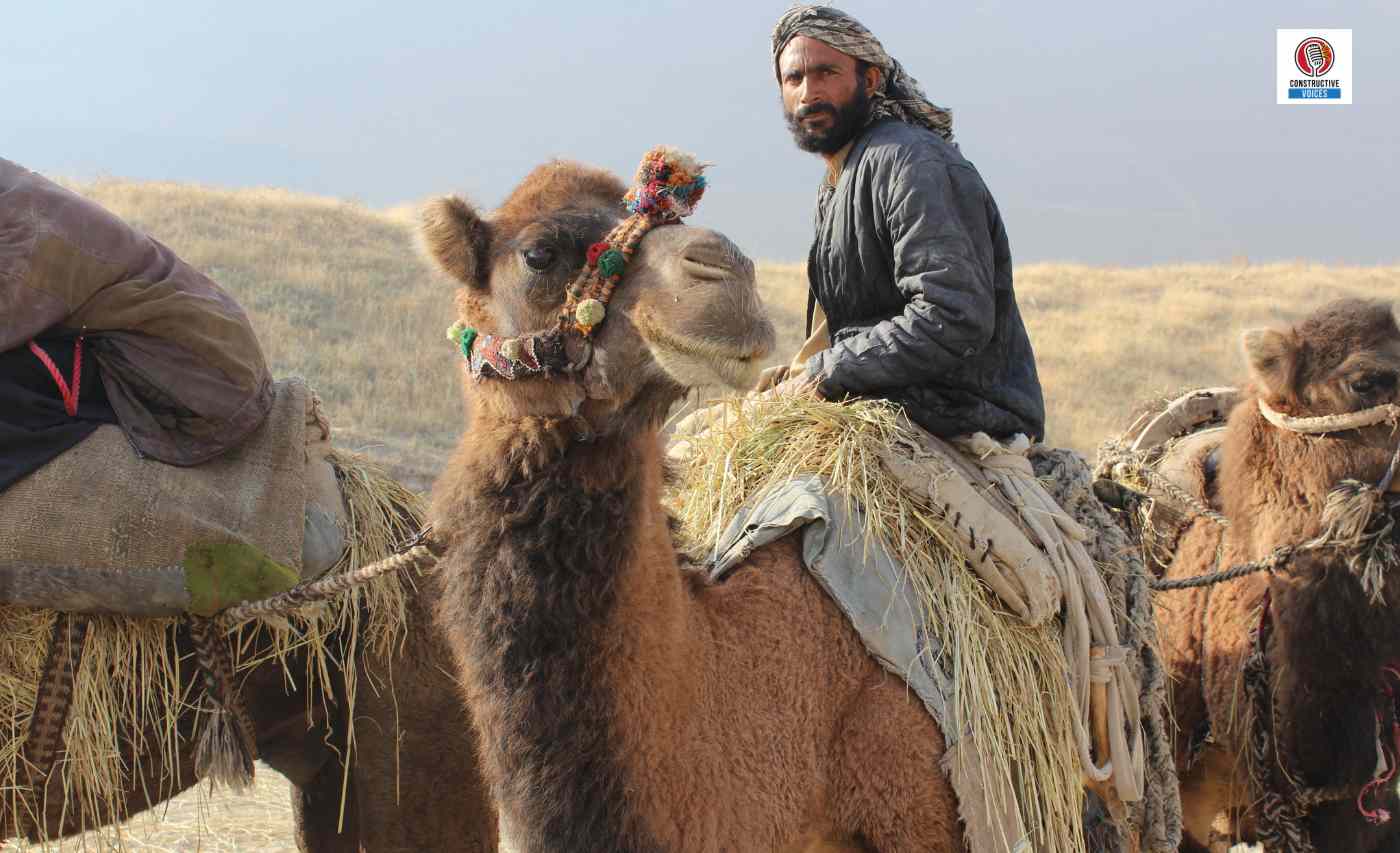
Pastoral life threads the bond tighter. Kuchi herders still trace old migration routes, choosing camps by the feel of the grasses and the reliability of the springs. In the Pamir and the central highlands, people pair livestock with wild knowledge — where to find edible greens after snowmelt, which shrubs make good fuel, which herbs soothe a cough. Home gardens carry this indoors: seed saved by grandmothers, cuttings traded between households, flavours tuned to each valley's soil.
Communities have long protected pistachio stands, oak and juniper patches and village springs through informal rules — rotating harvests, closing areas to grazing, sharing the work of repair after flood or drought. The NBSAP now has a formal name for this category of arrangement: an Other Effective Area-Based Conservation Measure (OECM), an area that delivers conservation outcomes regardless of whether conservation was its stated purpose. Afghanistan's target is to pilot a limited number of them by 2030.
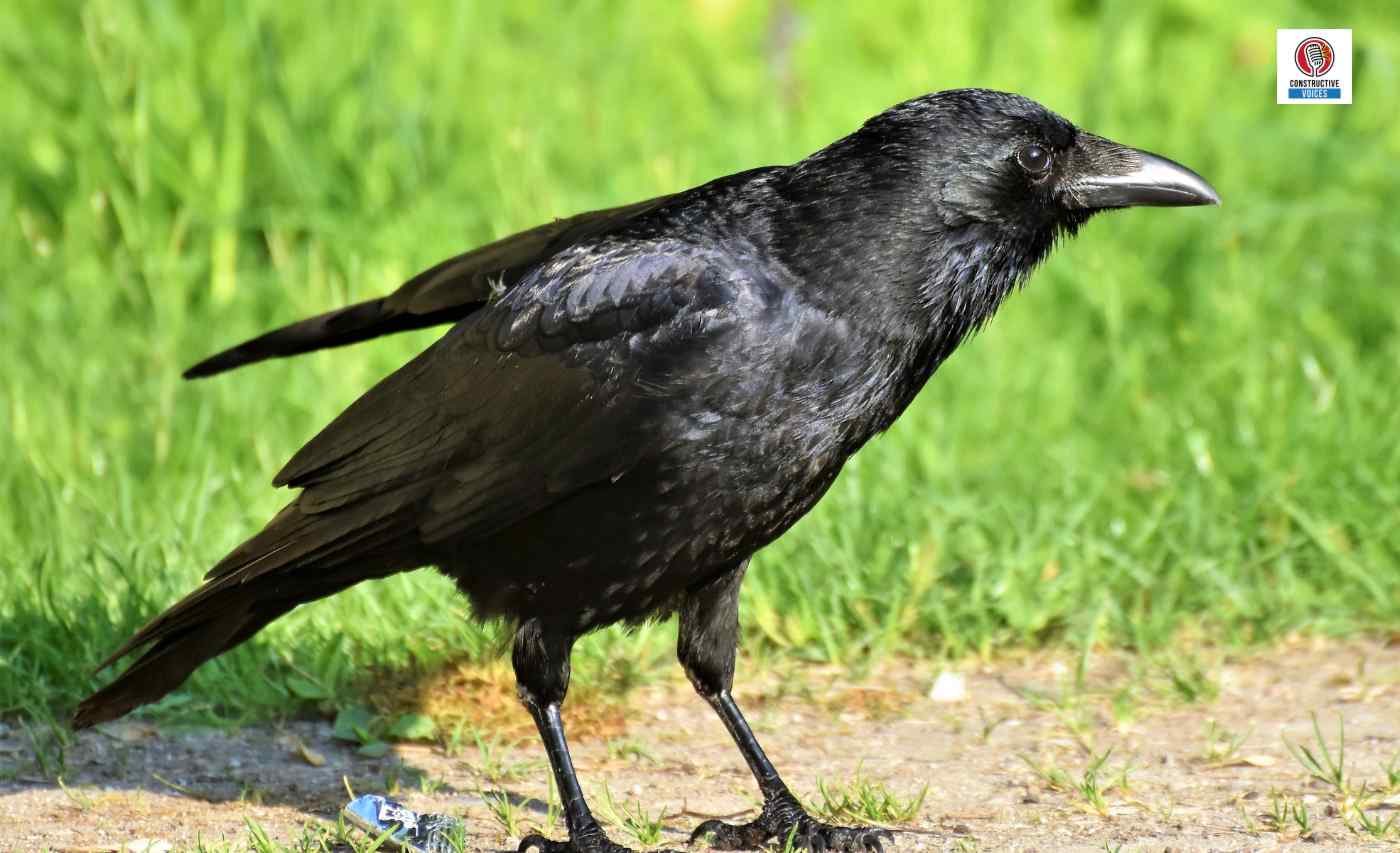
Afghan poetry leans on rivers, tulips and nightingales; carpets and embroidery echo mountain forms and desert blooms. Plant dyes, fruit-wood tools and shrine trees where vows are tied all show how the sacred and the everyday meet in living things. The poet Partaw Naderi, writing from Peshawar in 2002, took the crow — one of the most ordinary birds in the country — and made it carry the whole weight of exile and return. His poem Earth can be read in full at the Poetry Translation Centre.
Conflict and climate stress have bitten hard. Forests have thinned, springs falter, wildlife is pushed back. But the core relationship endures: care for the land because it cares for you. When Afghans re-open a karez, replant a hillside or agree to rest a pasture, they are practising an old truth in new conditions.
02 · THE INVENTORYWhat Afghanistan actually has
The NBSAP is candid on this point: as a largely arid, mid-latitude, mountainous country, Afghanistan is not species-rich and has never been treated as a global biodiversity hotspot. Its extreme north-east falls inside the Critical Ecosystem Partnership Fund's Mountains of Central Asia hotspot, and that is the extent of it.
The more interesting claim is the one about what is not yet known. So little field research has been possible since 1978 that the country is thought to harbour undescribed species and considerable unmeasured genetic diversity. Afghanistan's biodiversity figures are not a ceiling. They are a floor set by the limits of survey work.
| Group | Native species | Uncertain | Extinct | Endemics | Protected by AWEC |
|---|---|---|---|---|---|
| Mammals | 140 | 12 | 5 | 0 | 76 |
| Birds | 448 | 45 | — | 1 (semi) | 57 |
| Reptiles | 107 | 0 | ? | 6 | 4 |
| Amphibians | 11 | 0 | ? | 1 | 1 |
| Fish | 85 | — | — | 8 | 2 |
| Vascular plants | ≈5,000 | — | — | ≈1,500 | 8 |
| Arthropods | tens of thousands | — | — | ? | 1 |
| Fungi | millions? | — | — | ? | 0 |
Source: NBSAP for Afghanistan 2024–2030, Table 1, compiled from IUCN Red List, WCS bird database (2021), Wagner et al. (2016), Coad (2015) and Breckle (2007). AWEC = Afghanistan Wildlife Executive Committee, the expert body established in 2009 to assess species status; its current protected list runs to 149 species of wild flora and fauna.
Two lines in that table deserve to be read twice. Zero endemic mammals, and roughly 1,500 endemic vascular plants. Afghanistan's irreplaceable biodiversity is not its charismatic animals — those are shared with Pakistan, Tajikistan, Iran and China. It is the flora. And of those 1,500-odd endemic plants, eight are legally protected.
The eight bio-geographical provinces
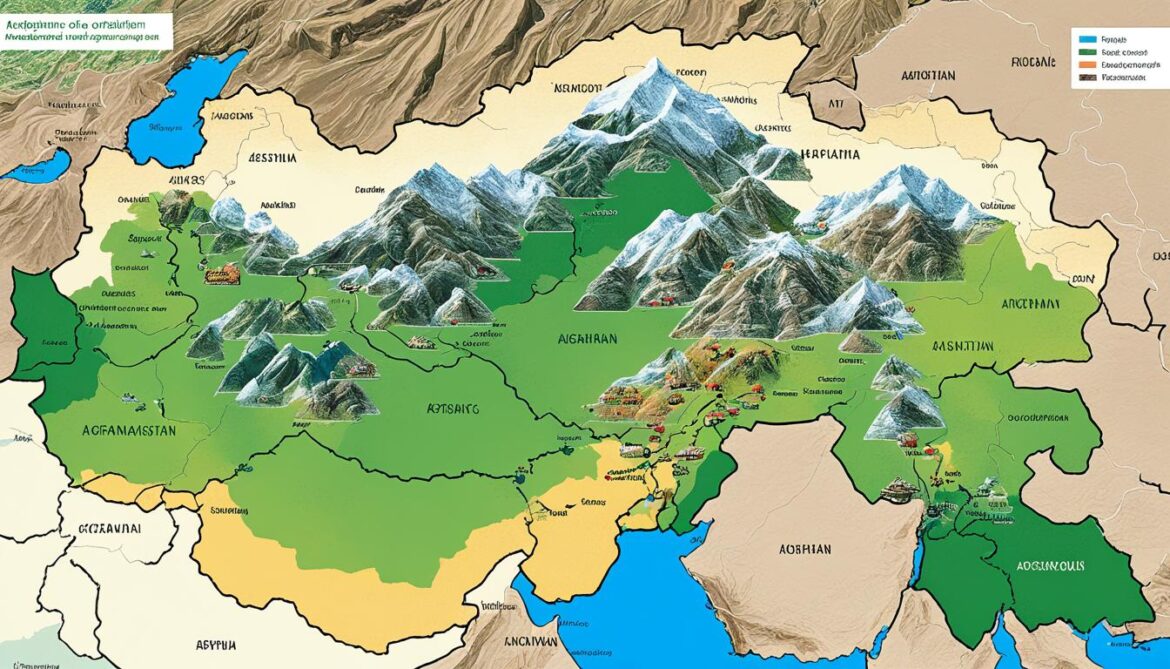
Afghanistan sits at the meeting point of biogeographic realms, which is why a country with modest species counts has such varied assemblages. Seven of its eight bio-geographical provinces belong to the Palaearctic realm, which runs from Europe across Asia north of the Himalayas into North Africa. The eighth, in the lower Kabul River Valley, is Indo-Malayan in origin — a fragment of monsoon Asia that reaches into an otherwise arid country, and the reason the eastern forests hold species found nowhere else in Afghanistan.
Mammals you would actually find
Afghanistan's diverse geography — mountains, deserts, riverine forest, steppe — supports a mammal fauna adapted to extremes rather than to abundance.
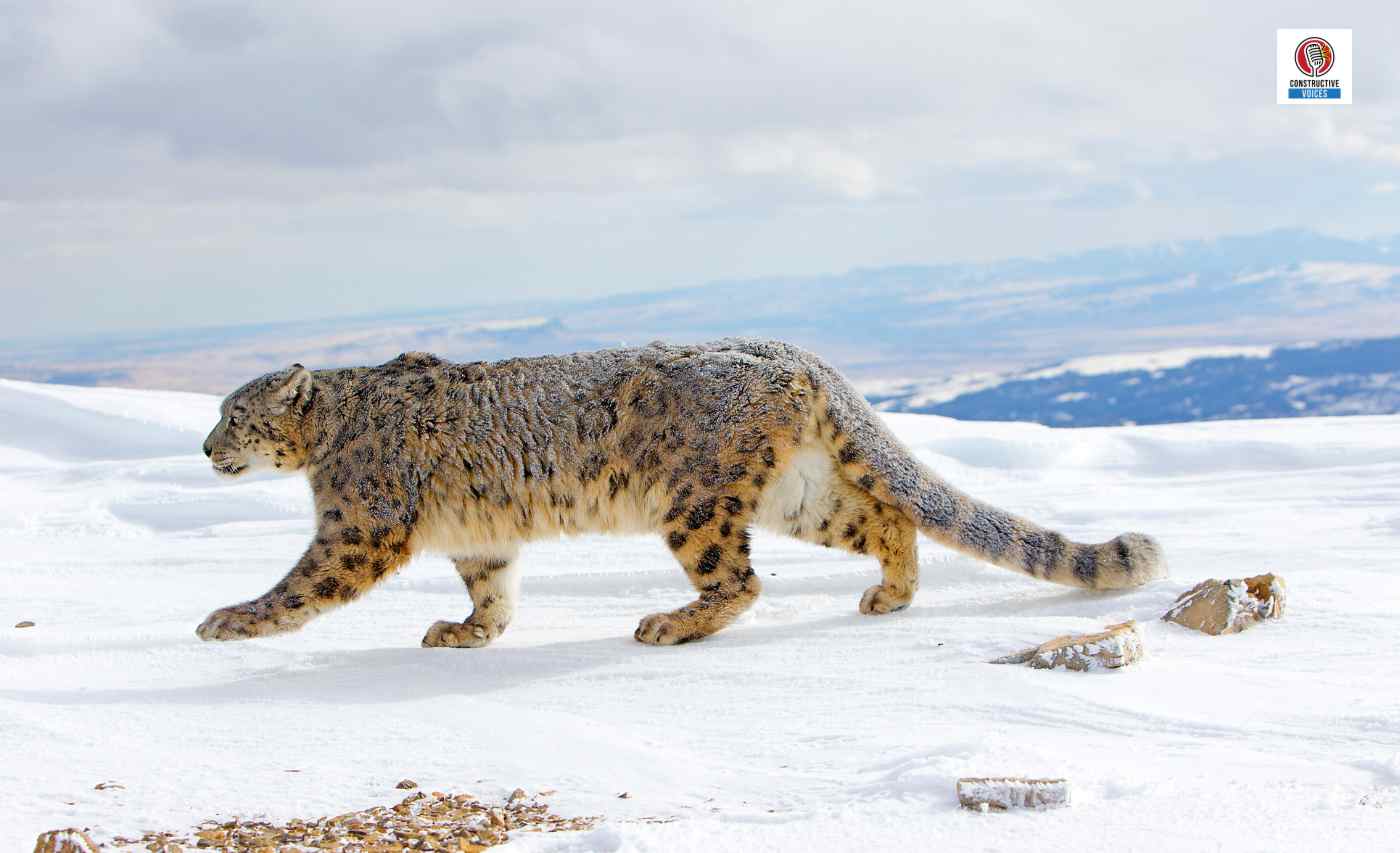
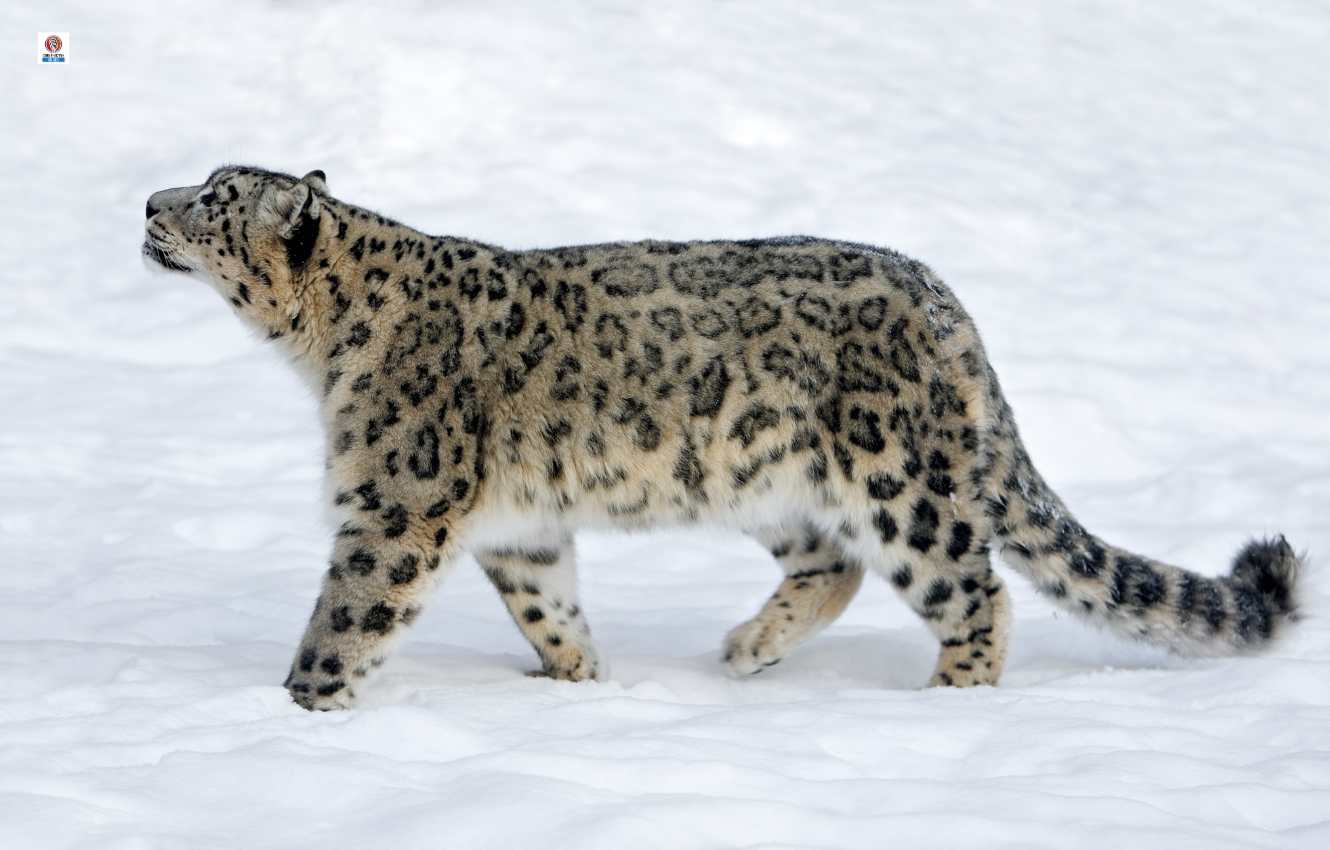
- Snow leopard (Panthera uncia) — Hindu Kush and Pamir ranges; the national animal, and IUCN Vulnerable. Roughly 52,000 km² of the country is snow leopard landscape, of which Wakhan National Park is the single most important stronghold.
- Markhor (Capra falconeri) — the spiral-horned wild goat of the north-eastern mountains; IUCN Near Threatened, and one of the species most exposed to poaching.
- Marco Polo sheep (Ovis ammon polii) — the Pamirs; the largest wild sheep in the world.
- Persian leopard (Panthera pardus tulliana) — a small and poorly surveyed population in the north-east and in Bamyan.
- Asiatic black bear (Ursus thibetanus) — eastern forests; Vulnerable.
- Siberian ibex, urial, wild goat — the ungulate prey base on which every large predator depends.
- Grey wolf, Eurasian lynx, caracal, Pallas's cat, striped hyena, red fox, golden jackal — a carnivore guild spanning six of the seven families of the order Carnivora, including ten wild felid species.
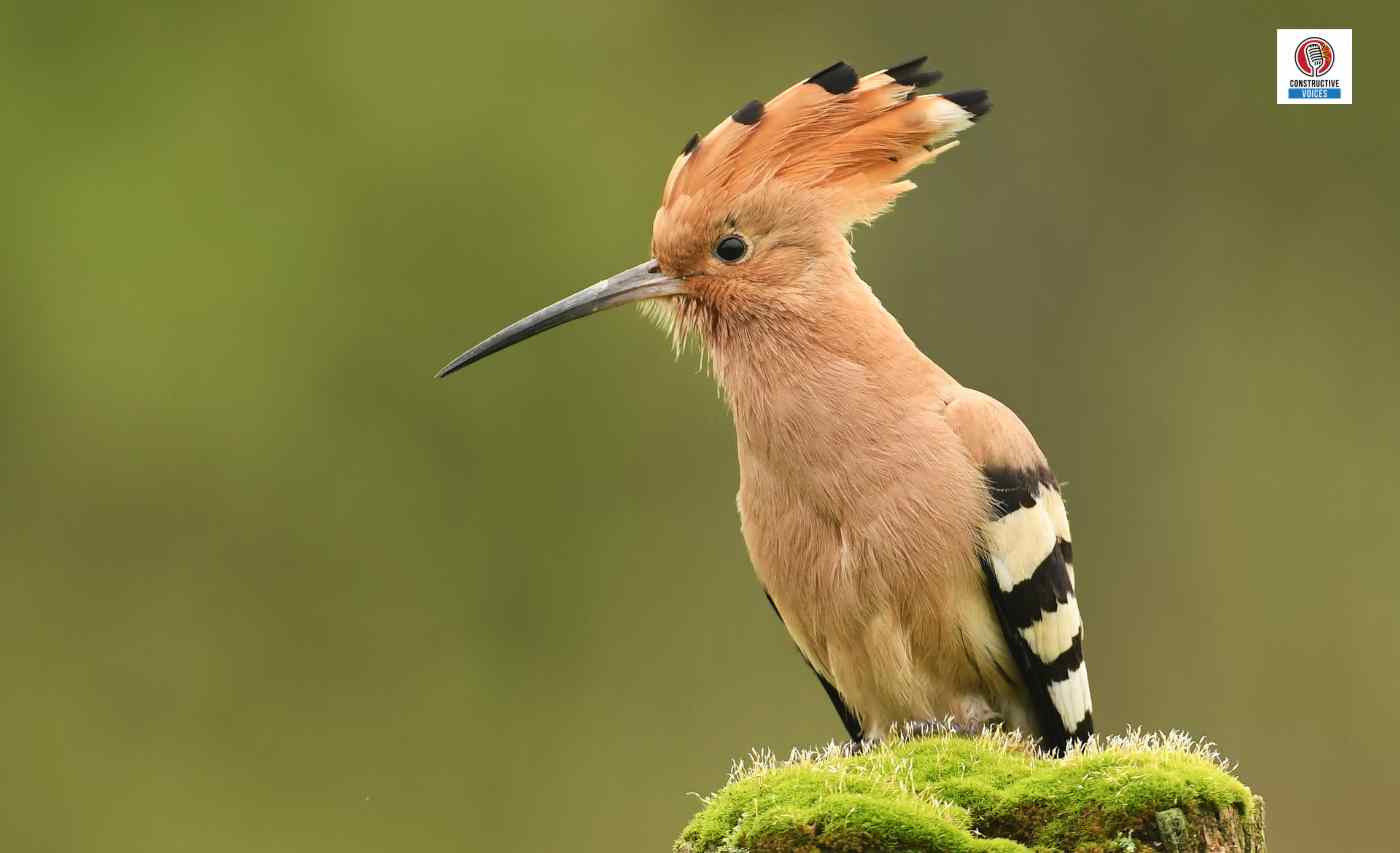
- Wild boar, Indian crested porcupine, rhesus macaque, Afghan flying squirrel — the eastern and riverine fauna.
03 · THE LAND ITSELFSeventeen ecoregions, and the state of each
Species counts are the wrong unit for a country like Afghanistan. Ecosystems are the right one — and the WWF classification divides the country into seventeen terrestrial ecoregions, each with a global conservation status. The distribution is stark.
| Ecoregion | Area (km²) | % of country | Global status |
|---|---|---|---|
| Registan–North Pakistan Sandy Desert | 161,346 | 24.9% | Vulnerable |
| Central Afghan Mountains Xeric Woodlands | 139,693 | 21.6% | Critical |
| Paropamisus Xeric Woodlands | 92,521 | 14.3% | Vulnerable |
| Ghorat–Hazarajat Alpine Meadow | 66,560 | 10.3% | Vulnerable |
| Badkhiz–Karabil Semi-Desert | 53,930 | 8.3% | Critical |
| Baluchistan Xeric Woodlands | 34,358 | 5.3% | Critical |
| Hindu Kush Alpine Meadow | 28,260 | 4.4% | Vulnerable |
| Central Persian Desert Basins | 23,079 | 3.6% | Vulnerable |
| Afghan Mountains Semi-Desert | 13,689 | 2.1% | Critical |
| East Afghan Montane Conifer Forests | 12,749 | 2.0% | Vulnerable |
| Pamir Alpine Desert and Tundra | 5,020 | 0.8% | Vulnerable |
| Karakoram–West Tibetan Plateau Alpine Steppe | 4,973 | 0.8% | Vulnerable |
| Sulaiman Range Alpine Meadows | 4,873 | 0.8% | Stable |
| Gissaro–Alai Open Woodlands | 3,658 | 0.6% | Critical |
| NW Himalayan Alpine Shrub and Meadows | 1,770 | 0.3% | Stable |
| Rock and ice | 854 | 0.1% | n/a |
| Western Himalayan Subalpine Conifer Forests | 248 | <0.1% | Vulnerable |
Source: NBSAP for Afghanistan 2024–2030, Table 2, after the WWF global ecoregion classification. No Afghanistan assessments have yet been made under the IUCN Red List of Ecosystems criteria.
The two ecoregions in genuinely good condition — the Sulaiman Range and the north-west Himalayan shrub and meadows — together account for about 1% of the country, and neither is under formal protection. The single largest ecoregion in critical condition, the Central Afghan Mountains Xeric Woodlands, covers more than a fifth of Afghanistan.
The intactness picture, and the one thing it gets right
The Biodiversity Intactness Index measures average species abundance against an undisturbed baseline. Afghanistan's national score was projected in 2021 to sit about 5% above the world average — higher than Uzbekistan and Tajikistan, lower than Pakistan and Iran. That is not a conservation success. It is a demographic and economic accident: mountains that are too high, too remote and too poor to have been developed.
The trend inside that figure is the part that matters. Between 2000 and 2015 intactness continued to decline across most of the country, with the greatest losses in Faryab, Nangarhar and Khost, and the least change in the north-east.
04 · UNDER THREATThe Red List position
The figure that has circulated in Afghan biodiversity writing for a decade — 39 species and 8 subspecies globally threatened — comes from an older national report. The NBSAP's assessment against the current IUCN Red List is considerably worse.
| Category | Species | What it means |
|---|---|---|
| Critically Endangered | 9 | Extremely high risk of extinction in the wild |
| Endangered | 17 | Very high risk of extinction in the wild |
| Vulnerable | 39 | High risk of extinction in the wild |
| Near Threatened | 43 | Close to qualifying for a threatened category |
| Least Concern / Lower Risk | 1,113 | Assessed and not currently at elevated risk |
| Data Deficient | 44 | Not enough information to assess at all |
| Total in the three Threatened categories | 65 | Up from the widely quoted figure of 39 |
Source: NBSAP for Afghanistan 2024–2030, drawing on IUCN Red List v.2021-2, Annex 3.
Species already gone
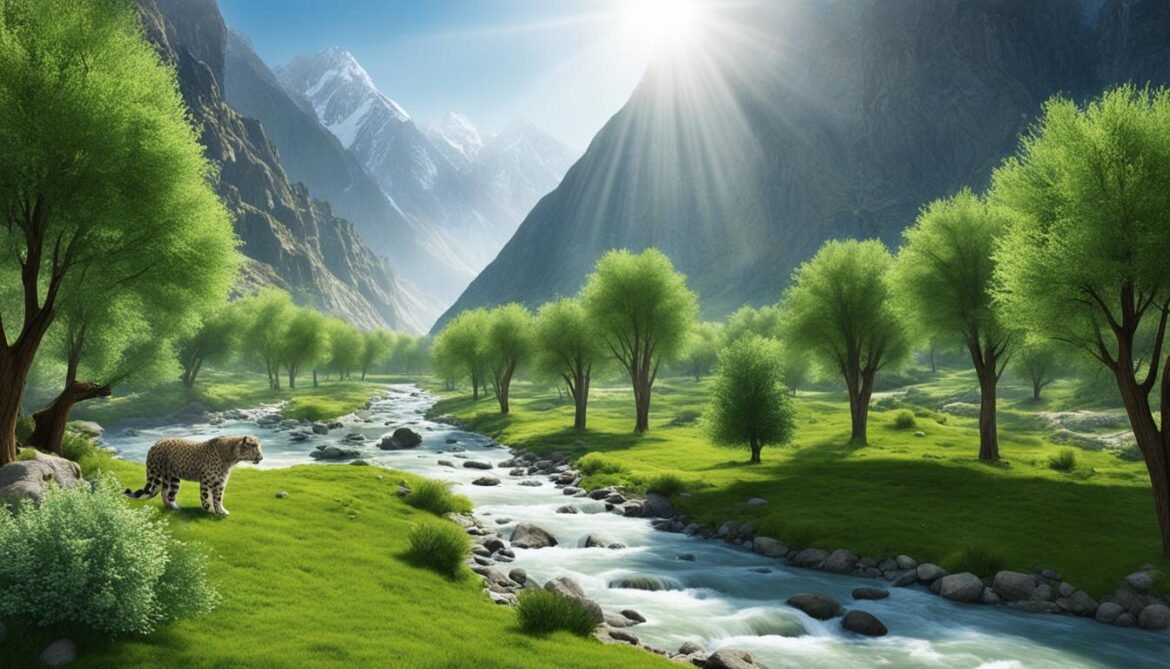
The NBSAP's Annex 3 carries a column that is easy to miss and hard to forget. Four large mammals are listed as extinct in Afghanistan, and a fifth as very likely so.
| Species | Global IUCN status | Afghanistan status |
|---|---|---|
| Tiger (Panthera tigris) — Caspian population | Endangered | Extinct in Afghanistan |
| Asiatic lion (Panthera leo) | Vulnerable | Extinct in Afghanistan |
| Dhole (Cuon alpinus) | Endangered | Extinct in Afghanistan |
| Asiatic wild ass (Equus hemionus) | Near Threatened | Extinct in Afghanistan |
| Asiatic cheetah (Acinonyx jubatus) | Vulnerable | Likely extinct |
Source: NBSAP for Afghanistan 2024–2030, Annex 3. Reporting in 2025 has also described the disappearance of wild peafowl from the country.
Alongside the losses sit a small number of species holding on in ways that were not certain a decade ago. Kabul Zoo has run breeding and reintroduction work on leopard and markhor. In the Wakhan, WCS-trained rangers monitor snow leopard, Marco Polo sheep and ibex; predator-proof corrals and a livestock compensation scheme have reduced the retaliatory killing that used to follow every depredation event. In several recent incidents snow leopards trapped inside livestock corrals were released alive rather than killed — a small thing, and a real one.
05 · THE PRESSURESEight threats, ranked as the NBSAP ranks them
The NBSAP is unusually direct about hierarchy. Three threats are named as major; four as lesser but significant. That ordering is worth preserving, because it tells you where money should go first.
The three major threats
- Habitat loss and ecosystem degradation — named as by far the greatest threat. Overgrazing, plant harvest and conversion to lalmi (rainfed cropland) strip vegetative cover, which drives soil erosion, weed invasion, nutrient loss and declining soil carbon. As herbivores decline, so do the predators above them.
- Climate change — increased frequency and duration of drought, rising mean annual temperature, more hot days and nights, declining spring precipitation and more extreme rainfall events. Projections give a 1.4–2.0°C increase by 2050, hitting hardest in the Central Highlands, Hindu Kush and Wakhan — precisely the areas that store winter precipitation for the rest of the country.
- Overexploitation — overgrazing, uncontrolled timber harvest, hunting of rare species, and commercial collection of wild plants for traditional medicine. The trade in hing (asafoetida), liquorice and medicinal plants is significant enough that the NBSAP sets a specific reporting action against it.
The four secondary threats
- Unsustainable use of water — damming and diversion for irrigation, and a rapid proliferation of deep wells depleting groundwater. Coupled with periodic drought, this has drained the country's few wetlands.
- Pollution — heavy metals in fish and high pesticide levels in the Kabul River are documented. The most specific biodiversity harm is veterinary diclofenac, which is lethal to vultures feeding on treated livestock carcasses and has driven declines of more than 90% in three South Asian vulture species since the 1990s. NBSAP Action 4.3 commits Afghanistan to banning its import and sale.
- Invasive alien species — treated primarily as an agricultural problem in the Afghan context.
- Loss of genetic diversity in both wild and domesticated species — the least-measured threat, and the one with no baseline at all.
Two further pressures sit outside the NBSAP's ranking but are increasingly hard to separate from it. Mining and infrastructure — growing interest in lithium, copper and other critical minerals carries habitat loss, water pollution and road-driven fragmentation if not tightly regulated. And urban growth — solid-waste and wastewater pollution degrading the rivers and peri-urban habitats that many species use.
06 · FORESTSThe clearest number in the whole document
Afghanistan's forest story is usually told in percentages that sound imprecise. The NBSAP tells it in square kilometres, and the result is the starkest figure in the report.
| Period | Extent (km²) | % of country | Note |
|---|---|---|---|
| 1970s (eastern forest) | ≈3,600 | 1.0% | Baseline estimate, Sayer & Van der Zon (1981) |
| 2000 | ≈2,063 | 0.3% | Implied from the 2000–2018 loss figure |
| 2018 | 718 | 0.1% | Tree cover at >30% canopy threshold |
| Loss since the 1970s | ≈2,900 | — | Of which 1,345 km² lost since 2000 alone |
Source: NBSAP for Afghanistan 2024–2030, drawing on Global Forest Watch data. The 2000 figure is derived arithmetically from the stated losses and is indicative only.
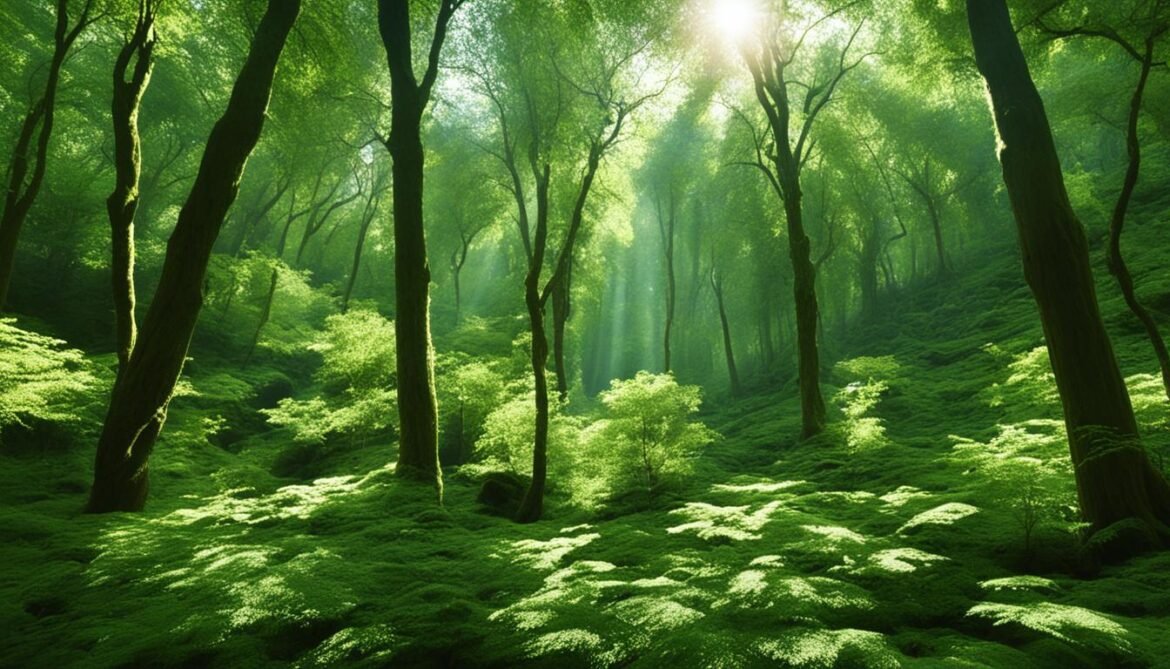
Roughly four-fifths of Afghanistan's closed forest has gone, and close to half of that loss happened after 2000. The distribution of closed deciduous and coniferous forest was probably always confined to the east, where the Indian monsoon delivers summer rain — which means the loss is concentrated in the single most species-rich part of the country.
The open woodlands are the other half of the story. Pistachio and juniper once dominated across a large share of Afghanistan's land area; satellite analysis found tree density in these systems had fallen below the threshold of detection. These are not forests in the canopy sense, and they are routinely missed by forest-cover statistics — but they are the habitat that carries most of the country's dryland biodiversity, and they are functionally collapsing.
Why this matters beyond biodiversity
- Soil stability. Unsustainable harvesting of the eastern forests drives erosion, flooding, landslides and avalanches directly.
- Water regulation. Forest cover reduces runoff, increases infiltration and holds soil moisture — the cheapest available intervention in a country facing chronic water scarcity.
- Sediment control. Forests buffer agricultural land and keep sediment out of rivers and reservoirs.
- Fuel. Deforestation deprives people of the resource they were cutting it for. NBSAP Portfolio 3 identifies alternatives to biomass for heating and cooking as a restoration action, not a welfare action.
07 · WATERTwenty-one wetlands and a capital city running dry
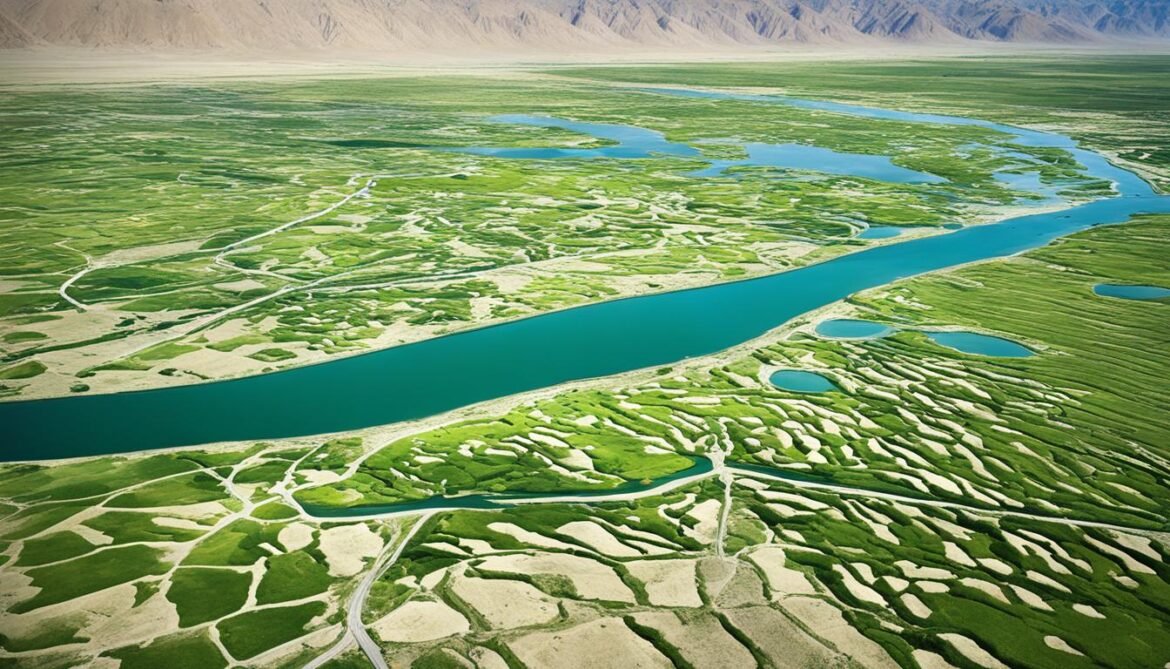
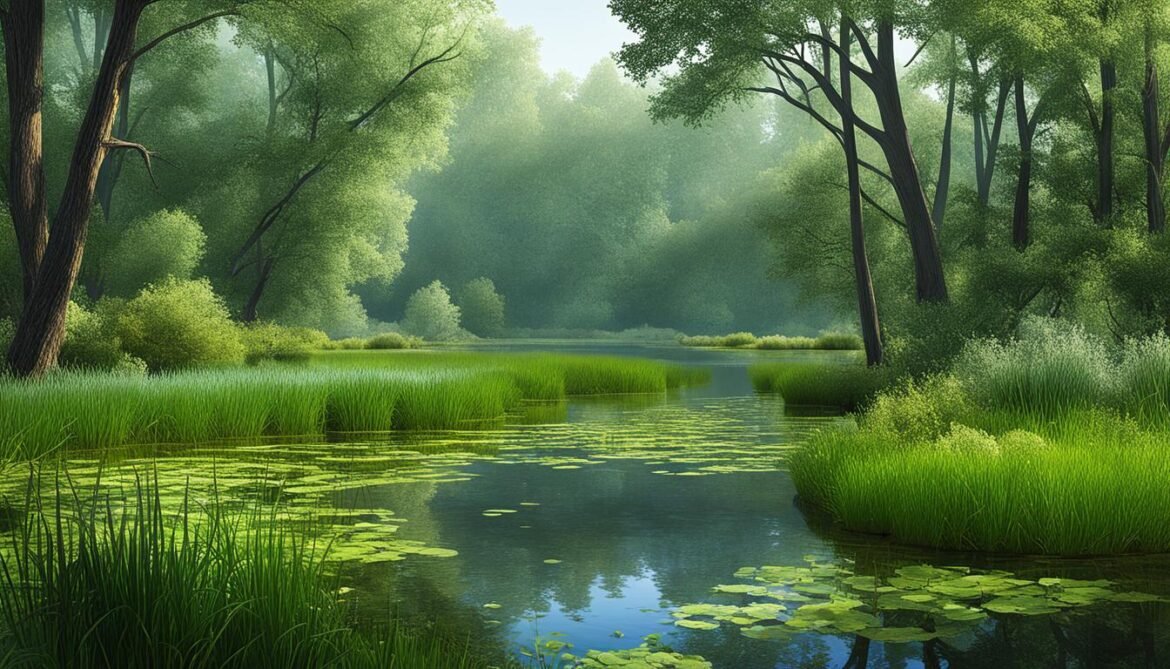
Afghanistan is arid and has very few wetlands. The Biodiversity Assessment of Afghanistan lists 21 significant ones and suggests there are likely more. In an arid country, these are disproportionately important: they are the breeding and staging habitat for migratory waterbirds, and the only habitat for aquatic plants, most invertebrates, all the fish and nearly all the amphibians.
Total wetland area cannot be stated, because the extent of many is entirely dependent on seasonal water availability. That dependency is the vulnerability.
Kabul
The most urgent water story in Afghanistan is not a wetland at all. It is an aquifer under a city of more than six million people.
| Measure | Figure | Source and caveat |
|---|---|---|
| Fall in groundwater level, past decade | 25–30 m | Mercy Corps, April 2025 |
| Annual extraction above natural recharge | 44 million m³ | Mercy Corps; roughly double the sustainable rate |
| Boreholes reported dry | Around half | Mercy Corps; boreholes are the main drinking-water source |
| Unregulated borewells | 100,000+ | Mercy Corps and Afghan water specialists, 2025 |
| Population | ≈2m (2000) → 6m+ (2025) | Growth is the primary driver, ahead of climate |
| Projected aquifer exhaustion | 2030 | Mercy Corps projection if current trends hold — a projection, not a forecast |
Sources: Mercy Corps Kabul water study (April 2025) as reported by Al Jazeera, RFE/RL and the Associated Press; AP reporting from Kabul, April 2026. Government of Afghanistan officials have publicly described the Kabul water situation as critical.
Two mechanisms in that table are built-environment problems rather than climate problems. The first is impermeability: Kabul is now built up to the point where there is little unpaved ground for rain to penetrate, so precipitation no longer meaningfully recharges the aquifer regardless of how much falls. The second is unregulated high-volume abstraction by greenhouses, beverage plants and factories drawing from the same shallow aquifer as the households above them.
Neither is solved by rainfall. Both are solved by permeable surfacing, retention, recharge design and abstraction licensing — which is to say, by planning and construction decisions.
08 · PROTECTED AREASNine declared, none gazetted
This is where the gap between the paper system and the real one is widest, and the NBSAP sets it out in a table that is remarkable for its candour — a government document scoring its own protected areas against its own legal criteria and recording, in most columns, "No".
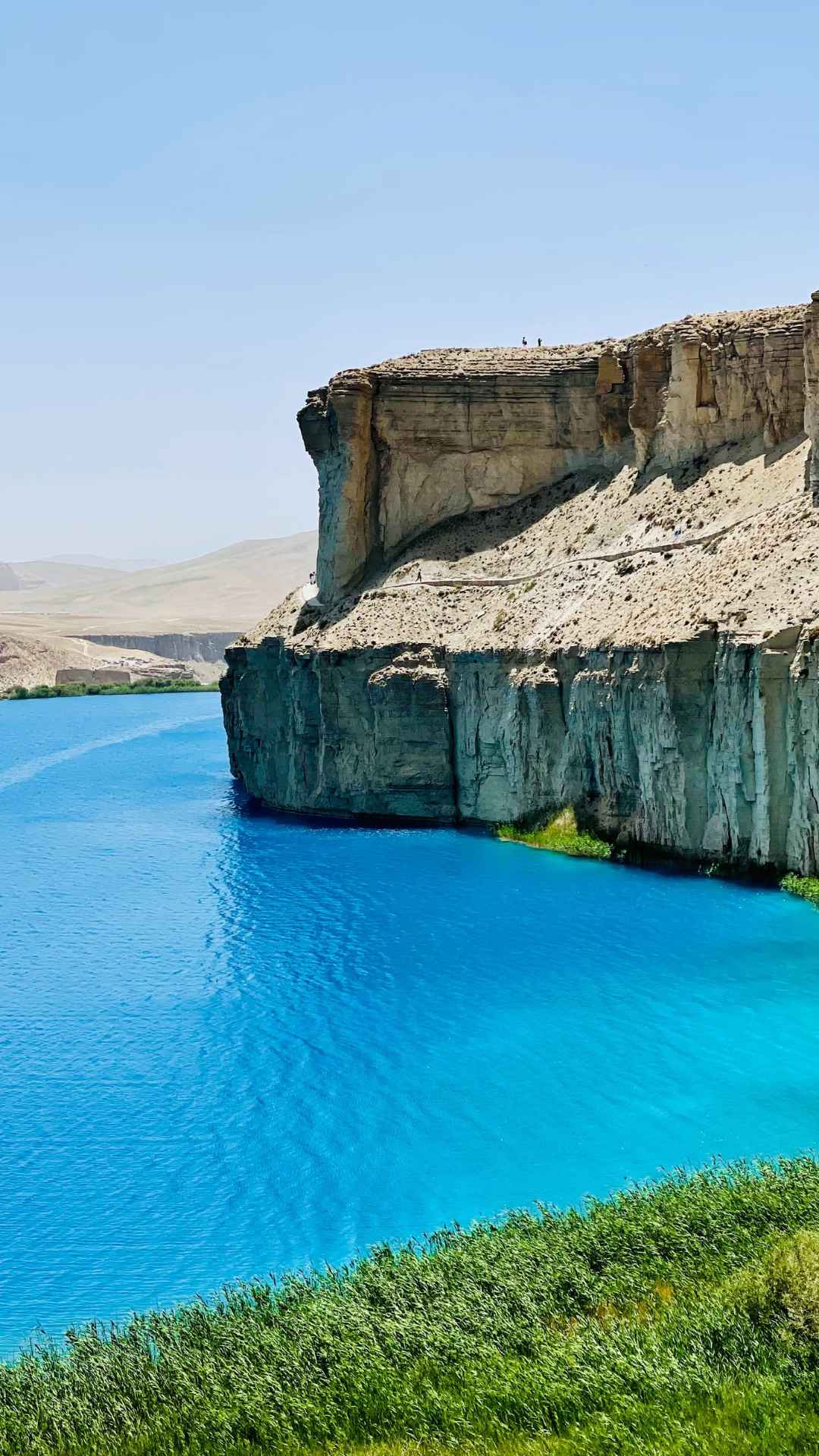
Afghanistan's Environment Law (2007) requires that a protected area be created in consultation with local communities, have a justification document or management plan, have clearly defined boundaries, have management in place, and be established by law. Band-e-Amir, Ajar Valley, Big Pamir, Dasht-e-Nawar and Ab-e-Estada were all officially gazetted in the 1970s — and those designations have lapsed. None of the current protected areas has yet been gazetted.
| Area | IUCN class | Area (km²) | Consultation | Justification | Mgmt plan | Boundaries | Management | In law |
|---|---|---|---|---|---|---|---|---|
| Band-e-Amir National Park Bamyan | II | 613 | Yes | Yes | Yes | Yes | Yes | Presidential decree |
| Wakhan National Park Badakhshan | II | 10,950 | Yes | Yes | Drafted, not approved | Yes | Yes | Ministerial council |
| Bamyan Plateau Protected Landscape | V | 4,200 | Yes | Yes | No | Yes | Yes | No |
| Shah Foladi Protected Landscape | V | 700 | Yes | Yes | No | Yes | No | No |
| Kol-e-Hashmat Khan Waterfowl Sanctuary Kabul | IV | 2 | No | Yes | Yes | Yes | Yes | No |
| Nuristan National Park | II | 9,225 | No | No | No | Yes | No | No |
| Darqad Wildlife Sanctuary Takhar | IV | 628 | No | No | No | No | No | No |
| Imam Sahib Wildlife Sanctuary Kunduz | IV | 582 | No | No | No | No | No | No |
| Dasht-e-Nawar Waterfowl Sanctuary Ghazni | IV | 375 | No | No | No | No | No | No |
| Total | — | 27,275 | 4.2% of Afghanistan's land area | |||||
Source: NBSAP for Afghanistan 2024–2030, Table 3. Areas as declared by NEPA. Figures for Band-e-Amir and Wakhan vary slightly between sources; the NBSAP figures are used here for internal consistency.
Read down the columns rather than across the rows. Only two of the nine areas have any legal instrument behind them. Only three have an approved management plan. Four — Nuristan, Darqad, Imam Sahib and Dasht-e-Nawar, together nearly 11,000 km² — have no consultation, no justification document, no management plan and no management. They are lines on a map.
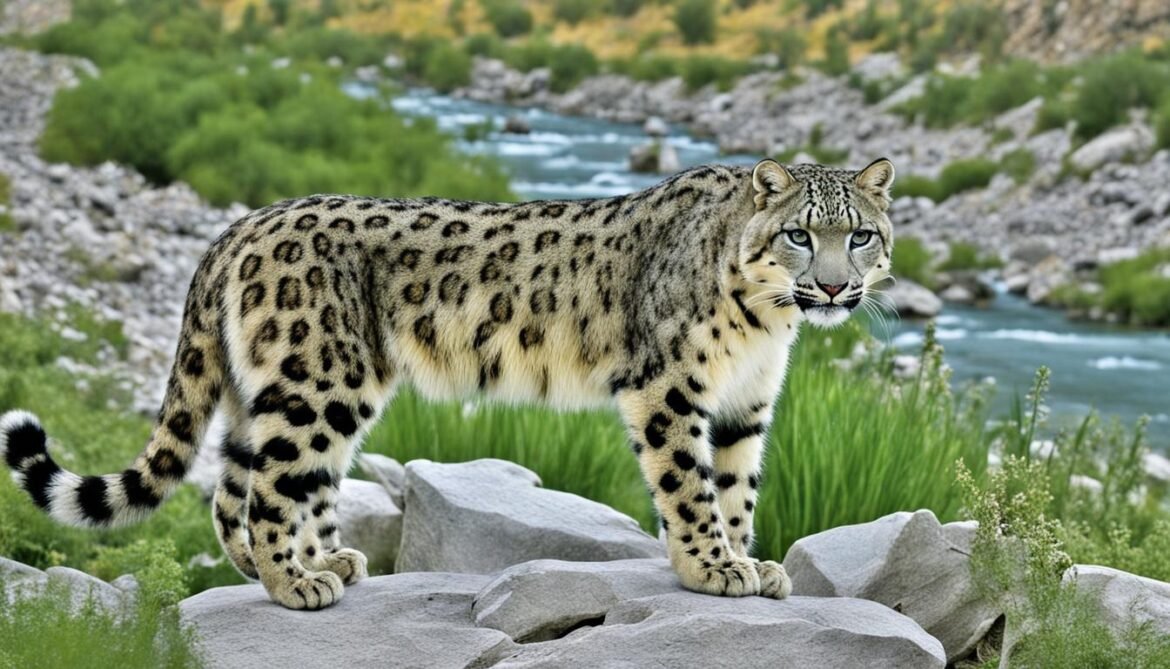
The functional exceptions are instructive. Band-e-Amir is co-managed with a committee drawn from the communities living around the park. Wakhan is co-managed by communities and government, has trained rangers, and holds roughly three-quarters of the confirmed national snow leopard range. The pattern is consistent: where local co-management exists, the protected area does something; where it does not, the designation is inert.
09 · THE PLANWhat the NBSAP 2024–2030 actually commits to
Afghanistan ratified the Convention on Biological Diversity in 2002 and produced its first NBSAP in 2014 against the Aichi Targets. The revision now in force was completed in 2023 by NEPA with UNEP/GEF funding and WCS technical leadership, covers 2024–2030, and is aligned to the Kunming-Montreal Global Biodiversity Framework adopted at COP-15.
It was informed by six consultation workshops held in five regional cities during 2021 — Mazar-e Sharif, Kabul, Jalalabad, Herat and Faizabad — with 669 participants drawn from 27 of the country's 34 provinces, followed by a three-day line-by-line review at NEPA headquarters in May 2023.
| Target | Commitment | Key actions |
|---|---|---|
| 1 | Biodiversity-inclusive land-use planning in all protected areas and buffer zones | Land-use planning written into every PA management plan; opportunistic spatial planning elsewhere |
| 2 | Restore degraded habitat in protected areas | Reduce shrub harvest and grazing pressure; cut conversion to lalmi; community tree planting; secure water for at least three sizeable wetlands |
| 3 | At least 10% of the country in protected areas or OECMs | Create 65,000 km² of new protected area; revise the national PA system plan by 2028; establish protected areas in law by 2030 |
| 4 | Maintain population numbers of targeted species | Species action plans; genetic baselines; ban import and sale of veterinary diclofenac; update the AWEC protected list |
| 5 | Harvesting, trade and use of wild species is sustainable and legal | Regulate hunting by law; control firearms and ammunition; functional CITES office by 2026; train border officials against wildlife trafficking |
Source: NBSAP for Afghanistan 2024–2030, Chapter 5 and Annex 1. The document states that where resources are limited, Targets 1–5 should be addressed first.
What the plan declines to do, and why it says so
The NBSAP does not adopt all 23 Kunming-Montreal targets. It declines several and — unusually for a document of this kind — states the reasoning at the point of each omission rather than burying it.
- Target 7 (pollution) — declined on the grounds that pollution is not clearly a serious threat to Afghan biodiversity, that air pollution and plastic waste belong in another forum, and that pesticide and fertiliser use is minor enough that reducing it further would jeopardise food independence.
- Target 11 (nature's contributions to people) — declined as already covered by Target 2.
- Target 17 (biosafety and biotechnology) — declined as not a significant threat relative to more pressing issues.
- Target 18 (harmful subsidies) — declined on the grounds that few such subsidies exist in Afghanistan.
- Target 23 (gender equality in implementation) — declined, with the stated position that the Islamic Emirate of Afghanistan considers the participation of women in society in accordance with Sharia.
That last omission stands in a particular relationship to the document's own consultation record. The NBSAP's Annex 2 reports that 81% of workshop respondents thought women should be involved in biodiversity conservation decisions because they are half the population; 71% because of their role in dairy production and exposure to disease transmission between livestock, wildlife and people; 70% because of direct dependence on natural resources for livelihoods; and 62% because of their role in collecting and storing agricultural seed. The consultation asked, recorded the answer, and the target was not adopted.
The money
Full implementation of the NBSAP by 2030 is costed at $80–110 million. The document states plainly that the Islamic Emirate's financial resources are limited and that delivery will fall largely on the international community — while start dates for individual actions cannot be set, because initiation depends on funding availability.
For context: $80–110 million over seven years, for a country of 652,000 km², is roughly the capital cost of a single mid-sized infrastructure project. It is not a large number. It is, at present, an unfunded one.
10 · THE BUILT ENVIRONMENTWhere construction and planning can actually move the needle
Most of what determines Afghanistan's biodiversity outcome — drought, funding, sanctions, governance — sits well outside the reach of designers and builders. A smaller set of things sits squarely inside it.
| Lever | What it addresses | NBSAP linkage |
|---|---|---|
| Permeable surfacing and recharge design in Kabul and other growing cities | The impermeability that has decoupled rainfall from aquifer recharge | Target 12 — restoring water in urban water bodies |
| Abstraction licensing for greenhouses, factories and beverage plants | High-volume drawdown from the same shallow aquifer households use | Threat: unsustainable use of water |
| Karez rehabilitation rather than deep-well replacement | Gravity-fed supply that does not mine the aquifer, with maintenance rules already socially embedded | Targets 2, 9, 22 — restoration through customary use |
| Fuel-efficient stoves and non-biomass heating | Fuelwood and shrub cutting — a primary driver of woodland collapse | Portfolio 3, Target 2 |
| Native-species urban planting | Peri-urban habitat, dust, urban heat, and green space access | Target 12, Action 12.1 |
| Riparian and slope planting along rivers and hillsides | Flooding, riverbank erosion, landslides — the degradation factors most cited by consultation participants | Target 2, Target 8 |
| Functioning EIA practice for mining and infrastructure | Habitat loss and road-driven fragmentation from critical-minerals development | Actions 14.2, 15.1 |
Levers are Constructive Voices' own mapping; NBSAP linkages are as stated in the source document.
The consultation data supports this ordering rather than contradicting it. Asked what would reduce natural disasters, 66.8% of respondents backed planting trees and shrubs along rivers to reduce flood impact, 63.8% backed planting on mountains and slopes to restore watersheds and reduce erosion, and 42.0% backed energy-efficient stoves to reduce fuelwood consumption. These are not exotic interventions. They are the ones people asked for.
Key takeaways
- Afghanistan's irreplaceable biodiversity is botanical, not zoological — around 1,500 endemic vascular plants against zero endemic mammals. Eight plant species are legally protected.
- 65 species sit in the three IUCN Threatened categories, not the 39 widely quoted. Four large mammals are already extinct in the country and a fifth likely so.
- 37.6% of the country lies in ecoregions rated Critical or Endangered; just 1.0% in ecoregions rated Stable.
- Around four-fifths of closed forest has been lost since the 1970s, nearly half of it since 2000.
- Nine protected areas cover 4.2% of the country. None is gazetted. Four have no management of any kind. Target 3 requires 10% by 2030 — another 65,000 km².
- The NBSAP is fully costed at $80–110m and essentially unfunded, with start dates left open pending finance.
- Where community co-management exists — Band-e-Amir, Wakhan — protection functions. Where it does not, designation is inert. This is the most transferable finding in the document.
11 · QUESTIONSFrequently asked
Does Afghanistan have a National Biodiversity Strategy and Action Plan?
Yes. The first was developed in 2014 against the Aichi Targets. A revised NBSAP covering 2024–2030 was completed in 2023 and submitted to the CBD Secretariat. Earlier accounts stating that Afghanistan had not prepared an NBSAP are out of date.
How many species in Afghanistan are threatened with extinction?
65 species sit in the three IUCN Threatened categories — 9 Critically Endangered, 17 Endangered, 39 Vulnerable. A further 43 are Near Threatened and 44 are Data Deficient, meaning there is not enough information to assess them at all.
How many protected areas does Afghanistan have?
Nine have been declared by NEPA, covering 27,275 km² or 4.2% of the country. None has been gazetted in law. Band-e-Amir and Wakhan are the only two with a legal instrument behind them, and the only two that meet the full set of criteria in the Environment Law.
What is the current state of forest cover?
Closed forest — largely confined to the monsoon-influenced east — stood at roughly 3,600 km² in the 1970s and 718 km² in 2018 at a 30% canopy threshold. That is around 0.1% of the country. The pistachio and juniper open woodlands have thinned to the point where satellite analysis could not reliably detect tree density.
Is Kabul really going to run out of water?
A 2025 Mercy Corps study projects aquifer exhaustion by 2030 if current trends continue. That is a projection under continuation, not a forecast — but the underlying measurements are not disputed: a 25–30 m fall in groundwater level over a decade, extraction exceeding recharge by 44 million m³ a year, and around half the city's boreholes dry.
Why is biodiversity data for Afghanistan so uncertain?
Systematic survey work largely stopped in 1978 and has resumed only intermittently since. The NBSAP notes that so little research has been possible that the country may hold undescribed species and substantial unmeasured genetic diversity. Several figures in this report are best read as floors rather than estimates.
What is an OECM, and why does it matter here?
An Other Effective Area-Based Conservation Measure is an area that delivers in-situ biodiversity conservation regardless of whether that was its stated purpose — a community-managed pasture, a rotational pistachio harvest, a hunting reserve. For Afghanistan, OECMs offer a route toward the 10% target that does not depend on gazetting new national parks, and they map closely onto customary management that already exists.
Methodology and sourcing
The central source for this report is the National Biodiversity Strategy and Action Plan for Afghanistan 2024–2030, published by the National Environmental Protection Agency with UNEP/GEF funding and Wildlife Conservation Society technical leadership, and submitted to the Convention on Biological Diversity. Tables 1, 2, 3, 4, 5, 7 and 8 are drawn directly from it, with the source line given at each table.
Where the NBSAP and the older CBD country profile disagree on species counts, the NBSAP figures are used, because the CBD profile draws on datasets predating the 1978 conflict. Kabul groundwater figures come from the Mercy Corps study of April 2025 as reported by Al Jazeera, RFE/RL and the Associated Press, together with AP reporting from Kabul in April 2026; these are humanitarian-sector estimates rather than audited hydrological measurements and are presented as such. Snow leopard range and Wakhan figures come from the Global Snow Leopard and Ecosystem Protection Program and from Moheb and Zahler's 2026 status assessment.
The built-environment levers in Table 9 are Constructive Voices' own analysis, mapped against NBSAP actions; the NBSAP linkages are as stated in the source document, the levers are not.
Figures marked with approximation signs are approximations in the original. Where a figure has been derived arithmetically rather than stated, that is noted at the point of use.
Source links
- National Biodiversity Strategy and Action Plan for Afghanistan 2024–2030 — NEPA / UNEP / GEF / WCS
- CBD Afghanistan country profile — note that this draws on older datasets
- Afghanistan Fifth National Report to the CBD
- Global Snow Leopard & Ecosystem Protection Program — Afghanistan
- The Guardian on the Kabul water report
- UNAMA — threats to Afghanistan's water sources
- Partaw Naderi at the Poetry Translation Centre
Originally published 9 April 2024 by Jackie De Burca. Rebuilt as a Constructive Voices country data report, August 2026, using the National Biodiversity Strategy and Action Plan for Afghanistan 2024–2030 as its primary source. All photography retained from the original article; images by Constructive Voices with Canva Pro unless otherwise credited.


Iran Biodiversity and the Built Environment
2 years ago[…] urban development and human activities on Iranian ecosystems. Sustainable design and environmental conservation in Iran face unique challenges due to the delicate balance between urban development and […]
Afghanistan Biodiversity and the Built Environment
2 years ago[…] managing and protecting its natural resources. The intersection between biodiversity and the built environment is an important topic, as urban development can have significant impacts on ecological diversity […]