성적 증명서
이 정보는 디지털로 생성되었으며 오류가 있을 수 있습니다.
[00:00:09] Speaker B: This is Jackie De Burca for the Constructive Voices Good News podcast. A short, sharp burst of uplifting stories from the built environment with a dash of biodiversity. Now we’re all about highlighting positive solutions that have the potential to improve our world. Today we feature floating developments, the EU’s proposed nature credit System and and Ecosia’s work in Burkina Faso.
[00:00:33] 스피커 A: 여기는 Constructive Voices입니다.
[00:00:35] Rutger de Graaf: 부유 구조물의 흥미로운 점 중 하나는 매우 가벼워야 하기 때문에 대개 속이 빈 구조물이라는 것입니다. 그래서 저희는 강철이나 콘크리트 기초, 또는 복합재를 사용합니다. 사용할 수 있는 재료는 다양합니다. 하지만 이러한 구조물은 종종 넓은 공간을 만들어냅니다.
그리고 이 공간은 폐수 처리의 분산형 기술에 활용될 수 있습니다.
분산형 음용수 처리에 사용될 수 있으며, 부유 플랫폼의 공간은 전기 저장 공간으로 활용될 수 있습니다.
So floating structures by nature, they offer a lot of opportunities to become more self supporting, to become more off grid. We have also done for instance, a floating solar study. Floating solar is a great technology also to have floating energy generation.
We all know about the floating offshore wind. Of course we can also use floating algae and seaweed systems to produce floating biofuels. So floating urban development creates a lot of opportunities to implement decentralized concepts for water and energy.
그런 의미에서, 떠다니는 동네를 하수 시스템으로 해안과 연결하는 것은 필요하지 않습니다.
그래서 저는 그것이 그 자체로 일종의 회복력을 만들어낸다고 생각합니다. 왜냐하면 이런 작은 규모의 구조물은 자립성이 더 뛰어나고 거대한 격자보다 취약성이 적기 때문입니다.
If you have a power blackout or something, it has a big impact. But if neighbourhoods create their own, have their own system, it’s more redundant and more resilient.
그것은 한 가지입니다.
수년간 파도 분지 시험에 대한 연구를 통해 우리가 확인한 것은 부유 구조물이 해안에 미치는 파도의 충격을 줄여준다는 것입니다.
그러니 해안 앞에 떠다니는 동네를 조성하는 순간, 폭풍과 파도로부터 해안을 보호하게 되는 거예요.
따라서 홍수에 적응하는 것 외에도 극한 기상 조건에서도 본토가 홍수에 휩쓸리지 않도록 보호합니다.
[00:02:31] 스피커 A: 여기는 Constructive Voices입니다.
[00:02:34] Jackie De Burca: 브뤼셀은 자연을 대차대조표에 포함시키려는 움직임을 보이고 있습니다. EU가 자연 크레딧 로드맵을 공개한 가운데, 브라이언 맥셰리는 이러한 시장 주도적 접근 방식이 민간 투자를 활성화하고 생태계 복원에 기여하는 사람들에게 보상을 제공하며, 나아가 생태계 안정에 큰 진전을 가져올 수 있는 방법을 설명합니다. 9월 XNUMX일자 전체 기사는 Construction Voices 웹사이트나 좋아하는 팟캐스트 앱에서 확인하실 수 있습니다.
[00:02:57] 스피커 A: 여기는 Constructive Voices입니다.
[00:02:59] 재키 드 부르카: 예를 들어 우르줄라 폰 데어 라이엔은 이 사건 이후 자연스럽게 기고문을 쓴 사람 중 한 명이었습니다. 그녀의 말을 인용하자면, 매우 직관적이고 일반인도 쉽게 이해할 수 있다고 생각합니다. 우리는 자연을 대차대조표에 포함해야 합니다. 자연 크레딧이 하는 일이 바로 그것입니다.
When well designed, they will provide an efficient, market driven instrument that encourages the private sector to invest and innovate. With investment and innovation, we generate revenue for those who work to protect nature.
[00:03:30] 브라이언 맥샤리: 네, 물론 대통령께서 방금 말씀하신 모든 내용에 동의합니다. 하지만 매우 잘 정리된 내용이라고 생각하고, 로드맵의 목표를 잘 보여주는 것 같습니다. 그리고 자연을 대차대조표에 포함시키는 것에 대해서는 많은 사람들이 오랫동안 이야기해 왔습니다.
There’s always been the how. And I think this roadmap is a step in that right direction, a big step, I would say. But for me, statements like that in the op ed I think is very clear. A lot of discussions and it was last September at a conference in Munich, the President said something about this, about nature credits was the first real public discourse about it. And she said something very similar at the time. And for me, when I read this and I listen to those different presentations, it’s very clear what the ambition from the European Union is about. This is put it on the balance sheet, it’s helping and it is really about protecting and restoring and mobilising the market to allow that and put in funding for nature and recognising the importance of nature and how it basically pays for itself. You know, we know nature is the cornerstone of our economy and businesses depend on it. The World Economic Forum, I think in 2020 said half the world’s GDP is moderately highly dependent on biodiversity. The rest of it still is, but maybe to a lower extent. So having any kind of conversation where it connects that business world to the rest of the nature world and the financing I think is to be supported.
[00:04:54] 스피커 A: 이것은 건설적인 목소리입니다.
[00:04:57] Jackie De Burca: 마지막으로 검색 엔진 Ecosia에 대한 이야기입니다.
[00:05:00] 스피커 A: 여기는 Constructive Voices입니다.
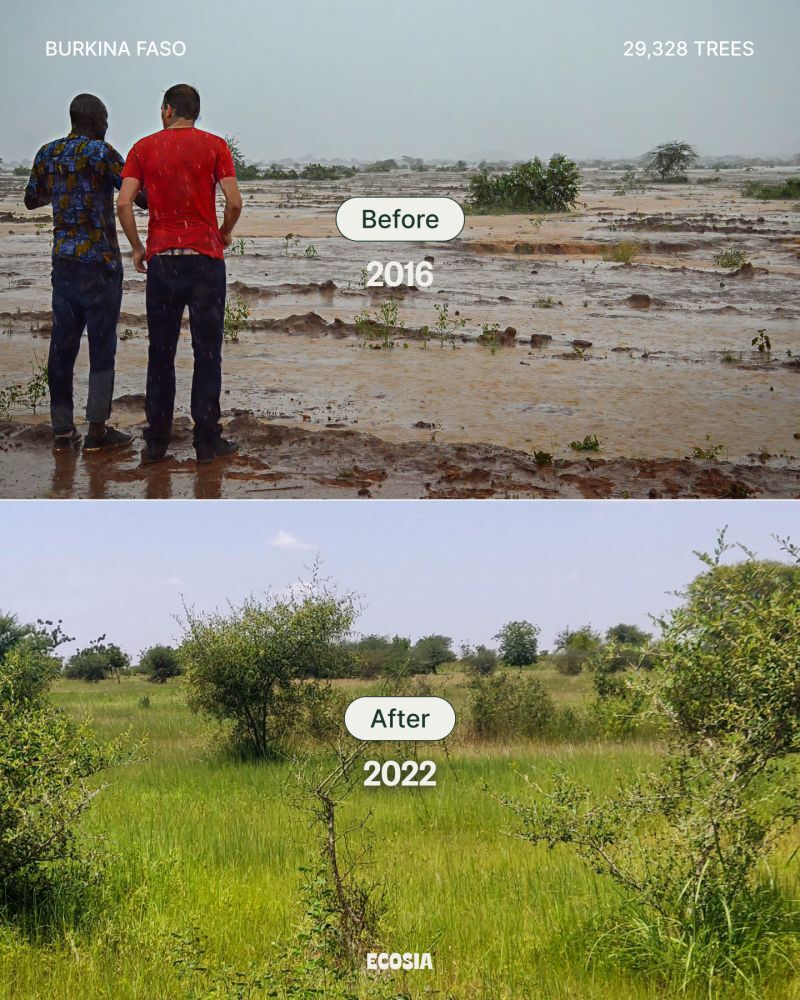
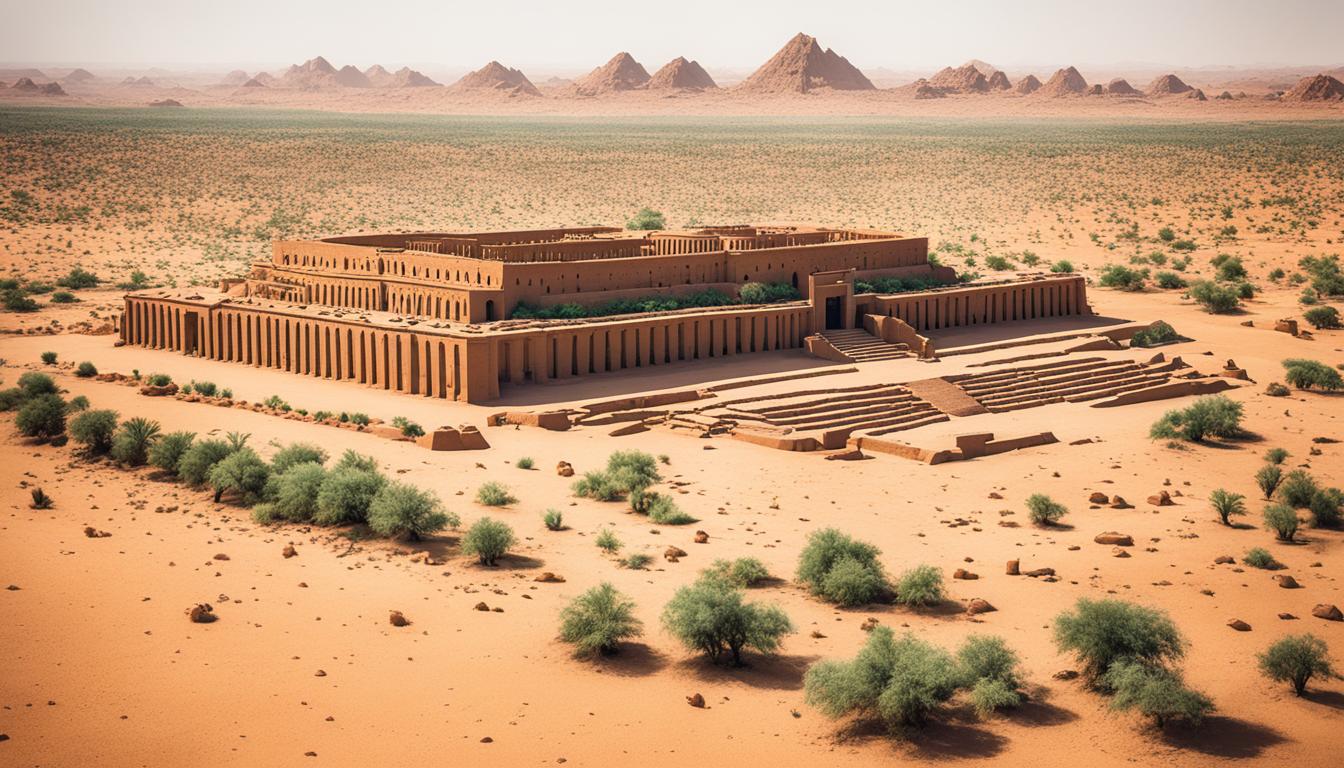
[00:05:03] 발표자 E: 이제 검색 엔진 Ecosia가 하고 있는 훌륭한 작업들을 살펴보겠습니다. 2016년, 부르키나파소의 이 사바나는 거의 황폐해졌습니다. 그래서 파트너들과 함께 옴므 아 테르에코시아는 29,328그루의 나무를 심었습니다. 그곳은 비가 자주 오지 않아서, 어린 나무들이 살아남도록 구덩이에 물을 가두는 고대 기술인 반달을 사용했습니다. XNUMX년이 지난 지금, 나무와 초원이 자라고 토양이 회복되고 야생 동물들이 돌아오고 있습니다. 에코시아를 사용하시면, 여러분의 검색 결과가 이 나무들을 보호하는 데 도움이 됩니다. 그리고 앞으로도 계속 그렇게 될 것입니다.