


Afghanistan Biodiversity and the Built Environment
Afghanistan
Constructive Voices · Country Data Report
Afghanistan Biodiversity and the Built Environment: the pressure has moved into the cities
Afghanistan is still overwhelmingly rural — around 27% of its people live in cities. But the country is urbanising at roughly 4% a year, four out of five urban Afghans live in unplanned settlements, and the capital is drawing down an aquifer it cannot refill. The relationship between building and biodiversity here is not an abstraction about green roofs. It is a question of water, land and whether the next house stands up.
Three things have changed since this article was first published, and all three run through the built environment.
Kabul's groundwater has fallen by 25–30 metres in a decade, with extraction outpacing natural recharge by around 44 million cubic metres a year. Roughly 6 million people have returned from Iran and Pakistan since late 2023, most of them absorbed by cities and their edges. And two earthquakes in 2025 — Kunar in August, Balkh and Samangan in November — demonstrated, again, that Afghan buildings, not Afghan earthquakes, are what kill people.
Each of these is a construction question before it is a conservation question. That is the argument of this report.
Editor's note on this revision. This report replaces the February 2024 version of the article. Readers who cited the earlier text should know what has changed.
Three tables in the original set out generic "benefits of sustainable urban planning" with illustrative examples that contained no Afghan data; they have been replaced with sourced tables. A table listing biodiversity initiatives in Kabul, Herat and Mazar-e-Sharif could not be verified against any programme document and has been removed, and replaced with the municipal and NGO greening work that is actually documented. Two attributed expert quotations could not be traced to any source and have been cut rather than left standing. The material on war and biodiversity, the cultural framing, and all of the original photography are retained.
01 · THE TRANSITIONA rural country building cities in a hurry
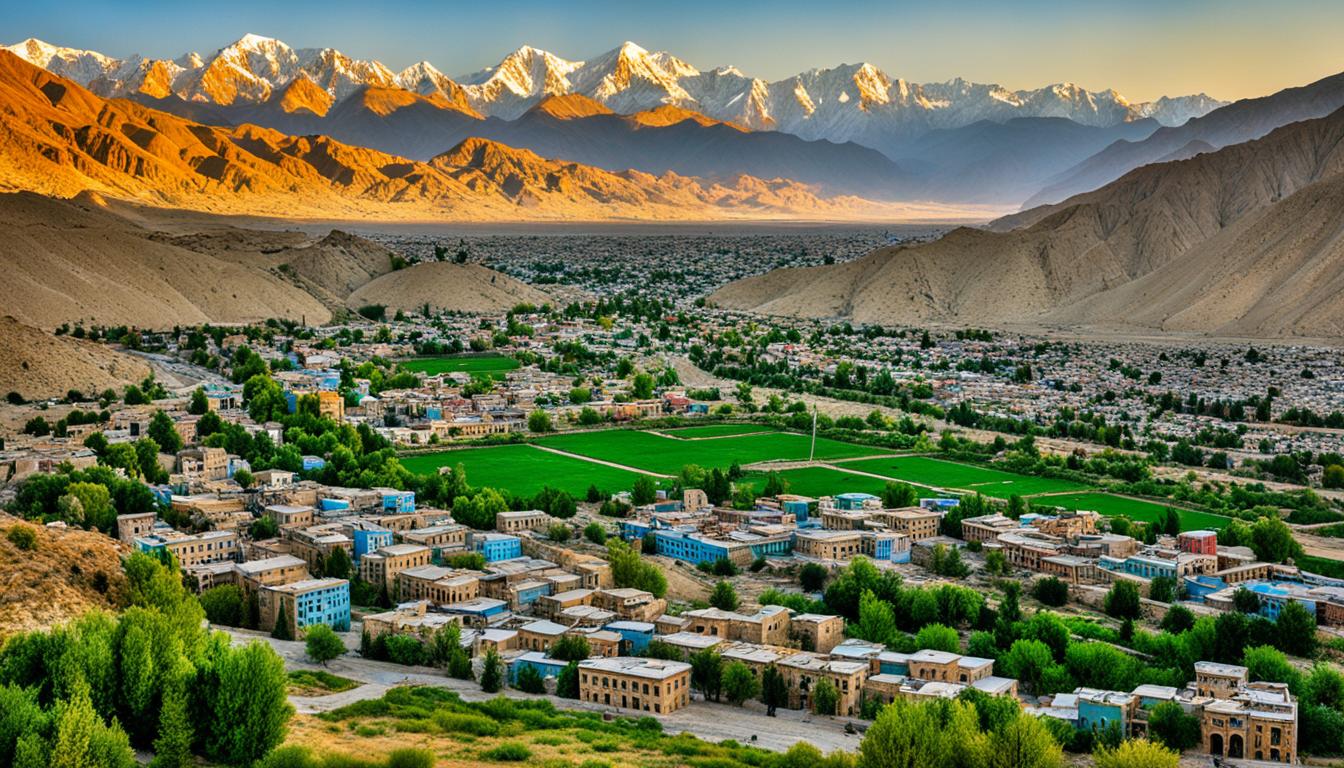
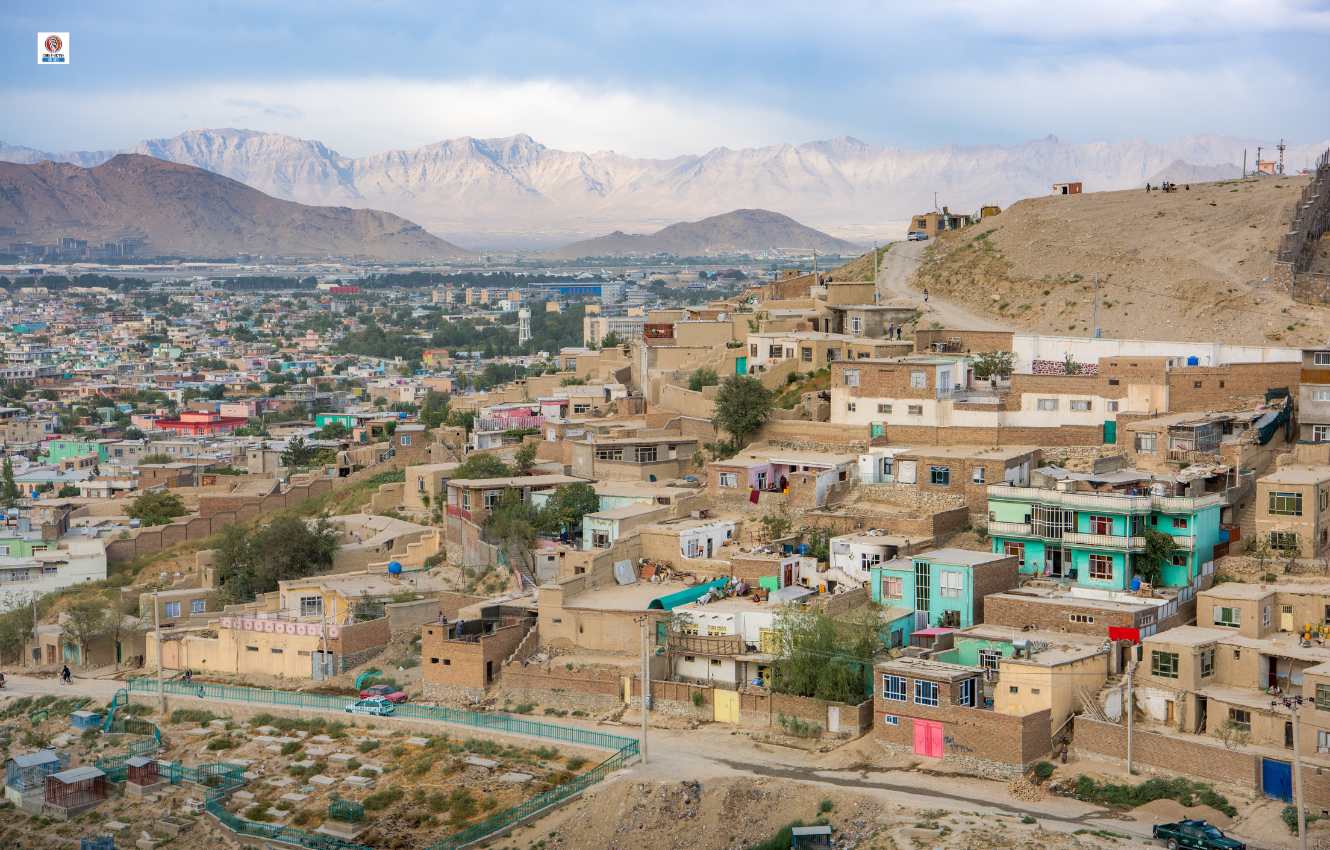
Afghanistan is not yet an urban country. Just over a quarter of its people live in towns and cities, a share well below the regional average. What makes the built environment the decisive variable is the rate of change, not the level.
UN-Habitat puts annual urban growth at roughly 4%, among the fastest anywhere, and projects that one in two Afghans will live in a city by 2060. The agency's own assessment is blunt about the readiness gap: cities are absorbing this growth without spatial plans, without functioning land administration and without the municipal revenue to service what gets built. In practice that means growth arrives as informal settlement first and infrastructure — if at all — years later.
| Indicator | Value | Source and year |
|---|---|---|
| Total population | 45.0 million | UN DESA, World Population Prospects (2024 rev.), 2026 estimate |
| Urban population | 12.1 million (26.9%) | UN DESA, 2026 estimate |
| Annual urban growth rate | ~4% | UN-Habitat Afghanistan |
| Urban share projected for 2060 | ~50% | UN-Habitat, July 2026 |
| Urban population in informal settlements | 73–80% | UN-Habitat (73% in 2020; ~80% in current country profile) |
| People living in informal settlements | 9 million+ | UN-Habitat Afghanistan, 2025 |
| New urban households needing housing each year | ~43,800 | Afghanistan Housing Profile, UN-Habitat |
| Kabul population | ~6 million | Multiple estimates, 2025 — up from ~2 million in 2000 |
Figures compiled by Constructive Voices, August 2026. The informal-settlement range reflects two different UN-Habitat estimates rather than a disagreement about direction.
This is the context in which every biodiversity conversation about Afghan cities has to sit. Where growth is informal, there is no development-control process into which ecological considerations can be inserted. There is no environmental impact assessment to strengthen, because there is no permit. Green infrastructure in Afghanistan is not mainly a design problem. It is a land governance problem wearing a design costume.
02 · THE WATERKabul is spending an aquifer it cannot refill
The single most important environmental fact about the Afghan built environment in 2026 concerns water under a city.
An April 2025 assessment by Mercy Corps found that Kabul's groundwater levels have dropped by 25 to 30 metres over the past decade, that extraction exceeds natural recharge by roughly 44 million cubic metres a year, and that around half the city's boreholes have gone dry. On the current trajectory the report projects the aquifer could be exhausted by 2030 — which would make Kabul the first modern capital to fully drain its groundwater. Researchers cited in the reporting attribute a substantial share of demand to more than 100,000 unregulated wells and to commercial users, including several hundred hectares of greenhouses.
Contamination compounds scarcity. Sewage infiltration from unlined septic tanks, salinity and naturally occurring arsenic all reduce the fraction of remaining groundwater that is drinkable. In a city where most households sit outside the piped network, the practical response has been to drill deeper — which accelerates the drawdown that caused the problem.
| Measure | Figure | Note |
|---|---|---|
| Aquifer decline, past decade | 25–30 m | Mercy Corps, April 2025 |
| Annual extraction above recharge | ~44 million m³ | Roughly double the sustainable rate |
| Boreholes reported dry | ~50% | Of the city's main drinking-water sources |
| Unregulated wells | 100,000+ | Largely unlicensed and unmetered |
| Commercial greenhouse area in Kabul | ~400 ha | Estimated ~4 million m³ of water a year |
| Projected aquifer exhaustion | 2030 | If current extraction trends hold |
| Residents potentially displaced | ~3 million | Mercy Corps scenario, not a forecast |
Source: Mercy Corps Afghanistan water assessment (April 2025) and subsequent reporting, 2025–26.
The two projects that would change the arithmetic
Two pieces of infrastructure dominate every technical discussion of Kabul's water future. Neither has broken ground. Together, Mercy Corps estimates, they could supply around four million people.
| Project | Scale | Status |
|---|---|---|
| Panjshir River pipeline | ~200 km transfer from north of Kabul; ~US$130 million | Budget approved Original survey revised; a further review required before construction. Considered the faster of the two. |
| Shah Toot Dam | Reservoir ~30 km south-west of Kabul; storage in the hundreds of millions of m³ | Delayed Funding not secured. Officials estimate 6–7 years to build once started. |
| Shah wa Arus Dam | Shakardara district, north-west of Kabul | Complete Inaugurated 2024. Useful, but an order of magnitude too small to close the gap. |
| Check dams and absorption wells | Distributed across Kabul's 14 districts | Under way Managed-recharge and stormwater capture. Cheap, fast, and the closest thing to a nature-based response currently at scale. |
| Qargha reservoir desilting | Millions of tonnes of sediment removed | Complete Restores lost storage capacity rather than adding new. |
Compiled from Associated Press reporting (April 2026) citing Afghanistan's Urban Water Supply and Sewerage Corporation, and Mercy Corps. Status classifications are Constructive Voices'.
The biodiversity consequence is direct. The Kabul basin's wetlands, its riverine vegetation and the migratory birds that use them depend on the same water table. When a capital city's boreholes deepen, springs at the margin fail first — and the habitat that fails with them is rarely counted in the water statistics.
03 · THE INFLUXSix million people, arriving mostly at the urban edge
Afghanistan is absorbing one of the largest forced return movements in the world, and it is landing disproportionately on cities and their peripheries.
The IOM's Displacement Tracking Matrix records approximately 6.04 million returns from Iran and Pakistan between mid-September 2023 and the end of May 2026. OCHA reported 2.78 million returns in 2025 alone. Provinces including Herat, Kabul, Kandahar, Kunduz, Nangarhar and Helmand have taken in large numbers despite limited infrastructure, with temporary accommodation, health facilities and water and sanitation systems under strain — particularly in urban and peri-urban areas.
| Period | Returns | Note |
|---|---|---|
| Mid-Sept 2023 – 30 May 2026 | ~6.04 million | IOM DTM, June 2026 |
| 2025 (calendar year) | ~2.78 million | OCHA humanitarian update, Dec 2025 |
| January 2026 alone | 110,000+ | Mid-winter; daily averages of ~2,500 from Pakistan, ~1,200 from Iran |
| Remaining in Pakistan | 2–3 million | Sustained return pressure signalled for 2026 |
| Remaining in Iran | ~4.5 million | Deportations accelerated through 2025–26 |
Sources: IOM Displacement Tracking Matrix (June 2026); UN OCHA (December 2025); UN Afghanistan Returnees Overview (February 2026).
Set that against the housing arithmetic in section 01 — roughly 43,800 new urban households needing shelter each year in normal conditions — and the scale of the mismatch is clear. What gets built in response is single-storey, unengineered, on unserviced land at the edge of the settled area. That is where the ecological cost is highest: peri-urban land is usually the last agricultural soil, the last orchard belt, the last floodplain.
04 · THE SHAKINGWhat 2025 proved about Afghan construction
Afghanistan sits across active fault systems in the Hindu Kush, and shallow, moderate-magnitude earthquakes there are routinely lethal. Two events in 2025 made the point.
| Event | Where | Human toll | Buildings |
|---|---|---|---|
| 31 Aug 2025 Mw 6.0, depth ~8 km |
Kunar, Nangarhar, Laghman, Nuristan | 1,992 deaths 3,631 injured |
8,300+ homes damaged or destroyed |
| 3 Nov 2025 M6.2–6.3, depth ~28 km |
Samangan and Balkh, near Mazar-e-Sharif | 27+ deaths 950+ injured |
Structural damage across Mazar-e-Sharif, including the Shrine of Hazrat Ali |
| Joint Rapid Recovery Needs Assessment, eastern provinces | US$86.8m | Damages and losses — against US$128.8m in assessed recovery need | |
Sources: WHO Health Cluster situation reports (Sept and Nov 2025); Joint Rapid Recovery Needs Assessment led by the UN with UNDP, the EU, the World Bank and the ADB (Nov 2025); USGS.
The post-event engineering assessments identified the failure mode precisely: out-of-plane collapse of stone and mud walls with poor bonding and no confinement, amplified on steep hillside sites. These are not exotic problems. They are the failure signature of unreinforced masonry everywhere, and they are fixable with corner reinforcement, ring beams, better mortar and roof tying — techniques that a trained mason can apply using materials already on site.
UN-Habitat's position after the November earthquake is worth recording, because it cuts against the reflex to import solutions: the agency argued that training Afghan masons in improved versions of local construction techniques is one of the most effective ways to save lives, and that introducing unfamiliar materials and methods that cannot be taught at scale will not help the country. That is also the lower-carbon answer, and the one that keeps money in local supply chains.
05 · THE INHERITANCEWhat four decades of war did to the land
This section is retained largely as first published, because the analysis has held up. War has shaped Afghan biodiversity both directly and indirectly, and the built environment carries much of that inheritance.
Direct effects
- Habitat destruction. Bombardment, base construction and landmine contamination removed or rendered inaccessible large areas of forest, grassland and wetland.
- Wildlife mortality. Direct killing during combat, compounded by the loss of the habitat that supported populations.
- Contamination. Explosive residues and industrial spill from military infrastructure left localised soil and water pollution.
Indirect effects
- Deforestation for fuel and construction. Economic collapse pushed households onto standing timber. Forest loss in the eastern provinces was driven as much by survival as by commerce.
- Poaching under weak enforcement. Snow leopard, Marco Polo sheep and several bird species were exposed when protection lapsed.
- Displacement pressure. Concentrations of displaced people intensified grazing, fuelwood cutting and abstraction in a narrow band around settlements.
- Broken conservation continuity. Protected areas became inaccessible; programmes lost staff and funding. Afghanistan's 2024–2030 NBSAP records nine declared protected areas covering 4.2% of the country — and that none has yet been gazetted in law.
The landscapes named in the original article remain the right ones to watch: the Bamyan valley, where landmine contamination still constrains fieldwork; the Pamir, where Marco Polo sheep depend on enforcement capacity that comes and goes; and the Hindu Kush and central highlands, where fragmentation and hunting pressure bear on snow leopard range.
06 · THE RECORDWhat is actually being built and planted
The original article proposed urban greening in the abstract. There is now a documented record to report instead.
Kabul Municipality's own account of the period from March 2022 to March 2026 sets out what a functioning municipal works programme has delivered under severe fiscal constraint — and what it has prioritised.
| Item | Reported figure |
|---|---|
| Saplings and plants produced, propagated and planted | 6,399,019 |
| Parks built or rehabilitated | 12 (3 more under construction) |
| Roads constructed | ~450 km (137 km in 2025) |
| Streetlights activated | 29,339 |
| Municipal revenue collected | 28.9 billion afghanis |
| Properties subject to land acquisition (July 2021 – March 2026) | 11,287 |
| Projects planned for 2026 | 233, budget 9.123 billion afghanis |
Source: Kabul Municipality, reported April 2026. Figures are as stated by the municipality and have not been independently audited.
Two caveats belong with that table. First, survival rates matter more than planting counts: Afghan officials have themselves acknowledged in past campaigns that a large share of saplings planted nationally die from neglect, and in a city with Kabul's water constraint, irrigating street trees competes directly with drinking supply. Second, roads and land acquisition on this scale are precisely the activities that convert peri-urban habitat.
The more interesting work is smaller
In Paghman, on Kabul's outskirts, state nurseries are raising almond, walnut, pine nut and deodar cedar for distribution nationally — local species rather than fast-growing imports. In Charikar, in Parwan province, the municipality planted thousands of saplings through 2026 along streets, in parks and on hillsides, and reports a measurable shift in public attitude toward trees.
The most transferable example is a dense "micro-forest" planted on private land near Kabul on the principles associated with the Japanese botanist Akira Miyawaki: mostly local species, planted tightly, at varying heights. Reporting from the site in 2026 noted it runs noticeably cooler than the bare fields around it, and that the landowner has kept it open to the surrounding community of some 350 families. That is urban cooling, habitat and common space from a plot small enough to be replicated in a city block.
The Aga Khan Agency for Habitat has donated trees and irrigation equipment for Kabul's greening in partnership with NEPA, the Ministry of Urban Development and Land and Kabul Municipality, taking its cumulative contribution to tens of thousands of trees, with a park and solid waste management system also planned.
Conservation specialists interviewed in 2026 add a necessary corrective: planting drives are expanding, but protecting remaining old-growth forest and planting inside degraded forest areas matters more than urban planting alone. A sapling in a Kabul street is worth having. It is not a substitute for a standing pistachio woodland in Badghis.
07 · THE ANSWERWhat would actually work here
Generic urban-ecology prescriptions — green roofs, wildlife corridors, biodiversity net gain — assume a regulatory system that can require them and a maintenance budget that can sustain them. Afghanistan has neither at present. What follows is filtered for what can work under current conditions.
1. Repair the karez before building new supply
The underground karez tunnels and hand-dug channels that irrigate Afghan fields are a functioning common-property institution with rules about maintenance and abstraction order. They are gravity-fed, need no pumping energy, and lose far less to evaporation than open canals. Rehabilitating karez systems on the urban fringe is the cheapest available managed-recharge intervention, and it comes with a governance structure already attached.
2. Treat check dams and absorption wells as the primary green infrastructure
Kabul's distributed check dams and stormwater absorption wells are doing more for the city's ecology than any park will, because they act on the variable — the water table — that everything else depends on. They should be designed, monitored and reported as ecological infrastructure, not just as flood works.
3. Train masons, don't import systems
Seismic safety in Afghanistan is a skills-transfer problem. Confined masonry detailing, corner reinforcement, ring beams and roof tying can be taught to existing builders using existing materials. This is also the low-carbon option and keeps expenditure inside local supply chains.
4. Plant native, plant dense, plant where it will be watered
The Paghman nursery species list — almond, walnut, pine nut, deodar — is the right one. Dense mixed-species planting on small plots outperforms scattered street trees on survival, shade and habitat value per litre of irrigation. Count survival at three years, not saplings distributed.
5. Use OECMs to recognise what communities already protect
Afghanistan's NBSAP adopts the category of Other Effective Area-Based Conservation Measure — an area delivering conservation outcomes regardless of whether that was its stated purpose. Community-protected pistachio stands, juniper patches, shrine groves and village springs qualify. Recognising them costs almost nothing and does not depend on gazetting protected areas, which has stalled.
6. Put ecological conditions where the money is
With no functioning permit system for most construction, the leverage point is reconstruction finance. The US$128.8 million eastern recovery programme, municipal capital budgets and donor housing projects all have specifications. Water-sensitive site design, native landscaping and seismic detailing can be written into those specifications now.
Key takeaways
- Afghanistan is only 27% urban but urbanising at about 4% a year, with roughly four in five urban residents in informal settlements — so most building happens outside any planning process.
- Kabul's aquifer is being drawn down 25–30 metres per decade, with a 44 million m³ annual shortfall; both major bulk-supply projects remain unbuilt.
- Around 6 million returns since late 2023 are being absorbed largely at the urban edge, converting the last productive peri-urban land.
- The 2025 earthquakes killed roughly 2,000 people through unreinforced masonry failure — a mason-training problem with a known technical fix.
- Nine protected areas covering 4.2% of the country are declared but not gazetted; OECM recognition of community-protected sites is the faster route.
- Kabul Municipality reports 6.4 million saplings and 12 parks since 2022. Survival at three years, not saplings planted, is the number that matters.
08 · QUESTIONSFrequently asked
Is Kabul really going to run out of water in 2030?
2030 is the year the Mercy Corps assessment projects for aquifer exhaustion if extraction continues at current rates. It is a trajectory, not a prediction — it assumes no new bulk supply, no demand management and no change in recharge. What is not in dispute is the direction: extraction has exceeded recharge by roughly 44 million cubic metres a year for some time, and about half the city's boreholes have already failed.
How much of Afghanistan's biodiversity is actually protected?
Nine protected areas covering about 4.2% of the country are declared in the 2024–2030 NBSAP. None has been gazetted — the designations from the 1970s lapsed and the replacements are not yet established in law. Protection currently depends on local enforcement rather than legal status.
Do green roofs and urban parks make sense in Afghan cities?
Parks do, where they can be irrigated and maintained; Kabul has built or rehabilitated twelve since 2022. Green roofs are harder to justify: they require reliable water, a waterproofing and structural standard most Afghan buildings do not meet, and maintenance capacity. Dense native micro-forests on small plots deliver more cooling and habitat per litre.
What is the single highest-return intervention?
Managed aquifer recharge — check dams, absorption wells and karez rehabilitation. It is cheap, uses existing skills, addresses the constraint that limits everything else, and has an institutional structure already attached in the case of karez.
Does the returnee influx have to damage habitat?
Not necessarily, but it will if settlement continues unplanned. Directing returns toward serviced, densified sites within existing urban footprints — rather than new spread at the edge — is the difference between absorbing 6 million people and converting the last of the orchard belt.
09 · SOURCESWhere these figures come from
- National Biodiversity Strategy and Action Plan for Afghanistan 2024–2030, submitted to the Convention on Biological Diversity
- UN-Habitat Afghanistan — country programme, Strategic Priorities 2026–2027, and the Afghanistan Housing Profile
- UN DESA, World Population Prospects (2024 revision), 2026 estimates
- Mercy Corps, Kabul water assessment, April 2025, and subsequent reporting 2025–26
- Associated Press reporting on Kabul's water crisis, April 2026, citing the Afghanistan Urban Water Supply and Sewerage Corporation
- IOM Displacement Tracking Matrix, Afghanistan Returnee Resilience Overview, June 2026
- UN OCHA Afghanistan humanitarian updates, December 2025 and 2026; UN Afghanistan Returnees Overview, February 2026
- Joint Rapid Recovery Needs Assessment: Earthquakes in Kunar, Nangarhar and Laghman, led by the UN with UNDP, the EU, the World Bank and the ADB
- WHO Health Cluster situation reports, September and November 2025; USGS earthquake catalogue
- Kabul Municipality development programme figures, reported April 2026
- AFP reporting on Afghan tree planting and micro-forests, June 2026; Aga Khan Agency for Habitat
Rebuilt as a Constructive Voices country data report, August 2026, from the article first published on 29 February 2024. All photography retained from the original article; images by Constructive Voices with Canva Pro unless otherwise credited. Status classifications and exposure judgements marked as such are Constructive Voices' own.


Afghanistan Biodiversity: Animal and Plant Species and What Is Under Threat
2 years ago[…] Despite these challenges, Afghanistan boasts an impressive diversity of species. The country is home to approximately 118-147 species of mammals, 472-510 species of birds, 92-112 species of reptiles, 6-8 species of amphibians, 101-139 species of fish, 245 species of butterflies, and 3500-4000 vascular plant species. However, the International Union for Conservation of Nature (IUCN) has identified 39 species and 8 subspecies as being globally threatened with extinction. […]