


The State of the Built Environment in Ireland
- Jackie De Burca
- August 10, 2026
The State of the Built Environment in Ireland
Ireland · Built environment · 2026 audit
The State of the Built Environment in Ireland
Buildings and construction produce 37 per cent of Ireland's carbon emissions — the same share as agriculture, and far less discussed. This is where the sector actually stands in 2026: what is on track, what is falling behind, and what nobody is measuring at all.
Constructive Voices · Published August 2026 · Reviewed annually
For most of the last decade, Ireland's climate conversation has been a conversation about cattle. That is understandable — agriculture is the country's single largest emitting sector and the politics are loud. But it has left a blind spot roughly the same size sitting in plain view.
Research carried out by the Building in a Climate Emergency group at UCD for the Irish Green Building Council found that construction and the built environment are directly responsible for 37 per cent of Ireland's emissions. Around 23 percentage points of that come from operating buildings — heating, cooling, lighting. The remaining 14 points are embodied: quarrying, manufacturing, transporting and assembling the materials themselves.
That second figure is the one that changed the argument. Embodied emissions had always been counted, but they were counted somewhere else — filed under industry, transport, waste or electricity generation, which meant that no one looking at the built environment ever saw the full number. When the IGBC commissioned the first Irish assessment, the sector turned out to be a great deal larger than the official framing suggested.
This page is a map of that sector as it stands in mid–2026. Each section is a summary; each links to the full investigation behind it. Where we have not yet done the work, we say so.
Every section carries a verdict, and the colour of each section carries it too. Four judgements are used throughout.
How to read this page
The national ledger
Nine commitments, measured against where delivery has actually reached. Bars show progress towards the 2030 target where a target exists.
Home retrofit to a B2 rating
Heat pumps in existing homes
New homes completed
Wind generation
Grid capacity to carry that wind
Protected habitats in favourable status
Construction workforce
Embodied carbon of new construction
Certified commercial building stock
The buildings we already have
Off trackIreland has about 2.1 million dwellings. Roughly 1.35 million of them have been through a Building Energy Rating assessment since the register opened in 2009, and the profile of that rated stock is the single most important fact about the country's decarbonisation problem.
As of the first quarter of 2026, CSO figures for Q1 2026 put 18 per cent of rated dwellings at an A rating, 17 per cent at B and 31 per cent at C. Which means that after seventeen years of ratings, six years of a national retrofit programme and more than €1.7 billion of public money, roughly two thirds of rated Irish homes still sit at C or below.
The A ratings are not evenly spread, and this is the part that gets lost in the headline. Ninety-nine per cent of homes built since 2020 are rated A. The regulations work. New construction in Ireland is genuinely excellent by European standards. The problem is that the country builds around 36,000 homes a year against a standing stock of 2.1 million, so new build improves the national average at a rate of about one and a half per cent a year. Everything else has to come from retrofit.
Did you know?
Electricity is now the main space heating fuel in 86 per cent of Irish homes built between 2020 and 2024, and 95 per cent of those built since 2025 — against 25 per cent of the rated stock overall. Heat pumps are present in 84 per cent of homes built in 2020–2024, and in 15 per cent of the rated stock as a whole.
The transition is not slow. It is happening almost entirely in buildings that did not exist five years ago.
The retrofit arithmetic
The National Retrofit Plan commits Ireland to upgrading the equivalent of 500,000 homes to a B2 rating and installing 400,000 heat pumps in existing homes by the end of 2030. Both numbers come from the Climate Action Plan and both are load-bearing: the residential sector is expected to deliver a 3.5 megatonne cut in CO₂.
Delivery has grown every year. SEAI supported nearly 54,000 property upgrades in 2024 and more than 58,000 in 2025, a record. In January 2026 the Government announced a new National Residential Retrofit Plan with a record €640 million allocation and a 73,000-upgrade target, nearly doubling the heat pump grant to €12,500 and introducing a standalone windows and doors grant. Applications in the first quarter of 2026 ran 96 per cent ahead of the same period in 2025.
All of that is real. It is also not enough, and the reason is that upgrades and B2 upgrades are different things.
| Measure | Target by 2030 | Delivered to date |
|---|---|---|
| Homes upgraded to B2 or better | 500,000 | ~69,000 (2019–mid 2025) |
| Heat pumps in existing homes | 400,000 | 14,194 (2019–2024, SEAI schemes) |
| Total home energy upgrades | — | 257,000 (2019–early 2026) |
| B2-equivalent upgrades needed per year, 2026–2030 | ~75,000 | 21,817 achieved in 2024 |
Sources: SEAI National Retrofit Plan full-year reports; Department of Climate, Energy and the Environment. Heat pump figures cover SEAI-supported installations in existing homes and exclude new build.
To hit 500,000, Ireland needs about 75,000 B2-equivalent upgrades a year from 2026. In its best year so far it managed 21,817.
It is worth setting one number against that. Of the dwellings that have been rated more than once, 220,096 have improved by at least one full letter grade, and 51 per cent of those moved from a C rating or below to an A or a B. The programme is not failing. It is succeeding at roughly a third of the rate the target requires.
The heat pump number is starker still. Fourteen thousand installations against a target of four hundred thousand is not a delivery shortfall; it is a different order of magnitude. The January 2026 grant increase was a direct response, and early 2026 applications for heat pumps were up 95 per cent year on year — but from a base of roughly 350 applications in a quarter. The curve has to bend a very long way.
Who does this work — verified categories
- One Stop ShopsSEAI registered
- Deep retrofit contractorsSEAI registered · PHI Retrofit Expert
- External wall insulation contractorsSEAI registered · NSAI Agrément
- Internal insulation & dry liningSEAI registered · NSAI Agrément
- Airtightness contractorsPHI Certified Passive House Tradesperson
- BER assessorsSEAI registered assessor
- MVHR & ventilation specialistsManufacturer-certified · SEAI registered
- Windows & doors suppliersSEAI registered under the 2026 grant
The Director of National Retrofit on how Ireland is making homes warmer, cheaper to run and lower-carbon — and what the delivery system can realistically absorb.
Energy: the generation is solved, the wires are not
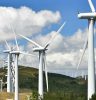
On trackOff trackIreland generates roughly a third of its electricity from wind, which puts it consistently in the global top ten by wind share and makes it one of the few countries where a genuinely weather-dependent grid is a daily operational reality rather than a modelling exercise.
That achievement is real and it is worth stating plainly, because the rest of this section is about what happens next. The constraint on Irish renewables has moved. It is no longer whether the turbines exist. It is whether the network can carry what they produce.
EirGrid's term for renewable output that is available but unused is dispatch-down, and it splits into two mechanisms. Constraint is local: a wind farm generates at full output, the transmission lines heading east are already full, and the turbines are turned down. Curtailment is system-wide: a minimum number of large conventional generators must stay online across the island to hold frequency and voltage, so even on a night when wind could theoretically supply everything, it is not permitted to.
In 2022, 8.5 per cent of the island's available wind was dispatched down. By 2024 it was 14 per cent. In the first half of 2026, EirGrid dispatched down 13.2 per cent of available wind in Ireland. Roughly one turbine in seven, on average, spins for nothing.
Did you know?
The larger share of curtailment in the Republic is attributable not to unreliable wind but to a system requirement: eight large synchronous generating units must run across the island — five in the Republic, three in Northern Ireland — to keep the grid stable.
Ireland is not throwing wind away because the wind is unreliable. It is throwing it away because the machinery that keeps the grid steady still runs on gas.
This matters to the built environment more than it might appear. Every argument for electrifying heat — heat pumps instead of oil boilers, direct electric instead of gas — assumes that the electricity arriving at the meter is getting cleaner. It is, but more slowly than the installed wind capacity suggests, and the gap between the two is a grid problem, not a buildings problem. Retrofit policy and transmission policy are the same policy.
Who does this work — verified categories
- Heat pump installersSEAI registered · heat loss assessment capable
- Solar PV installersSEAI registered · Safe Electric
- Building services engineersEngineers Ireland Chartered
The Dublin City Councillor and public transport advocate on demand-side decisions — and why what we build determines how much energy we need in the first place.
How Ireland certifies — and what the certificates leave out
Not measuredIreland has no national target for certified commercial buildings and no register that counts them. What exists instead is a set of international schemes, each with its own database, and a set of Irish numbers that nobody had assembled until we went and pulled them.
The BREEAM picture, taken directly from the BREEAM Projects database: 173 In-Use certified assets in Ireland once duplicate rows for Part 1 and Part 2 assessments are removed. That last clause matters — the raw export returns 182 rows, and the difference between the two figures is the difference between an accurate count and a repeated one.
The LEED picture is very nearly the inverse. Ireland has 294 LEED-certified projects, and around 85 per cent of them sit at Gold or Platinum — against roughly 10 per cent of the BREEAM stock at Excellent or above. Two schemes, one country, opposite distributions. The explanation is mostly about who chooses which scheme and why, and it is a better guide to the Irish commercial property market than either number alone.
Did you know?
In 2015, Dún Laoghaire–Rathdown County Council voted to require new homes in its area to meet the passive house standard or equivalent where reasonably practicable — among the first local authorities anywhere in the world to do so, and years ahead of national policy.
The vote met significant political resistance and the requirement was subsequently constrained by national planning guidance. The precedent stands regardless.
On the residential side, the picture is stronger. Ireland's passive house expertise is genuine and concentrated — but it is concentrated in new build, which is precisely where the national problem is smallest. The design capability that produces excellent new houses is not the same capability, and often not the same people, as the trade base required to deep-retrofit a 1970s bungalow without causing a moisture problem.
Who does this work — verified categories
- Sustainable architectsRIAI Environmental Accreditation · PHI Certified Designer
- Conservation-accredited architectsRIAI Grade I–III Conservation
- Sustainability consultantsBREEAM Assessor · LEED AP
- Thermal modellersNSAI registered
- Certified passive house tradespeoplePHI Certified Tradesperson
The recast EPBD is the regulatory pressure behind most of what happens next in Irish buildings — including the end of standalone fossil fuel boiler grants.
What we build with
Not measuredFourteen per cent of Ireland's national emissions are embodied in construction materials and the act of construction itself. There is no national cap on that figure, no mandatory whole-life carbon assessment for most projects, and no register recording it. It is the largest unmanaged number in the sector.
Two things make it urgent rather than merely interesting. The first is scale: Ireland has committed to roughly 300,000 new homes by 2031, plus the schools, hospitals, water infrastructure and grid reinforcement in the National Development Plan. Every one of those projects fixes its embodied carbon at the moment the materials are made.
The second is irreversibility. Operational emissions can be reduced later — you can always add insulation, swap a boiler, decarbonise the grid underneath a building. Embodied carbon is spent on day one and cannot be recovered. A building that is efficient to run but expensive to have built has already made its worst decision.
A deep retrofit produces roughly a quarter of the embodied carbon of an equivalent new build. On carbon grounds, the best building is almost always the one that already exists.
Cement is the specific pressure point. Cement production accounted for 4.6 per cent of Ireland's total national emissions in 2024, and roughly half of that is chemistry rather than fuel — the CO₂ released when limestone is broken down cannot be insulated away. Public projects now require a 30 per cent reduction in clinker content, and the industry is investing in ground granulated blast-furnace slag and, eventually, carbon capture.
Which brings the argument back round to the existing stock. Ireland's vacancy and dereliction problem is usually framed as a housing supply issue, and it is one. It is also the cheapest embodied carbon strategy available: the Croí Cónaithe Vacant Property Refurbishment Grant offers up to €50,000 for a property vacant two years or more, rising to €70,000 where it is certified derelict, and can be combined with SEAI energy grants on the same building. Bringing an empty building back into use answers a housing question and a carbon question with the same works.
Who does this work — verified categories
- Eco-materials suppliersEPD-backed product declarations
- Sustainability consultantsWhole-life carbon · LCA capability
- Conservation-accredited architectsRIAI Grade I–III Conservation
Where our coverage stops
We have not yet published original research on Irish embodied carbon — no equivalent of our BREEAM or wind datasets. The figures above are drawn from IGBC and UCD work rather than our own. It is the biggest gap in this cluster and the next piece we intend to build.
Biodiversity, and a deadline three weeks away
Off trackIreland's most recent Article 17 reporting to the European Commission found the great majority of EU-protected habitat assessments in unfavourable condition, with a substantial share actively deteriorating. That is the baseline against which everything else is now measured.
What has changed is the legal status of doing something about it. The EU Nature Restoration Regulation (EU) 2024/1991 came into force in August 2024. Because it is a regulation rather than a directive, it became law in every member state immediately, with no transposition step and no national discretion about whether to adopt it.
Ireland's draft National Restoration Plan, coordinated by the National Parks and Wildlife Service, is due with the European Commission by 1 September 2026. Public consultation on the draft closed on 1 July. A twelve-month dialogue with the Commission follows, a second consultation runs in 2027, and the final plan is due in September 2027.
For anyone designing or consenting a building in Ireland, the practical question is what this does to the process. The honest answer is that it is not yet clear — the plan will set restoration targets at habitat and ecosystem level rather than at planning-application level. But the direction is unambiguous, and the projects that will find the next five years easiest are the ones that appointed an ecologist at concept stage rather than at planning.
Did you know?
Swifts and several bat species in Ireland depend on the fabric of buildings rather than on trees or open ground. Renovation and insulation works routinely eliminate the cavities and eaves gaps they use, often without anyone realising a habitat has been removed.
Integrated swift bricks and bat access tiles cost very little, last the life of the building, and are invisible once installed. The barrier is almost never money. It is that nobody specified them.
Who does this work — verified categories
- EcologistsCIEEM Registered Practice
- Landscape architectsILI registered
- Hydrologists & SuDS specialistsEngineers Ireland · CIWEM
- ArboriculturistsArboricultural Association registered
What restoration looks like at street and site scale, from someone doing it rather than legislating for it.
Planning: a system mid-rebuild
BehindThe Planning and Development Act 2024 was signed into law in October 2024 and is the most substantial restructuring of Irish planning law since 2000. It is being commenced in phases, and at the time of writing that process is still incomplete — which means Ireland is currently operating two planning regimes in parallel.
What has already taken effect: An Bord Pleanála was restructured and renamed An Coimisiún Pleanála from 18 June 2025, separating decision-making from corporate governance and replacing the old board with a Chief Planning Commissioner, a Deputy and thirteen ordinary Commissioners. Judicial review provisions commenced from August 2025. The strategic and policy framework — including National Planning Statements, which replace the old section 28 Ministerial Guidelines — commenced in full in October 2025.
What has not: the consenting provisions. Decisions on permissions, appeals and approvals continue to be made under the Planning and Development Act 2000 until Part 4 of the 2024 Act is commenced. The name on the letterhead has changed; the law being applied to most applications has not.
Two things in the new Act matter particularly for anyone building sustainably. Statutory decision timelines are stricter for renewable energy and grid infrastructure, reflecting European requirements — relevant to every argument in section two. And National Planning Statements give the Minister a sharper instrument for directing local authorities than the guidelines they replace, which is the mechanism through which any future national position on biodiversity, embodied carbon or building standards would reach the development plan level.
Where our coverage stops
We have no standalone piece on Irish planning reform. Given that commencement is still running and that the consenting provisions are the ones most likely to change how projects are actually assessed, this is worth a dedicated article once Part 4 has a confirmed date.
The people who have to build it
BehindEvery target on this page is a labour question wearing a policy costume. Seventy-five thousand deep retrofits a year, fifty thousand homes a year, four hundred thousand heat pumps — all of it requires people with specific skills standing on specific sites.
Ireland's construction sector employs more than 177,600 people. A February 2026 skills report from Property Industry Ireland put the additional requirement at between 95,000 and 110,000 roles to meet the 2030 housing and infrastructure programme. The sector currently sits around 54,400 workers below its 2007 peak, and roughly 20 per cent of the existing workforce is expected to retire within the decade.
Government analysis has framed the same problem differently, estimating that widespread adoption of modern methods of construction would reduce the requirement by around 10,000 workers — roughly 69,000 new entrants rather than 79,000 — while shifting the mix away from bricklayers, plasterers and painters. Shortages already named include plumbers, electricians, steel erectors, roofers and insulation operatives.
The Construction Industry Federation disputes the framing. Its position has been that the industry has the workforce and the capability, and that what is missing is certainty — a reliable pipeline of funded, consented work, faster planning approvals and land ready to build on. Both accounts can be partly true, and the disagreement is worth watching rather than resolving, because it determines whether policy money goes into training or into planning capacity.
Did you know?
Passive house design capacity in Ireland substantially outstrips certified trade capacity. There are considerably more certified designers than certified tradespeople — a ratio that describes the whole national problem in miniature.
You can design a building to any standard you like. Someone still has to tape the membrane at the junction, and get it right, on a wet Tuesday.
Finding people who are actually qualified
This is why we built the Constructive Voices Find directory. Inclusion is based on verifiable third-party credentials rather than self-reported sustainability claims — PHI Certified Passive House Designer or Tradesperson, RIAI Environmental Accreditation, RIAI Conservation Grades I–III, CIEEM Registered Practice, NSAI Thermal Modeller registration, NSAI Agrément certification and SEAI registered status.
That filter is deliberately narrow, and it excludes firms doing genuinely good work who simply hold no accreditation. We think the trade-off is worth it. A directory that admits everyone who says they are sustainable is a directory that tells you nothing, and the credential registers are the only Irish datasets that can be independently checked.
Listing is free. Sponsorship sits at category or podcast level, and a sponsor must sell to a category rather than compete within it — a membrane manufacturer can support the airtightness contractors category, but cannot appear in it.
It looks different depending on where you stand
National figures conceal enormous regional variation, and in Ireland the variation is not the one people expect. A ratings cluster in Kildare, Meath and Dublin county — commuter-belt counties with the newest housing stock — while Leitrim and Cork city sit at the bottom. That is not a story about local ambition. It is a story about when the houses were built.
Dublin carries the certified commercial stock, most of the BREEAM and LEED assets, and the concentration of design practices. Cork has a different profile: a substantial public-sector and institutional building programme, an unusually active local authority position on climate, and a set of projects worth examining individually rather than in aggregate.
The towns are where the vacancy argument lives. Above-the-shop space sits empty across the country while the same country builds greenfield estates, and the Croí Cónaithe grant is the state's main attempt to change that equation. Cobh is a useful case study in what local action looks like when it is neither a capital-city showcase nor a rural anomaly — we covered it in A Sustainable Snapshot of Cobh.
Read the full piece Sustainable Building in Cork, Ireland: An Updated Report Twelve projects, the county's retrofit position, the BER band picture and the specific mechanisms behind Cork's sustainable building programme. Read the full piece Dublin Top Green Buildings and Their Architects The capital's flagship sustainable buildings and the practices behind them.What to watch
Five things will tell you, before the end of 2027, whether the trajectory on this page has changed.
The pattern across all of this is consistent enough to state as a conclusion. Ireland is good at the new and slow at the existing. New buildings are excellent; the 2.1 million we already have are the problem. New wind farms went up fast; the wires to carry their output did not. New regulation arrives on time; the delivery capacity to act on it does not.
None of that is a reason for pessimism. It is a reasonably precise description of where effort would do the most good.
The full picture
Everything in this series
Articles and episodes · Ireland · Updated August 2026
Energy
Dispatch-down, offshore delays, port capacity and what 2022's promises actually delivered.
Podcast — demand-side decisions and the buildings-transport connection.
Retrofit and the existing stock
Grants, One Stop Shops and what a deep retrofit involves in practice.
Damp, cold, respiratory health and the non-carbon case for upgrading.
Podcast — the Director of National Retrofit on delivery capacity.
Certification and standards
Every Irish BREEAM In-Use certificate, ranked, with the deduplication shown.
LEED, heat pumps and passive house measured against European comparators.
Podcast — the European regulation driving Irish building standards.
Biodiversity and nature
Article 17 status, the Nature Restoration Regulation, case studies and a practical checklist.
The species baseline behind the policy.
Podcast — restoration at street and site scale.
Podcast — the emerging market mechanism behind restoration finance.
Places
Twelve projects, the county retrofit position and Cork's delivery mechanisms.
The capital's flagship sustainable buildings.
Podcast — what climate action looks like in an Irish town.
Podcast — twenty years of a built community experiment.
Find a verified professional
Credential-verified professionals across Ireland. Free to list, verified to appear.
Design & consultancySustainable architects · Conservation-accredited architects · Landscape architects · Sustainability consultants · Building services engineers · Structural engineers · Thermal modellers · Quantity surveyors
Assessment & ecologyBER assessors · Ecologists · Arboriculturists · Hydrologists & SuDS specialists · Airtightness testers · Thermographers
Retrofit & contractingOne Stop Shops · Deep retrofit contractors · External wall insulation contractors · Internal insulation & dry lining · Airtightness contractors · Certified passive house tradespeople · Sustainable builders
Systems & supplyHeat pump installers · MVHR & ventilation specialists · Solar PV installers · Windows & doors · Eco-materials suppliers · Rainwater & greywater systems
SkillsTraining providers · Passive house academies · Apprenticeship & upskilling routes
Categories are populated county by county. Dublin and Cork are furthest along. If you hold a relevant credential and are not listed, tell us.
Verified rather than reported
Constructive Voices checks claims against primary sources — CSO statistical releases, SEAI and departmental reporting, EirGrid operational data, EU legal instruments and the certifying institutes themselves — rather than repeating figures in circulation. Every number on this page traces back to a named source in the list below. Figures we could not stand up have been left out.
Where sources disagree, we say so rather than picking one. The 2026 retrofit allocation is reported at €640 million by SEAI and the Department as the total Budget 2026 provision; a smaller figure circulates for the residential upgrade sub-allocation specifically. Where a number is our own analysis rather than a published statistic — the BREEAM and LEED counts — the method is shown in the linked article.
This is the hub of our Ireland series and a living document, reviewed annually. Retrofit completions, dispatch-down percentages, certificate counts and workforce figures will all move within twelve months. If a figure here is wrong, or a project belongs in this record and is missing, get in touch.
Sources
- Central Statistics Office, Domestic Building Energy Ratings, Quarter 1 2026 — national A/B/C distribution, county shares, space heating fuel, heat pump penetration and multiple-assessment improvements (Tables 2, 4, 8, 9, 14 and 15).
- Central Statistics Office, Domestic Building Energy Ratings, Quarter 4 2025 — comparative quarter for renewables penetration. Underlying open data: EBQ02 and EBA02.
- Irish Green Building Council, Building a Zero Carbon Ireland — the 37 per cent figure and its 23/14 operational-embodied split, modelled by the Building in a Climate Emergency Research Lab at the UCD School of Architecture (full report, PDF).
- Irish Green Building Council, Building a Zero Carbon Ireland: Industry Insights & Actions — progress against the roadmap three years on, and the cement and clinker position.
- Sustainable Energy Authority of Ireland, National Retrofit Plan full-year reporting, and Department of Climate, Energy and the Environment announcements — B2 upgrade counts, heat pump installations, annual delivery and the 2026 allocation. Scheme detail: SEAI home energy grants.
- Department of Housing, Local Government and Heritage, public consultation on Ireland’s draft National Nature Restoration Plan — submission timetable to the European Commission. Conservation status baseline: NPWS Article 17 reporting.
- Regulation (EU) 2024/1991 on nature restoration — the legal instrument behind the 2030, 2040 and 2050 restoration obligations.
- Property Industry Ireland / Ibec construction skills report, February 2026, as reported by The Irish Times — workforce size, additional requirement and retirement profile. The Construction Industry Federation’s dissenting position is noted in the text.
- EirGrid dispatch-down reporting — constraint and curtailment percentages. The full series and method are set out in our wind article.
- BREEAM Projects database (tools.breeam.com) and the GBCI LEED project directory — certificate and project counts, deduplicated. Our own analysis; method shown in the linked articles.
- Planning and Development Act 2024 and associated commencement orders — the restructuring of An Coimisiún Pleanála and the phased commencement position.
COLOPHON — Colour system derived from a four-state delivery verdict — on track, behind, off track, not measured — and used functionally throughout rather than decoratively. Type set in Bricolage Grotesque, Newsreader and IBM Plex Mono. All external links open in a new tab. Figures were verified against source at the date of publication; BER data, retrofit reporting, certification registers and grant rates are revised periodically, and readers should check the underlying sources for the current position. Claims in circulation that could not be verified against a primary source have been omitted rather than caveated.