

좋은 소식: 아일랜드의 지속 가능성, 소형 숲 및 개보수를 바라보는 새로운 방식

원래 게시 됨 · 최종 업데이트

좋은 소식: 아일랜드의 지속 가능성, 소형 숲 및 개보수를 바라보는 새로운 방식

Constructive Voices Good News 팟캐스트의 이번 고무적인 에디션에서는 건축 환경에서 나온 짧고 강렬한 긍정적인 이야기와 함께 보존에 대한 영감을 전해드리겠습니다.
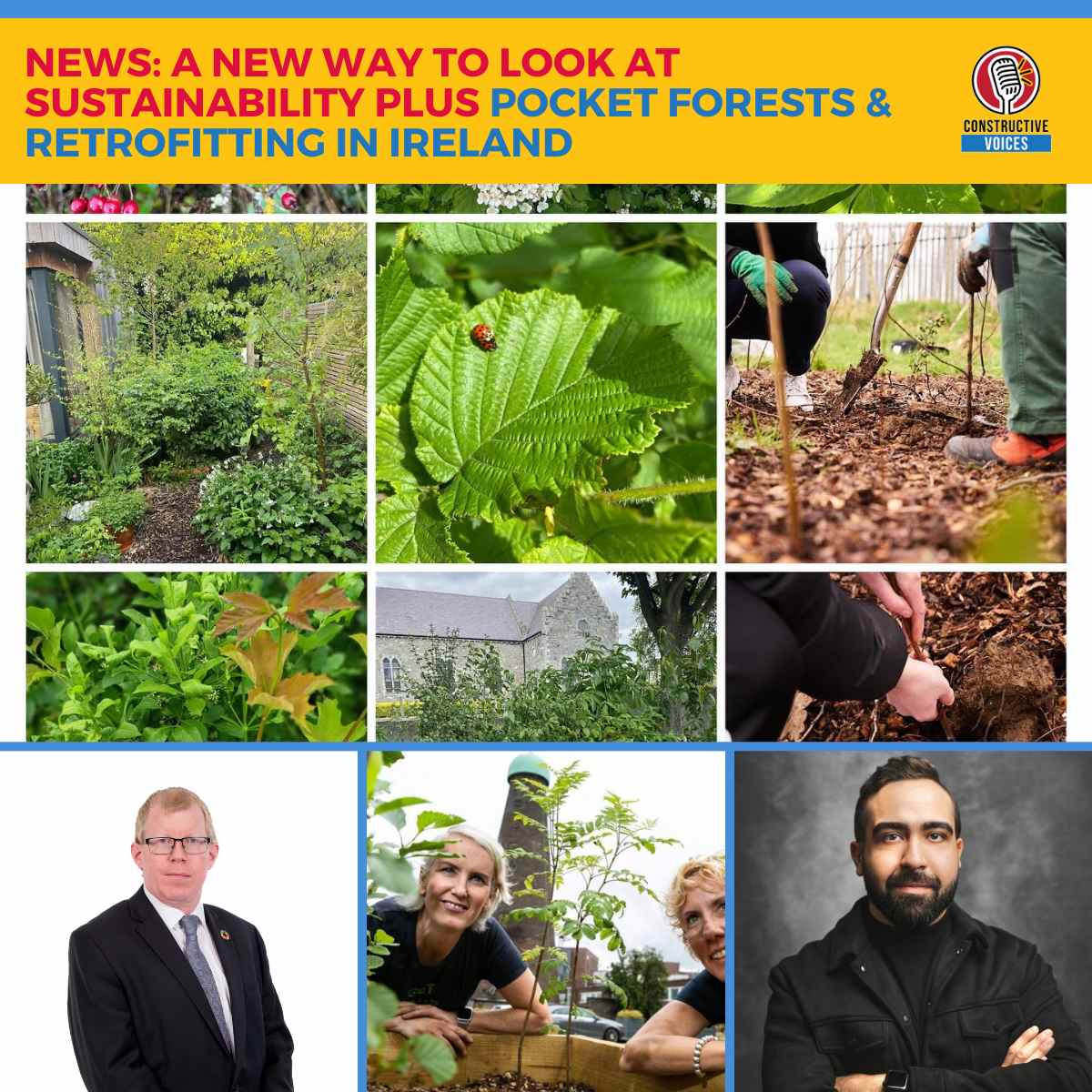
좋은 소식: 아일랜드의 지속 가능성과 소규모 숲, 그리고 개보수를 바라보는 새로운 방식


6분 이내에 시청하고 배우고 긍정적인 감정을 느껴보세요

지속 가능성을 바라보는 새로운 방식: 신경 지속 가능성

우리는 지구를 보호하는 것만큼이나 우리의 정신을 보호하는 것과도 관련된 매혹적인 개념, 바로 신경지속가능성으로 시작합니다. 진행자 재키 드 부르카는 케임브리지 대학교에서 선구적인 연구를 통해 신경지속가능성을 탐구하는 모하메드 헤샴 칼릴과 이야기를 나눕니다. 건축 환경 affects our brain health, mental wellbeing, and cognitive performance.

“That shift… from experiencing the built environment in a specific way and then going back was an alert to start seeing this relationship between the built environment and the human brain.” — 모하메드 헤샴 칼릴

Discover how architecture, neuroscience, and nature intersect — and why this matters more than ever post-lockdown.

모하메드 헤샴 칼릴

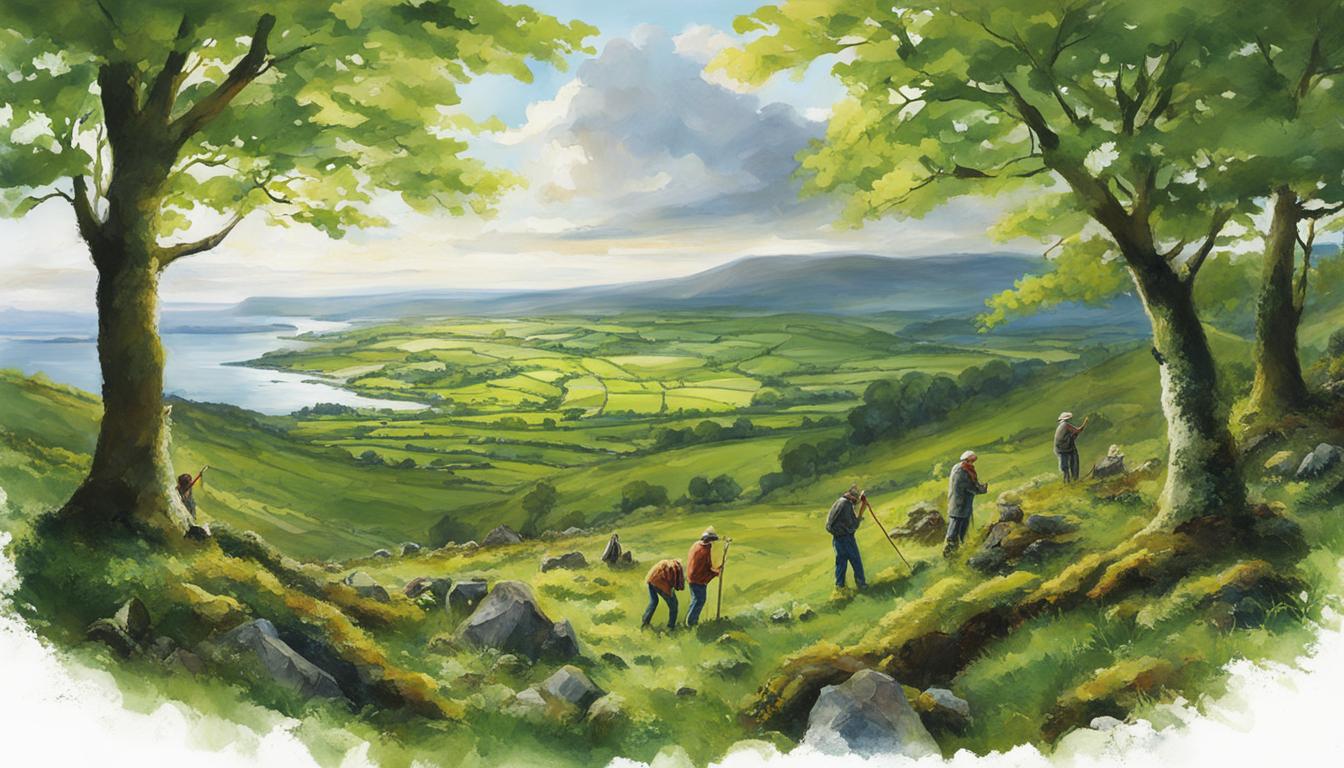
아일랜드를 푸르게 만들기: 소형 숲

Next, volunteer reporter Sarah Austin speaks with Catherine Cleary, co-founder of Pocket Forests, about transforming small urban spaces into thriving native woodlands. With over 125 sites planted — from car-parking-space-sized micro-forests to half–tennis-court plots — these dense plantings are changing soil health, 생물 다양성및 지역 사회와의 연결.

“우리는 훨씬 더 어린 나무들을 심고 있습니다… 훨씬 더 가깝게… 그 결과, 그들은 매우 빠르게 이러한 미기후를 만들어냅니다.” — 캐서린 클리어리

자세한 내용을 알아보려면 특별 에피소드를 확인하세요. 우리 웹사이트에서 소규모 숲에서 토착림까지 아일랜드를 푸르게 가꾸는 방법을 알아보세요.

포켓 포레스트(Pocket Forests) 설립자 캐서린 클리어리(Catherine Cleary)와 애시 콘래드-존스(Ashe Conrad-Jones)

캐서린 클리어리와 애쉬 콘래드-존스, 포켓 포레스트의 창립자.
이미지는 Pocket Forests에서 제공되었습니다.

아일랜드의 재건축 추진력

We round things off with encouraging retrofitting news: in early 2025, Ireland saw 11,910 home energy upgrades supported through government grants — a 2% rise from the previous year.

These upgrades avoided 15,000 tonnes of CO₂ emissions, reinforcing Ireland’s national push toward energy efficiency and climate action.

Bookmark this page to check for the podcast episode that deep dives into this topic with Dr. Ciaran Byrne, the Director of National Retrofit at Sustainable Energy Authority of Ireland (SEAI).

관련 팟캐스트 놓치지 마세요

성적 증명서 

본 내용은 디지털로 생성되었으며 오류가 있을 수 있습니다.

[00:00:00] Speaker A: This is Constructive Voices. Constructive Voices, the podcast for the construction people with news, views and expert interviews.

[00:00:10] Jackie De Burca: Hi there, this is Jackie De Burca for the Constructive Voices Good News podcast. A short, sharp burst of uplifting stories from the built environment with a side of conservation. We’re hoping to light up your day with some really interesting news about a new way of thinking about sustainability. In fact, it’s one that’s not just about protecting the planet, but also about protecting our minds.

It’s called neurosustainability, a concept linking environmental conservation with brain health. As you may know, research shows that spending time in nature can have profound effects on our mental and cognitive well being, something many of us felt firsthand during the COVID 19 lockdowns.

최근 모하메드 헤샴 칼릴과 이야기를 나누었습니다. 그는 이 개념을 선도하고 있으며, 이에 대해 여러 논문을 썼습니다. 그와의 인터뷰 중 이 개념에 대해 간략하게 설명하는 부분을 잘라서 다시 말씀드리겠습니다. 모하메드의 글이 끝난 후, 아일랜드의 소규모 숲과 도시 재생에 대한 좋은 소식이 있으니 놓치지 마세요.

[00:01:10] 스피커 A: 여기는 Constructive Voices입니다.

[00:01:13] Jackie De Burca: 신경과학과 건축의 교차점을 탐구하게 된 첫 계기는 무엇이었나요?

[00:01:19] Mohamed Hesham Khalil: It was during lockdown, to be honest, when I started seeing so many people feeling more depressed and having higher levels of anxiety. That was sparked to something that it is something about the built environment and especially that some people have sustained those symptoms even after lockdown. So that shift, like from experiencing the belt environment in a specific way and then going back was an alert to start seeing this relationship between the built environment and the human brain. Because I know that it is associated with mental health and cognitive performance was really the motivation.

석사 과정에서 이 주제를 탐구하기 시작했는데, 건축과 신경과학, 특히 응용 신경과학을 아우르는 학제적 접근이었습니다.

And then that was the departure point based on which I started doing my PhD at the University of Cambridge to explore this impact of the built environment on neuroplasticity in more depth.

[00:02:31] 스피커 A: 여기는 Constructive Voices입니다.

[00:02:33] Jackie De Burca: Mohamed의 소식을 들으니 반갑습니다. 2025년 XNUMX월에 공개될 이 주제를 중심으로 저희가 제작하는 시리즈와 함께 전체 에피소드를 기대해 주세요. 그 이후에 이 에피소드를 들으시는 분들은 좋아하는 팟캐스트 앱을 이용하시거나 Constructive Voices 웹사이트(constructive hyphen voices.com)를 방문해 주세요. 여기는 Constructive Voices입니다.

[00:02:57] Sarah Austin: 지금까지 이런 포켓 숲을 몇 개나 만들었나요?

[00:03:02] Catherine Cleary: We’re up to about 125 at the moment. I think some of them will be Extremely small, the size of a single car parking space and others would be larger. Our largest is about 100 square meters, which is roughly half a tennis court.

[00:03:18] Sarah Austin: 와. 그럼 포켓 숲이 뭔지 모르는 분들을 위해 말씀드리자면, 일반 도시 정원이나 집이나 학교에 있는 화단과는 어떻게 다른가요?

[00:03:28] Catherine Cleary: Yeah, it’s really interesting to kind of discover what the traditions of urban landscaping are. So we traditionally do a lot of grass, so we will call a green space, a green space when there’s very thin soil and just a layer of grass and then that’s usually mown to within an inch of its life over the summertime, although no mamey is happening. And then with tree planting they tend to be planted widely spaced lone trees with those grassy areas in between them. There are various reasons given for this.

Cyclones, certain local authorities and, and people aren’t, some are, aren’t very happy at the idea of not being able to see what’s happening everywhere in every, every public space. So what we do looks very different to that. We’re planting much younger trees than would normally be planted. They’re only two year old whips, so they’re very small, planted in winter time and planted much more closely together about 3 per square meter, which would be very dense compared to traditional landscaping in cities. But the result is that they create this microclimate very quickly the soil changes and we do a little bit of that work before we plant anything as well. That’s part of the pocket forest difference, I suppose. We do a soil preparation workshop with communities.

[00:04:38] 스피커 A: 여기는 Constructive Voices입니다.

[00:04:40] Jackie De Burca: 저희 웹사이트에 방문하시면 "캐서린 클리어리와 함께하는 아일랜드의 작은 숲에서 자연림으로"라는 제목의 글을 보실 수 있습니다. 이 글은 Constructive Voices 자원봉사자 중 한 명인 사라 오스틴이 작성했는데, 정말 훌륭한 작업을 해내셨습니다. 정말 감사합니다, 사라. 감사합니다. 이제 아일랜드의 도시 재개발에 대한 짧은 글을 쓰겠습니다. 전체 에피소드는 2025년 XNUMX월에 나올 예정입니다.

[00:05:05] 발표자 A: 건설적인 목소리입니다.

[00:05:07] 마크: 7년 2025월 11,910일, 아일랜드 지속가능에너지청(SEAI)은 분기 보고서를 발표했는데, 2025년 첫 2개월 동안 정부 보조금 제도를 통해 2024건의 주택 에너지 개선 사업이 지원되었으며, 이는 같은 기간 대비 76% 증가한 수치입니다. 4년 정부 지출은 XNUMX만 유로로 XNUMX% 증가했습니다.

5,100채 이상의 주택이 BER B2 등급 이상으로 업그레이드되었습니다.

에너지 빈곤층 1,350가구가 무료 업그레이드를 받았는데, 이는 14% 증가한 수치이며, 이산화탄소 배출량을 15,000% 감축하여 전국적인 에너지 개량 추진을 더욱 강화했습니다. 이것으로 오늘의 Constructive Voices 긍정적 뉴스 업데이트를 마무리합니다.

[00:05:53] 스피커 A: 여기는 Constructive Voices입니다.

댓글 2

코멘트 남김

귀하의 이메일 주소는 공개되지 않습니다.