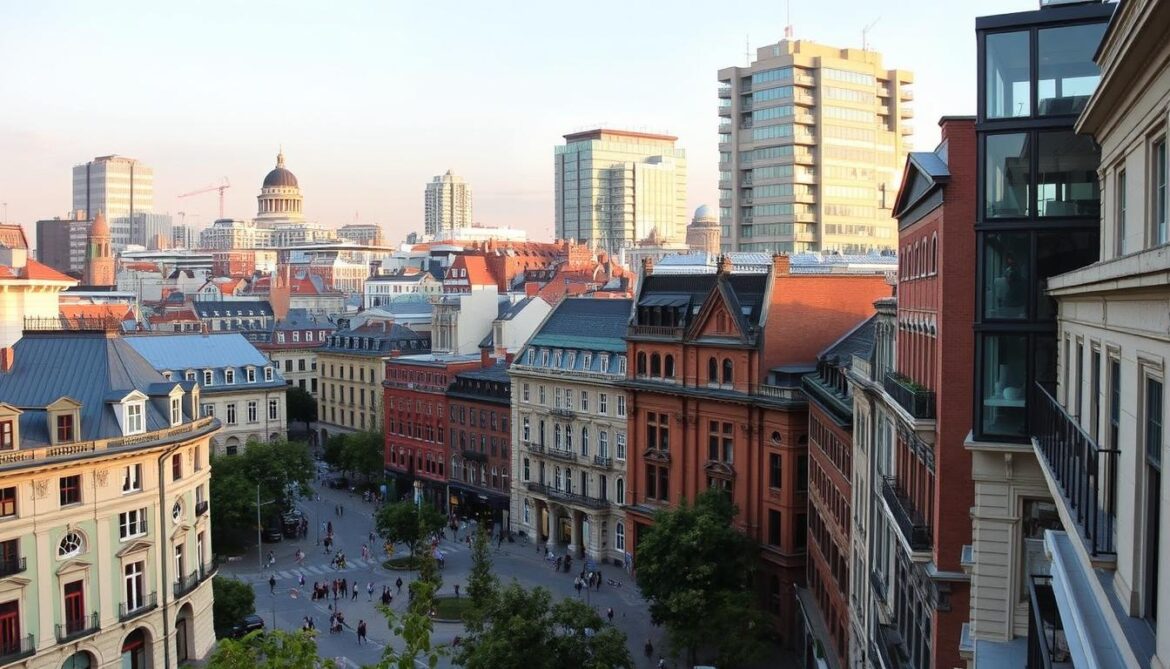
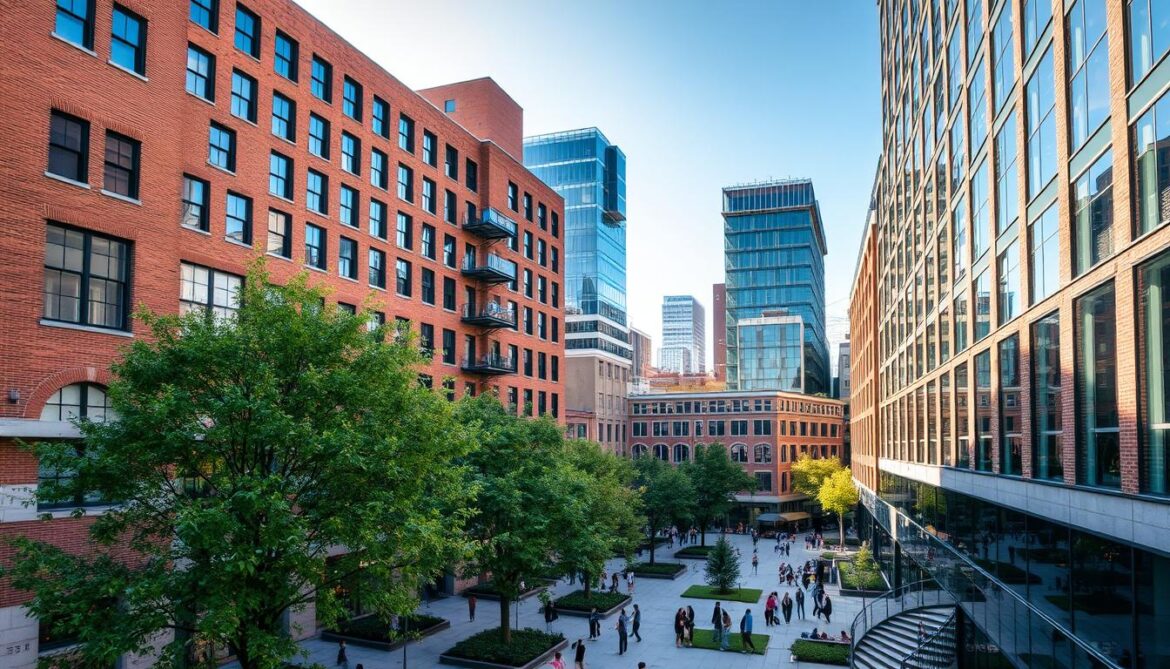
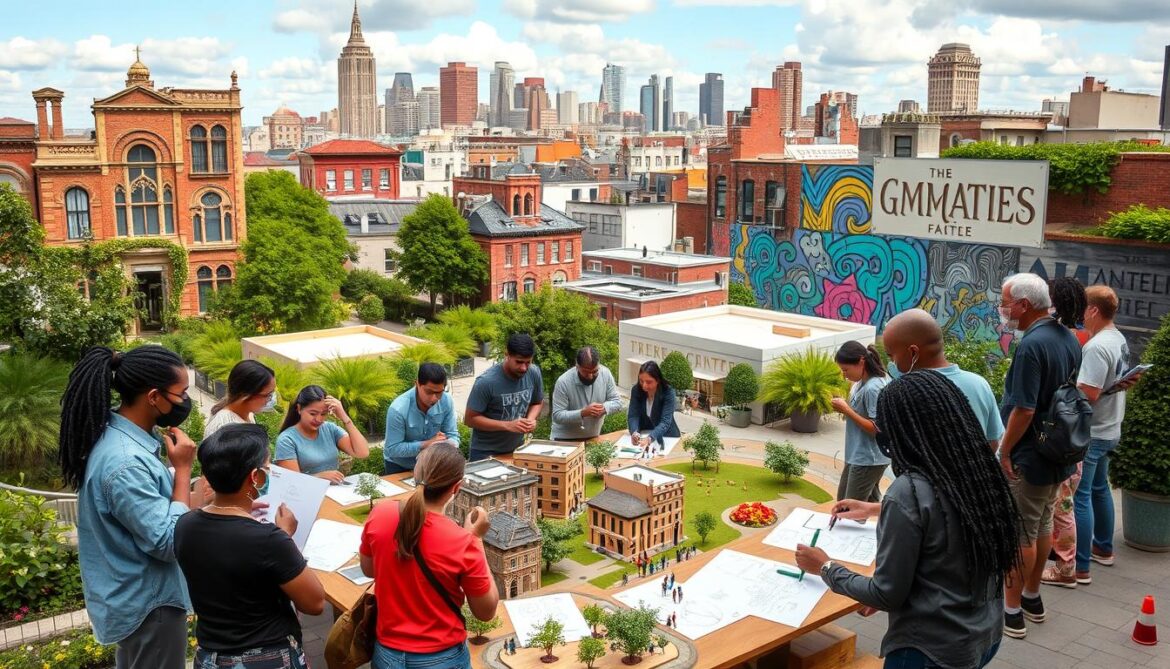
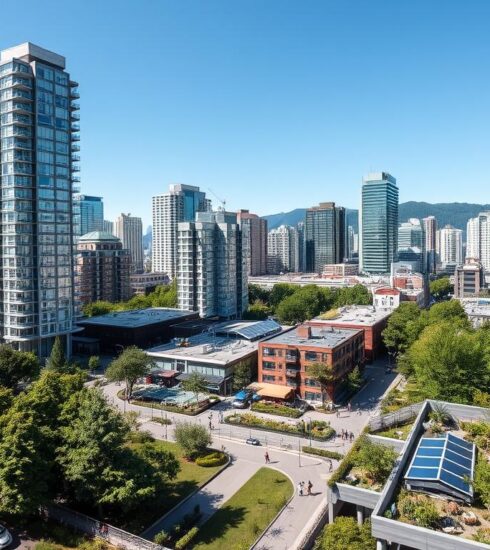
The essence of a city lies not just in its modern architecture or bustling streets, but in the intricate tapestry of its urban fabric. This fabric, woven with threads of history, culture, and innovation, shapes the character and identity of a place. Urban design plays a crucial role in preserving the past while adapting to the present and future needs of a city1.
The analogy of a city as a grand tapestry is a powerful one, for each thread – be it a landmark building, a bustling public square, or a network of pedestrian-friendly streets – is intricately woven into the larger urban fabric. Understanding and respecting this intricate web of elements is essential for cities seeking to undergo sustainable development, ensuring that the rich history and cultural identity of a place are not lost in the pursuit of progress1.
不同時代的獨特挑戰和文化影響塑造了城市設計的演變3。例如,在戰後時期,以汽車為導向的城市規劃導致了高交通量和空氣污染,凸顯了採取更永續和以人為本的方法的必要性2. Similarly, the High Line project in New York City demonstrated how the repurposing of abandoned infrastructure can transform urban spaces and foster community engagement2。在全球範圍內,哥倫比亞麥德林等城市展示了策略性城市設計措施在改善居民生活品質方面的力量2.
As cities continue to grow and evolve, urban design plays a crucial role in addressing complex challenges, from social inequality and housing shortages to environmental sustainability2。透過從歷史先例中汲取靈感並適應當代需求,城市規劃者和設計師努力創造充滿活力、宜居和文化豐富的城市環境,在保留城市遺產精髓的同時滿足現代世界的需求。
The built environment of our cities is a tapestry woven with threads of history, each architectural style a unique narrative that has shaped the urban landscape. From the grandeur of Victorian marvels to the minimalism of Modernist movements, these iconic designs have left an indelible mark on our 建築遺產.
高聳的大教堂和裝飾著複雜石雕和高聳尖塔的宏偉市政建築長期以來一直是許多歐洲城市的標誌性特徵9. Stonehenge in England, a prehistoric stone circle, showcases ancient construction techniques and mystery, while cliff dwellings like those in Mesa Verde, Colorado, illustrate early 可持續設計 實踐9。法國圖盧茲的聖塞爾寧大教堂(Basilica of St. Sernin) 建於1070 年至1120 年間,是哥德式建築經久不衰的魅力的證明,它的尖拱和肋拱頂讓所有看到它的人都感到敬畏和驚嘆。
將歷史元素融入新的城市發展中可以創造新舊的和諧融合,在保留城市文化遺產的同時滿足現代需求11。歷史建築和景觀在培養集體記憶和保護城市空間文化遺產方面發揮著至關重要的作用11。基於保護的經濟適用住房項目利用現有結構來降低建築成本並解決住房負擔能力問題11。一個著名的例子是澳大利亞墨爾本的 Council House 2,該建築因其可持續設計和對週邊社區的影響而於 2005 年獲得六星綠色之星評級10.
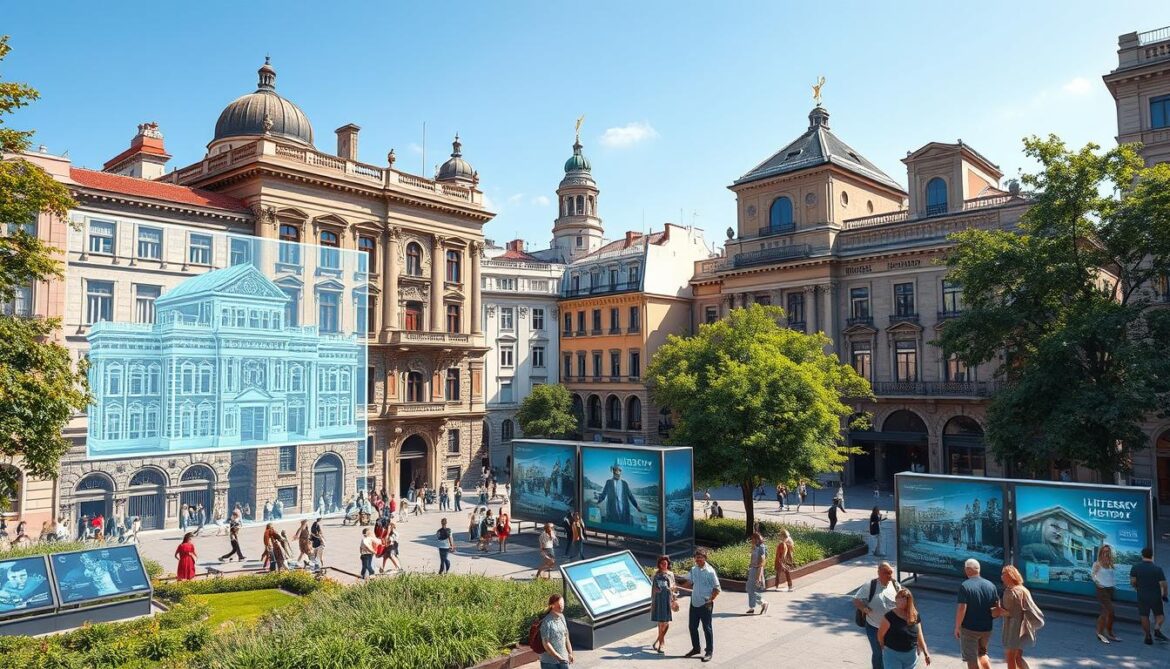
創新技術正在改變我們保護歷史的方式15。建築資訊模型(BIM)、雷射掃描、3D列印提高了歷史建築修復的準確性和可行性15。雷射掃描提供詳細的 3D 模型,用於評估建築狀況和規劃修復工作,而 3D 列印則可以精確複製建築元素以修復受損結構15。配備先進攝影機和感測器的無人機可提供詳細的空拍鏡頭,從而可以對歷史遺址進行非侵入性評估15。虛擬和擴增實境技術進一步增強了保護項目和公眾參與的可視化。
智慧城市和遺產管理
科技與城市設計的融合也徹底改變了我們管理和保護文化遺產的方式16. Smart cities utilise digital technology and data-driven solutions to enhance residents’ quality of life and improve service efficiency16。利用物聯網(IoT)、大數據和人工智慧(AI)即時管理資源、交通、基礎設施和公共服務,同時支援文化遺產的保護16。 3D掃描、攝影測量和虛擬實境(VR)等先進技術可以數位化記錄和保護文化遺產,為遊客提供互動和身臨其境的體驗16。物聯網感測器可以監測結構健康狀況、環境條件和遊客流量,以預測和防止損壞,而大數據分析則可以為遺產保護中的數據驅動決策提供信息16.
As one of the oldest continuously inhabited cities in the world, Rome faces the unique challenge of harmonising its ancient history with the demands of contemporary urban living24。該市實施了各種策略來保護其豐富的歷史遺跡,如羅馬競技場、羅馬廣場和萬神殿,同時也考慮到永續發展和現代建築元素的融合。羅馬在保護其豐富的文化遺產和適應 21 世紀城市的需求之間取得了微妙的平衡,為其他努力應對城市遺產保護複雜性的城市樹立了榜樣。
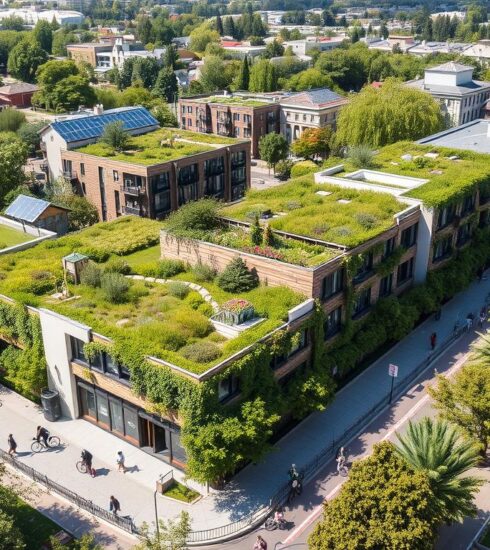
隨著世界日益城市化,將現代元素無縫融入歷史環境的需求比以往任何時候都更加重要25. Smart city initiatives, which leverage technology to enhance liveability and sustainability, are proving vital in maintaining the relevance of urban heritage. By incorporating energy-efficient technologies into historical buildings, cities can reduce their carbon footprint while preserving the architectural integrity of the past25.