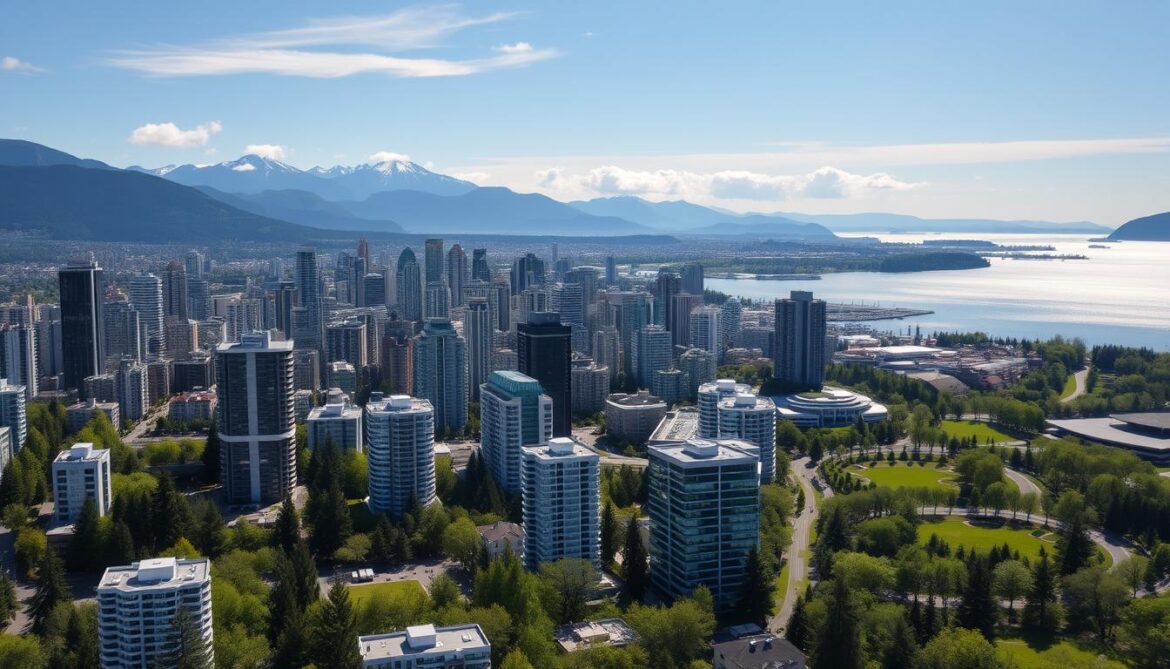
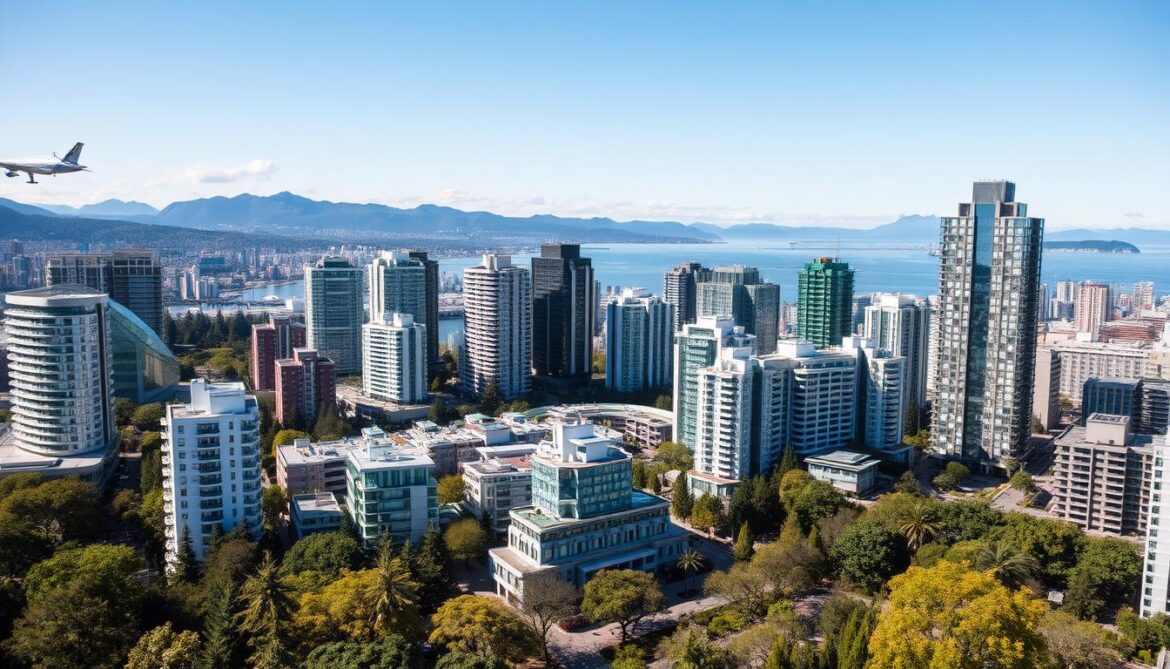
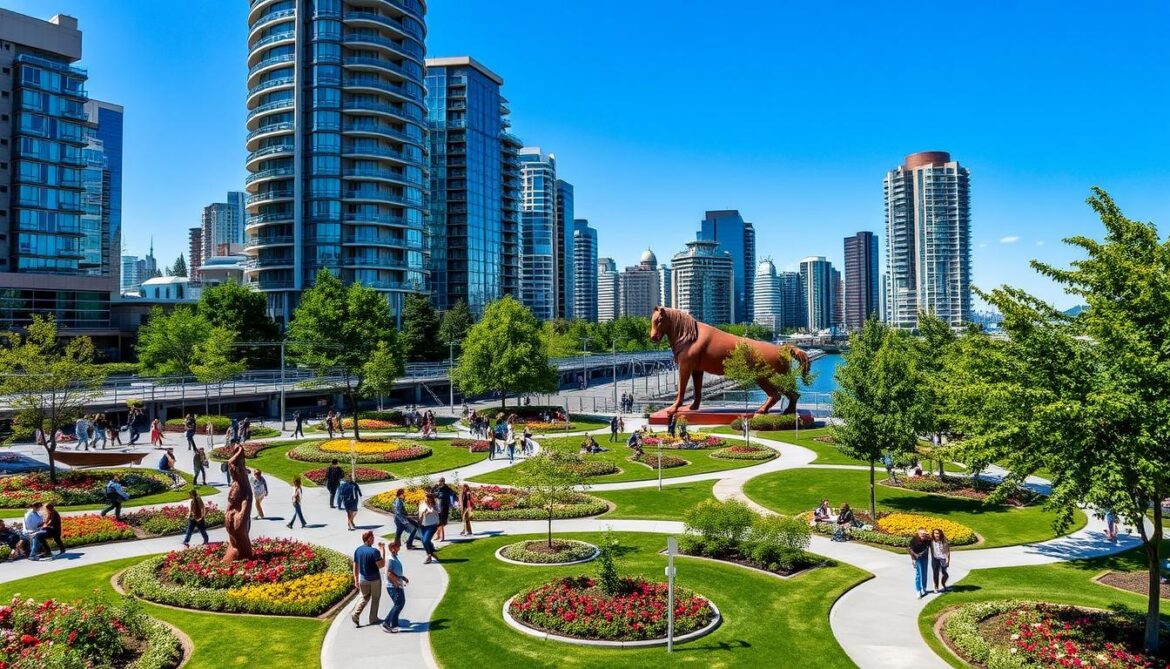
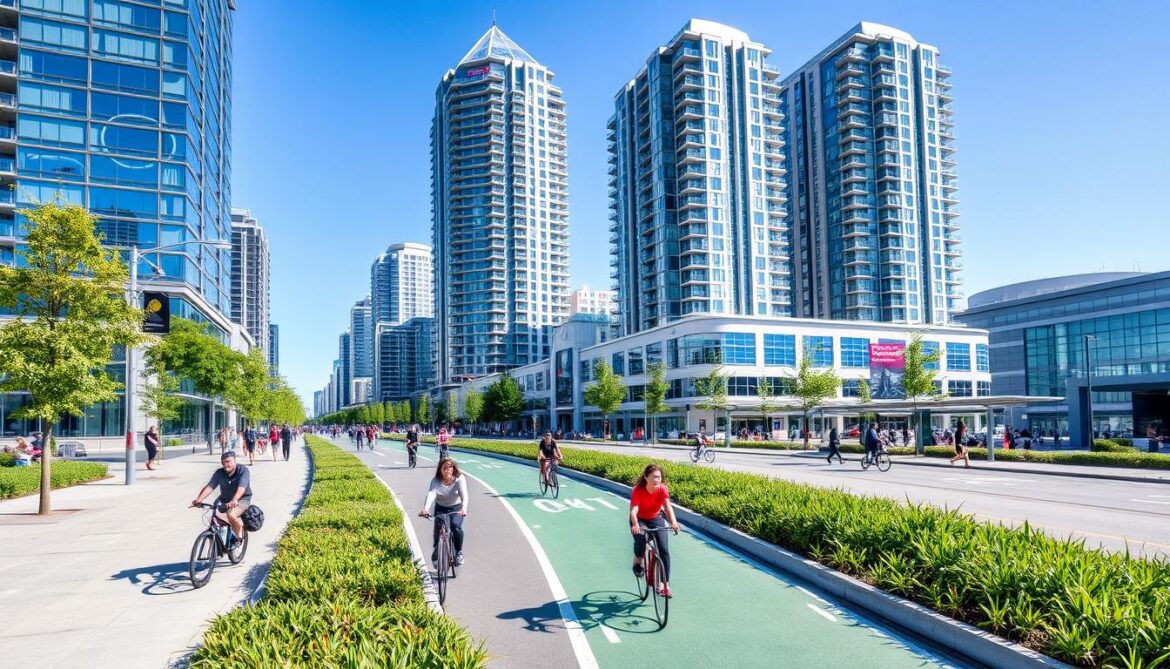
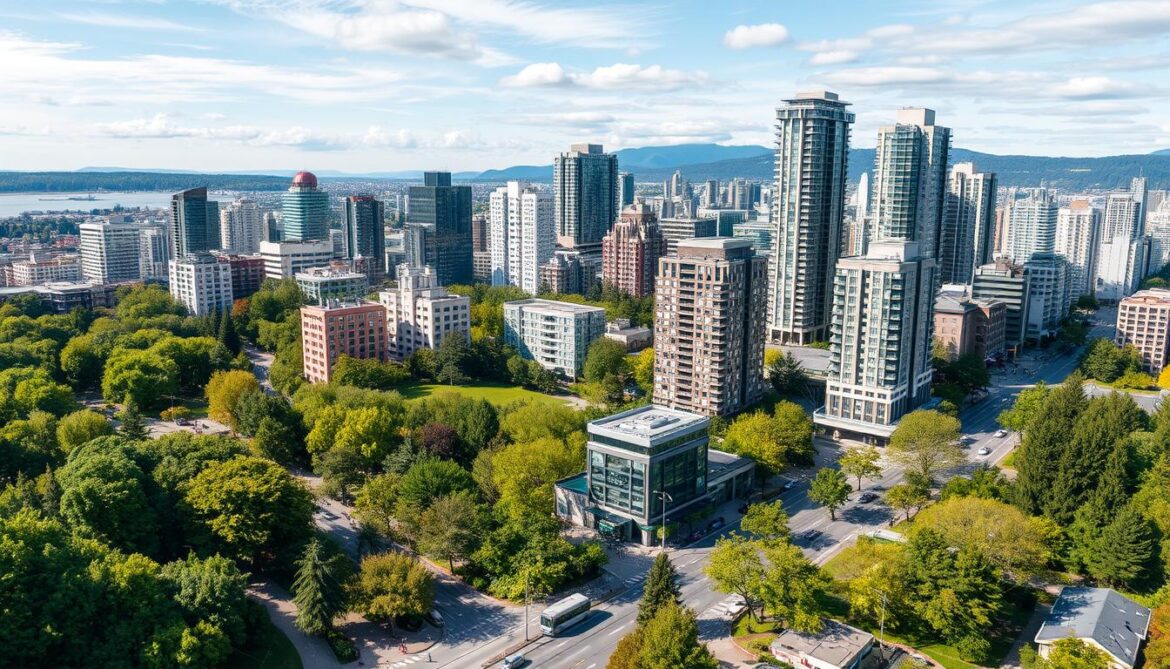
Vancouver, a city renowned for its stunning natural landscapes and progressive urban planning, is a veritable tapestry of architectural marvels and 可持續設計. As one navigates through its streets, the skyline is punctuated by towering glass-and-steel skyscrapers, while hidden amongst the urban fabric lie tranquil greenways and trails that seamlessly blend the built environment with the great outdoors1.
This dynamic interplay between modernity and nature is a hallmark of Vancouver’s urban design, which has earned the city accolades for its livability, sustainability, and inclusive development policies. Driven by a civic culture that values local democratic processes and community engagement, Vancouver’s urban landscape showcases a remarkable balance between the high-density cityscape and the verdant natural oases that permeate its neighbourhoods1.
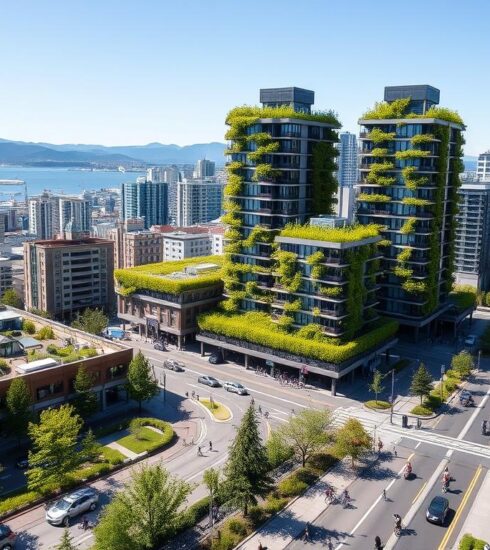
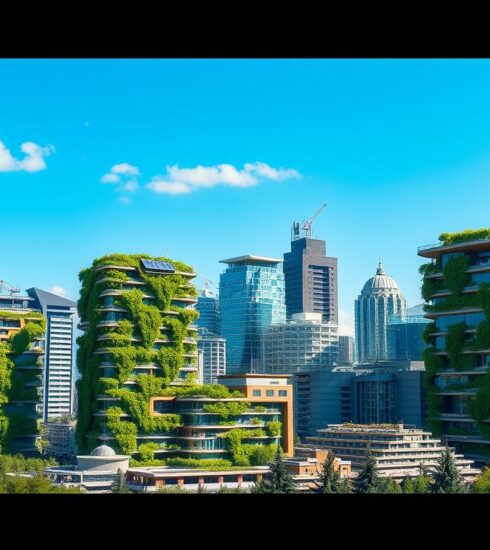
溫哥華展望未來,城市設計的重點是創造一個更具彈性和永續發展的環境 溫哥華城市的未來. Key trends shaping the next decade include increased densification, climate change adaptation, and the integration of nature-based solutions16。城市研究專業是不列顛哥倫比亞省首個此類項目,是在不列顛哥倫比亞大學 (UBC) 現有城市研究輔修課程成功的基礎上,為了滿足日益增長的城市研究需求而設立的。16。該計畫提供五個不同的專業領域,包括本土城市未來、城市本質、全球化城市、技術與城市以及城市與社區,讓學生全面了解城市中心面臨的多方面挑戰和機會。
塑造未來十年的趨勢
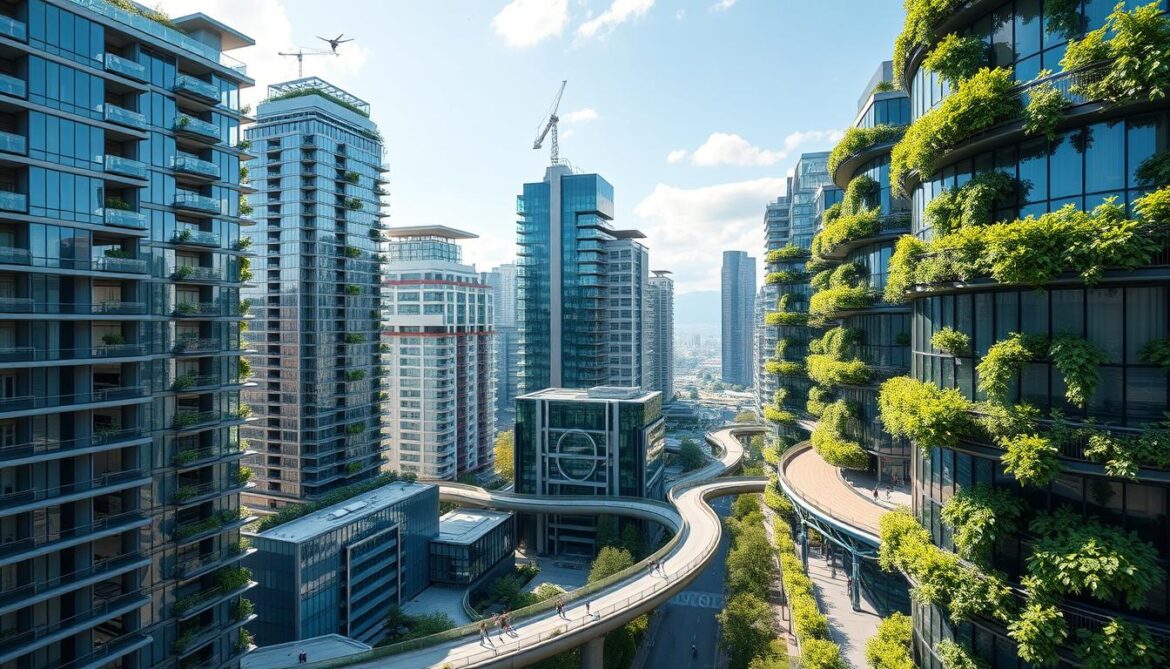
As 城市發展趨勢 隨著溫哥華市不斷發展,溫哥華市正在應對住房負擔能力和社會包容性等挑戰。基於自然的解決方案的整合,例如溫哥華美術館的新提案,是該市正在努力的一種方式 彈性城市設計17。低調的建築具有連續且可滲透的街道正面,旨在密集和激活公共領域,而高層建築則旨在表達其內在生活,並通過大量的退縮和懸挑來回應當地的氣候,創造有蓋和開放的露台不同層次的空間17.