




Ukuguqula iMihlaba: IQush Tepa Canal kunye ne-Ecosystems yase-Afghanistan yaseMantla
- admin
- Matshi 6, 2025
Ukuguqula iMihlaba: IQush Tepa Canal kunye ne-Ecosystems yase-Afghanistan yaseMantla
Existing Ecosystems and Regional Landscape
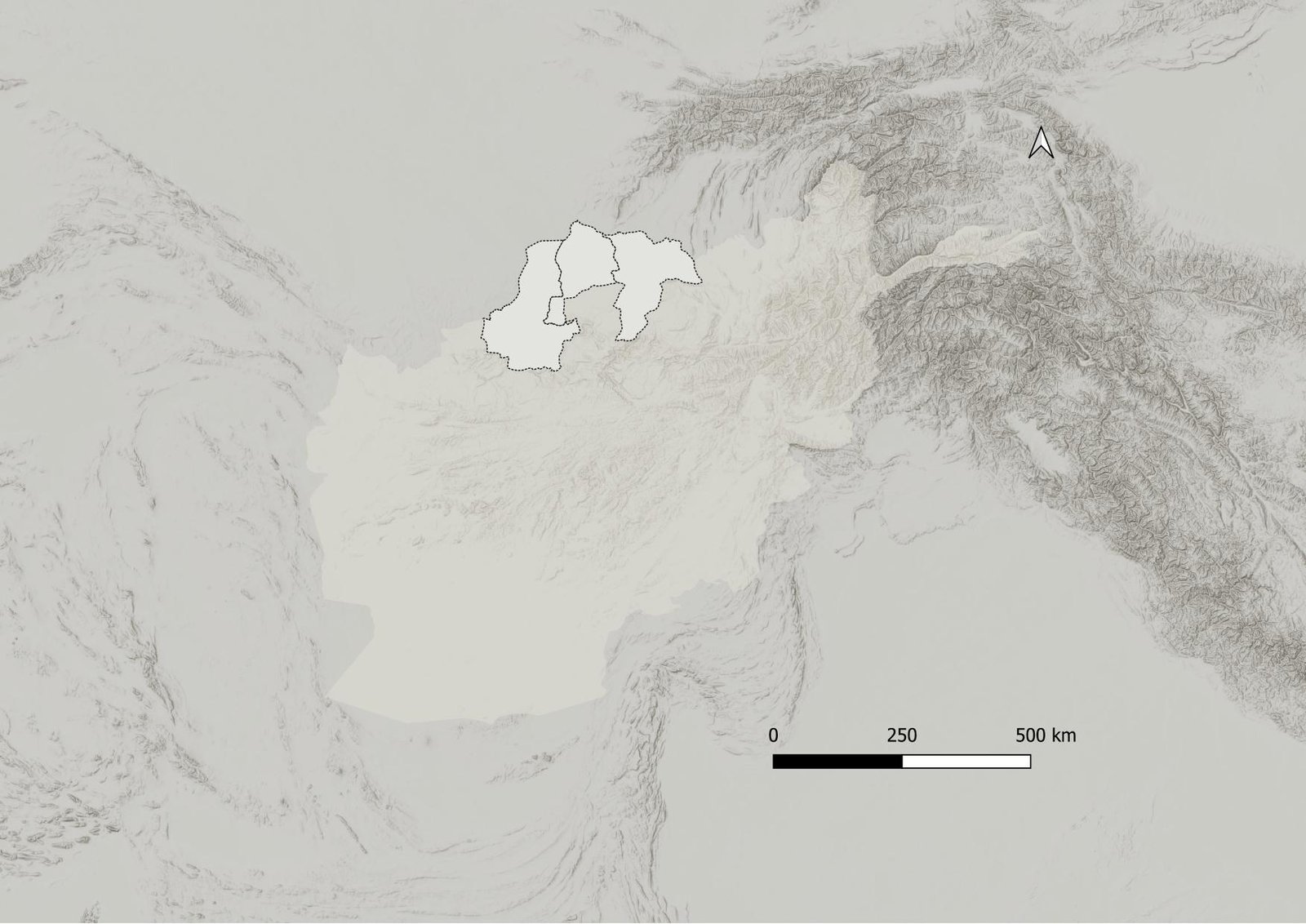
ngasentla Afghanistani is a land of contrasts. From vast deserts and fertile deltas to mountain-fed rivers and scattered wetlands, the region is undergoing significant changes. The Regional Landscape study assesses the impact of the Qush Tepa Canal on Mazar-e-Sharif, Andkhoi, and Sheberghan by examining the interplay between various ecosystems that shape the region. This analysis considers both internal and external forces that have defined the landscape over time.
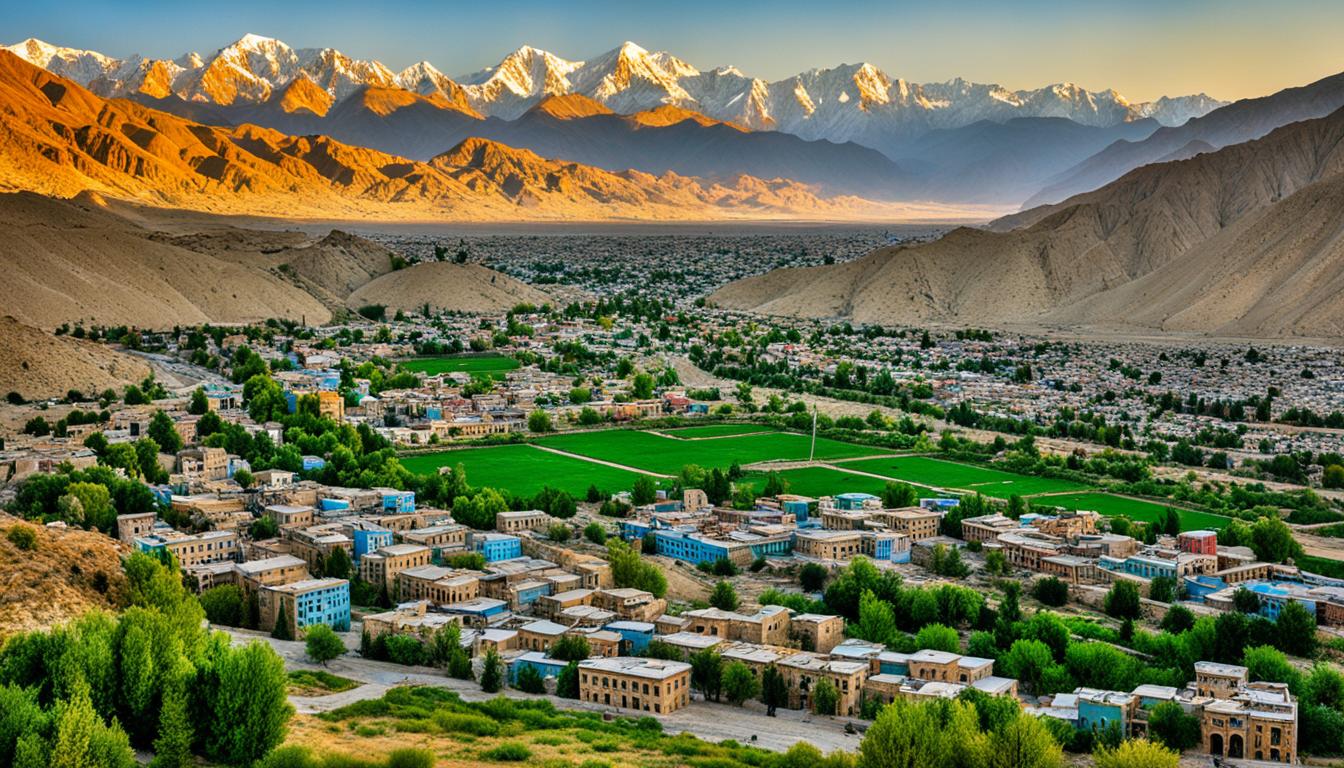
Situated on a vast deltaic plain at the confluence of the Band-e-Amir River, these northern cities are deeply linked to their environment. The flow of the Balkh, Khulam, Sar-e-Pul, and Shereen Tagab rivers creates a natural border: fertile soils with rainfed or irrigated agriculture lie to the north, while barren drylands stretch to the south. The region’s cold steppe climate—with scorching summers averaging 39°C in July and chilly winters averaging -2.1°C in January—receives minimal rainfall, reinforcing the cities’ heavy reliance on both surface and groundwater resources.
The urban fabric of Mazar-e-Sharif, Andkhoi, and Sheberghan is defined by two dominant landscape types. To the north, an extensive desert corridor marked by sand dunes parallels the Amu Darya River, contributing salt and dust that adversely affect public health. Conversely, the southern edge is graced by the Hindu Kush Mountain range, which not only supplies vital water resources but also offers a cool retreat during the intense summer heat. This natural contrast is further enriched by a variety of significant cultural landmarks located within a two-hour drive, providing sufficient opportunities for leisure and recreation. The dynamic interaction between these contrasting landscapes highlights the region’s social and economic vitality.
Iimpawu eziphambili zeNdalo kunye neDynamics yazo
Umlambo iAmo:
Forming a natural boundary with Afghanistan’s northern neighbors, the Amo River is one of the largest untouched ecosystems along the border. Often referred to as the “Nile of Central Asia,” it supports diverse fish species, draws recreational enthusiasts from across the country, and serves as an important economic resource for local communities. Aral Lake, once the world’s second-largest lake, has largely dried up due to the diversion of Amu River water for irrigation. This event is considered one of the most catastrophic environmental disasters in history.
The Desert Ecosystem:
Positioned between the Amu River and Afghanistan’s northern rangelands, the desert stretches from Jawzjan to Takhar provinces in parallel with the river. Characterized by arid and semi-arid conditions, the Sand Dome Desert is a major source of seasonal sand, dust storms, and strong winds that pose significant environmental and public health risks—risks that have intensified over the past two decades due to climate change. Despite generating 35% of the Amu River’s water, Afghanistan has yet to harness it for irrigation. The Qush Tepa Canal is set to change that by becoming the country’s first project to use Amu River water for agriculture, although uyilo Imiceli-mngeni isenokukhokelela kwilahleko yamanzi efikelela kwi-22% kwiikhilomitha zokuqala ezingama-40 kwaye oko kunokubangela ukunyibilika kwetyuwa emhlabeni njengoko amanzi enyuka. Ngaphezu koko, umjelo ngokwawo uqhekeza intlango, unciphisa indawo yokuhlala ekhoyo kunye nokuthintela ukuhamba kweentlobo.
Imilambo etyiswa ziintaba kunye neMida yezoLimo:
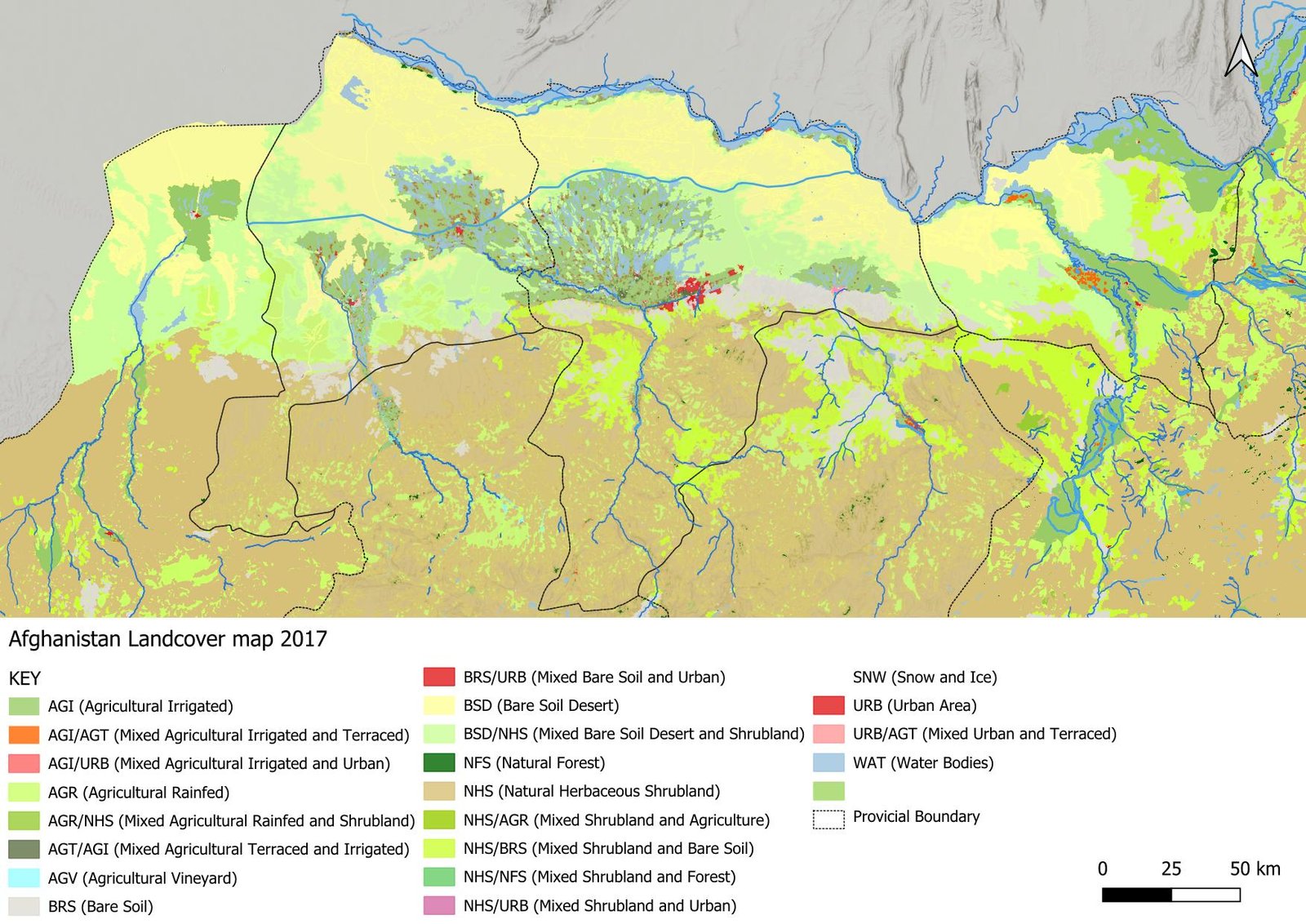
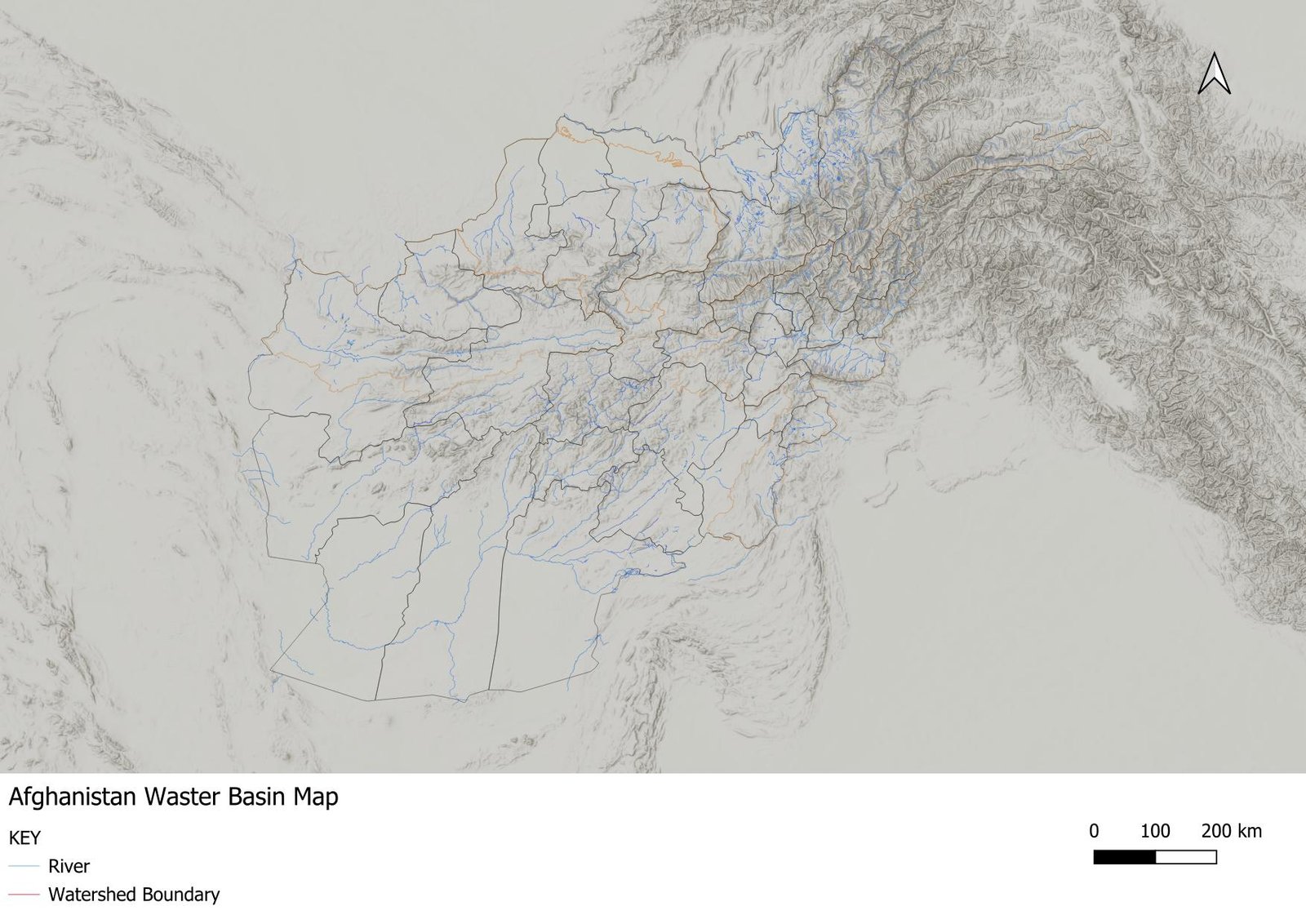
Originating from the peaks of the Hindu Kush, Alborz, and Marmal mountains, the Khulam, Balkh, Sari Pul, and Sheren Tagab rivers flow through verdant valleys before merging with the rangelands and semi-desert. Historically, these rivers reached the Amu River prior to the advent of modern irrigation systems and now delineate the boundary between fertile agricultural lands and encroaching desert. Ancient sites along the lower reaches of the Balkh River highlight early civilizations that thrived on these watercourses, once surrounded by lush grasslands now increasingly overtaken by sand dunes—a stark reminder of ongoing desertification. Satellite imagery even reveals these rivers as tree-like roots traversing the landscape, connecting agricultural lands and recreational areas within a two-hour drive from Mazar-e-Sharif.
Imihlaba yezoLimo kunye nemiqobo yeNdalo:
Each river watershed has developed its own distinct agricultural landscape. However, natural features such as rangelands and sand dunes create barriers between these zones, rendering the habitats fragile and vulnerable to environmental stresses like extreme heat and draught. Although much of the land between irrigated fields remains moderately suitable for cultivation, rainfed agricultural zones—especially those at the end of irrigation canals—are prone to water shortages during droughts and contribute to airborne fine particles during windy seasons, further impacting air quality.
Imigxobhozo njengeNkqubo yeMisebenzi emininzi:
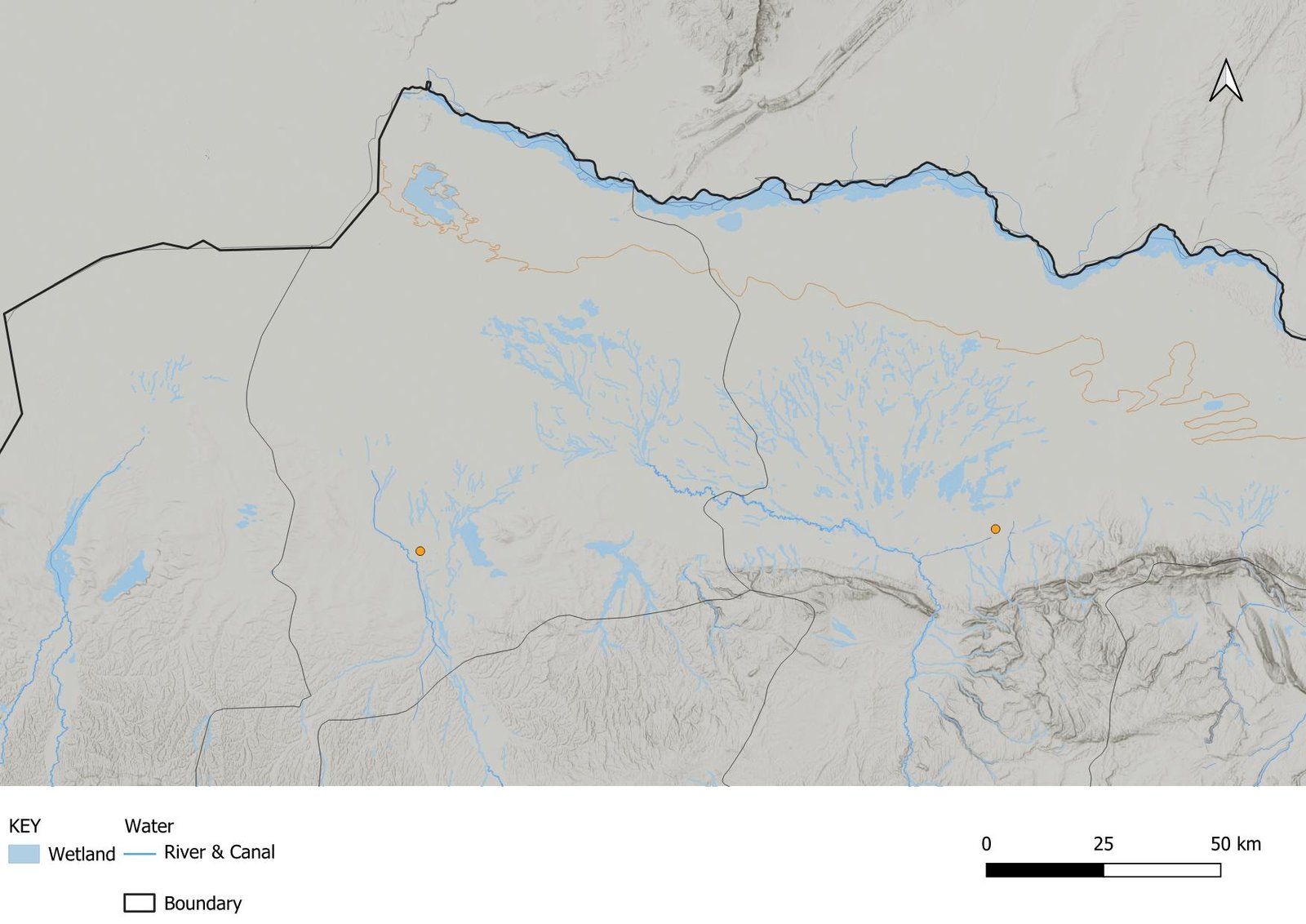
Maps of the region reveal scattered wetlands interspersed throughout expansive agricultural areas. These wetlands typically form in depressions or low-lying areas where the water table is shallow or where excess water accumulates along irrigation canals and runoff paths. Functioning as Nature-Based Solutions (NBS) for water management, these wetlands enhance flood resilience, shorten the duration of droughts, and filter out pollutants. Even in intensively cultivated zones, these natural water bodies persist as vital elements of a complex mosaic that includes irrigated fields, rainfed farms, shrublands, and deserts—each reflecting the critical influence of water availability on settlement, agriculture, and ecosystem dynamics.
Imigrogriso evela kuTshintsho lweMozulu kunye neeNgozi zokusiNgqongileyo
Climate change, coupled with rapid urbanization and shifts in land use, poses increasing risks to these unique ecosystems. Since 1980, natural hazards in Afghanistan have affected approximately 9 million people and claimed over 20,000 lives. Flooding remains the most common hazard, with average annual damages of $54 million and major events surpassing $500 million in losses. Although earthquakes have been less frequent, they have been deadlier—causing over 10,000 fatalities since 1980 and annual damages estimated at $80 million. Droughts have impacted 6.5 million people since 2000 during significant events in 2000, 2006, 2008, and 2011. Additionally, millions face landslide and avalanche risks, with around 10,000 km of roads (15% of the total) exposed to avalanche hazards, including critical routes like the Salan Pass.
Kulo mxholo, i-Mazar-e-Sharif ibekwe ngokuphakathi kwimbalela kwaye isesichengeni kakhulu kwiinyikima, nemingcipheko yezandyondyo yasekhaya kwindawo yayo esemazantsi ethambeka eliphezulu kunye neendawo ezinomgxobhozo osentshona. Ngeli xesha, i-Sheberghan ijongene nemingcipheko yembalela kunye neenyikima, nangona iingozi ezisezantsi zezikhukhula, kwaye u-Andkhoi ufumana ingozi ebalulekileyo yembalela kunye nokuba sesichengeni senyikima ephakathi.
IQush Tepa Canal: Imingeni kunye namaThuba
Afghanistan’s interim authorities project that the 287-kilometer-long Qush Tepa Canal—with a depth of 8.5 meters and an average width of 100 meters—will irrigate over 1.2 million acres of farmland and generate roughly 200,000 jobs, thereby enhancing agricultural productivity and national food security. Construction is advancing rapidly, employing about 5,000 workers and 4,000 pieces of heavy equipment. With the first phase completed and 81% of the second phase’s excavation finished, the main canal structure is expected to be completed in six years, though the full network of secondary channels may take up to 15 years.
Ngaphandle kwala mathemba athembisayo, iinkxalabo zisekho: ilahleko yamanzi ukuya kuthi ga kwi-22% ilindeleke kwiikhilomitha zokuqala ezingama-40 ngenxa yeziphene zoyilo kunye nokungabikho kwelinen ephathekayo, kunye nokunyuka kweetafile zamanzi kunokukhokelela ekunkcenkcesheleni ityuwa yomhlaba.
Iqale yacingwa ngeminyaka yoo-1970, iprojekthi yamiswa ngamashumi eminyaka yongquzulwano emva kohlaselo lwaseSoviet luka-1979. Uphononongo olunokwenzeka olwenziwa yi-USAID ngo-2018 kunye nokuqaliswa okulandelayo ngurhulumente waseGhani (ngaphambi kokuwa kwayo ngo-2021) kwavula indlela yokuba iTaliban iqalise kwakhona iprojekthi ngoMatshi ka-2022 njengenyathelo lokuqala. Ngaphaya kokujongana nokunqongophala kwamanzi, lo mjelo ujolise ekudambiseni uxinzelelo kwimilambo iBalkh, iSar-e-Pul, kunye neSheren Tagab, ngokwenjenjalo iqinisekisa ukufumaneka kwamanzi unyaka wonke kuluntu olusemantla. Ukongeza, kulindeleke ukuba ikhuthaze amalinge karhulumente kumahlathi, uthungelwano olwandisiweyo lokunkcenkceshela, kunye nokuphuculwa kolawulo lwemigxobhozo, ukubeka isiseko sezisombululo ezihlangeneyo, ezisekelwe kumhlaba okhuthaza ukomelela kwengingqi kunye eziphilayo.
Izindululo eziSekwe kuBume beNdawo zokuPhucula iNdawo yeEkholoji
As urban areas expand, improving natural resource management becomes crucial to mitigating environmental risks. Nature-Based Solutions (NBS) offer a cost-effective strategy deeply embedded in Afghan cultural practices to tackle challenges such as water security, pollution, environmental hazards, food insecurity, public health, and climate change. By harnessing natural processes, NBS aims to enhance both regional and urban resilience.
Kwimimandla yaseMazar-e-Sharif, iSheberghan, kunye ne-Andkhoi, i-ecosystem ibunjwe ngokunzulu yimilambo kunye nemisinga esuka kwiinduli ezisemazantsi kunye neentaba zeHindu Kush. Le mijelo yamanzi iqingqe i-deltas yezolimo ngaphakathi kwendawo yamanzi yephondo ngalinye ngelixa inegalelo ekwakhiweni kweentlango ze-saline emantla. Ingqalelo ekhethekileyo iyafuneka kwiindawo apho iBalkh neMilambo yoMkhukula ivela kwimiwonyo ekwiinduli ize iqukuqelele kwithafa laseBalkh. Le mimandla, ibonelela ngamanzi kumaziko asezidolophini nakwimihlaba yezolimo, ivula amathuba okudala amadama okungena amanzi—izakhiwo ezithimba amanzi agqithisileyo ngamaxesha eemvula ezinkulu zize ziwagcine kwimithombo yamanzi ukuze asetyenziswe ngumasipala.
Moreover, integrating NBS with current wastewater treatment systems could lead to the development of city-wide treatment wetlands and regional parks in the saline desert north of these cities. Such wetlands would function as biofilters, using natural chemical processes and microorganisms to break down organic materials and remove pollutants. The resulting clean water could then infiltrate shallow aquifers or be used for irrigation.
Ukulwa nemingcipheko yempilo enxulumene nothuli oluvela kwintlango esemantla, ukuseka i-greenbelt usebenzisa amanzi angaphezulu ukusuka kwimigxobhozo kunokuphucula umgangatho womoya wasezidolophini. Ukuphumeza ngempumelelo ezi projekthi zinexabiso eliphantsi kodwa ezinamabhongo kuya kufuna utyalo-mali lukamasipala kunye nemfundo kunye namaphulo okuxhobisa.
Iingcebiso eziphambili:
- Uthungelwano lwezoLimo oluDityanisiweyo: Develop a continuous agricultural landscape to enhance resilience, reduce local temperatures, and provide uninterrupted habitats for wildlife.
- Imiqobo yeenduli zesanti: Ukuseka iindawo zothintelo phakathi kwemihlaba yezolimo kunye neengqumba zentlabathi ezishukumayo ukunciphisa ungenelelo lwasentlango.
- Uphuhliso lweGreenbelt: Protect vulnerable rolling hills from overgrazing by converting them into greenbelts through the planting of local trees and shrubs, thereby preventing soil erosion, improving air quality, and offering recreational spaces.
- UQhagamshelwano lweNdawo yokuhlala: Yenza iipaseji zezilwanyana zasendle ukunqumla intlango eyohlulwe ngumjelo ukuze ugcine intshukumo yezilwanyana kunye nommandla.
- Water Management Infrastructure: Ukwakha amadama enziweyo kunye nokuphuhlisa imigxobhozo kwiindawo ezisemazantsi ommandla ukuze kulawulwe amanzi aphuma emantla, ukugalela amanzi atshisiweyo ngokutsha, kunye nokunciphisa uxinzelelo lwembalela.
- Wetland Conservation and Reforestation: Khusela imigxobhozo ekhoyo kwaye uguqule iindawo ezifanelekileyo zibe ziindawo ezinamahlathi adityanisiweyo kusetyenziswa iintlobo zezityalo ezikwaziyo ukumelana netyuwa nembalela. Eli nyathelo liza kuphucula umoya, amanzi, kunye nomgangatho womhlaba ngelixa linciphisa iimpembelelo zokutshintsha kwemozulu. Apho amanzi aphuma kuMjelo weQush Tepa maninzi, eminye imigxobhozo inokuphinda isetyenziselwe ukusetyenziswa kwezolimo.
By implementing these landscape-based solutions, the region can achieve enhanced ecological resilience, improved biodiversity, and sustainable habitat conditions—thereby securing a better quality of life for its residents amid the challenges posed by climate change and rapid urbanization.
Esi sithuba Ukuguqula iMihlaba: IQush Tepa Canal kunye ne-Ecosystems yase-Afghanistan yaseMantla yavela kuqala kwaye ibhalwe ngu [email protected]