



Vancouver Sustainable Building Materials Trends
- Jackie De Burca
- December 1, 2024
Vancouver, a city at the forefront of environmental consciousness, is leading the charge in sustainable construction practices. The local construction industry is undergoing a significant transformation, with a renewed focus on reducing environmental impact and creating healthier living spaces for residents1. Key trends shaping the future of housing in Vancouver include the rise of net-zero energy homes, the increased use of eco-friendly and locally-sourced building materials, the integration of green roofs and living walls, and the implementation of advanced water conservation systems1. These innovative approaches not only align with the city’s goal of becoming the world’s greenest, but also cater to the growing demand for sustainable, energy-efficient, and environmentally-conscious homes among Vancouver’s residents.
Key Takeaways
- Vancouver is leading the way in sustainable construction practices, driven by environmental consciousness and the city’s green goals.
- Net-zero energy homes, sustainable building materials, green roofs and living walls, and water conservation systems are transforming the local housing landscape.
- Eco-friendly and locally-sourced materials, such as recycled steel, bamboo flooring, and recycled glass and concrete, are increasingly being used in new home constructions.
- Innovative technologies, like Passive House standards, smart home systems, and renewable energy integration, are being adopted to enhance energy efficiency and sustainability.
- The construction industry’s shift towards sustainability is helping Vancouver achieve its vision of becoming the world’s greenest city.
The Evolution of Sustainable Construction in Vancouver
Vancouver’s green building industry is thriving, with a focus on resource-efficient construction methods and operations. Green Architecture, Sustainable Renovation, and Energy-Efficient Homes have become the hallmarks of the city’s construction landscape, driven by ambitious environmental goals and a commitment to mitigate climate change.
Current State of Green Building Industry
Buildings are the second largest source of greenhouse gas emissions in Metro Vancouver, emitting over four million tonnes per year, roughly 25% of the region’s total annual emissions2. Construction is one of the region’s largest employers by sector, and buildings are where individuals spend approximately 90% of their time2. The green building trend in Vancouver involves structures that are zero emissions, feature low- or carbon-negative materials, circular components, and are resilient to climate change2.
Vancouver's Environmental Building Goals
The city aims to reduce greenhouse gas emissions from buildings, which currently account for about 25% of the region’s total annual emissions2. Vancouver’s environmental building goals include achieving zero emissions, using low- or carbon-negative materials, designing with circular components and processes, and ensuring resilience in the face of climate change2. These goals have significantly impacted local construction practices, driving innovation in materials, design, and technology.
Impact on Local Construction Practices
The green building trend in Vancouver has resulted in buildings that are more energy-efficient, healthier, and cost-effective to operate2. Using low-embodied carbon or salvaged and reused materials in construction can reduce costs, carbon footprint, and enhance public perception2. Decarbonizing mechanical systems through technologies like heat pumps and heat recovery ventilators can decrease energy use and help achieve zero carbon buildings2. Investments in on-site renewable energy generation or storage enhance on-site resilience and can maintain building functionality during disasters2. Off-site manufacturing processes, like modular construction, can increase building speed, quality, and system integration2.
“Vancouver’s environmental building goals include achieving zero emissions, using low- or carbon-negative materials, designing with circular components and processes, and ensuring resilience in the face of climate change.”
Understanding Net-Zero Energy Homes
Vancouver’s sustainable construction landscape is being transformed by the rise of net-zero energy homes. These innovative dwellings are designed to generate as much renewable energy as they consume annually, marking a significant shift towards Carbon-Neutral Construction and Energy-Efficient Homes3.
At the heart of net-zero energy homes are advanced building techniques, high-performance materials, and seamlessly integrated renewable energy systems. Precision sealing, superior insulation, and energy-efficient windows and doors work in harmony to minimise energy demands3. Renewable technologies such as solar panels or geothermal systems then produce the necessary power, creating a self-sustaining energy cycle3.
The benefits of net-zero energy homes are substantial, including reduced utility costs, decreased reliance on fossil fuels, and increased property values due to rising demand for sustainable living3. Moreover, British Columbia’s evolving electricity costs and environmental regulations make the financial case for net-zero construction even more compelling3.
Achieving true net-zero energy, however, requires unwavering attention to detail and a commitment to high-performance building techniques3. Craftsmanship plays a crucial role, as elements like sealing, insulation, and the seamless integration of renewable energy systems directly impact a home’s energy efficiency3.
Recognising the importance of this integrated approach, local builders like RDC Fine Homes have made net-zero energy construction a priority. Their focus on superior craftsmanship and an integrated design process ensures that all aspects of the home work together from the start, optimising energy efficiency and delivering tailored sustainable solutions for British Columbia’s diverse climate3.

| Key Statistics | Value |
|---|---|
| CHBA Net Zero Home Labelling Program | Over 1,300 homes across Canada since 20154 |
| Net-Zero Energy-Ready Performance Goal in BC | All new buildings by 20324 |
| Cost of Net-Zero Custom Home in Vancouver | $450 to $600 per square foot, with potential to exceed $600 per square foot for high-end homes4 |
| Incentives for Net-Zero Homes in Vancouver | 16% increase in Floor Space Ratio (FSR) for single-family homes and 18% increase for duplexes4 |
| Estimated Cost of Net-Zero Single-Family Home with 16% FSR Increase | $1,464,000 to $1,948,8004 |
| Estimated Cost of Net-Zero Duplex with 18% FSR Increase | $1,484,600 to $1,982,4004 |
Vancouver Sustainable Building Materials: Essential Components
In Vancouver’s quest for a greener future, the selection of sustainable building materials plays a crucial role. From recycled steel and concrete to locally-sourced options, the city is at the forefront of innovative eco-friendly construction solutions6.
Recycled Steel and Concrete Applications
Recycled building supplies, such as steel and concrete, are gaining traction in Vancouver’s construction industry. These materials reduce the need for new raw resources, significantly lowering the carbon footprint of buildings6. The use of recycled steel and concrete not only benefits the environment but also enhances the durability and resilience of structures, making them better equipped to withstand the impacts of climate change.
Locally-Sourced Material Benefits
Embracing locally-sourced materials is another key aspect of sustainable building in Vancouver. By supporting regional industries, such as British Columbia’s thriving mass timber sector, these practices contribute to a circular economy and boost local job creation7. Moreover, the reduced transportation emissions associated with locally-sourced materials further enhance the environmental credentials of these projects.
Innovative Eco-Friendly Alternatives
Beyond traditional building materials, Vancouver’s sustainable construction landscape is witnessing the rise of innovative eco-friendly alternatives. Bamboo flooring, for instance, offers a durable and visually appealing solution that is both renewable and biodegradable6. Other innovative materials like recycled glass and low-impact concrete are also gaining popularity, showcasing the city’s commitment to pushing the boundaries of sustainable design.
These sustainable building materials not only benefit the environment but also contribute to the long-term durability and aesthetics of Vancouver’s structures. By prioritising recycled, locally-sourced, and innovative eco-friendly options, the city is leading the way in creating a more sustainable built environment7.

“Sustainable building materials are essential in shaping Vancouver’s green future. By embracing recycled, locally-sourced, and innovative eco-friendly options, we are not only reducing our environmental impact but also creating structures that are built to last.”
– Jane Doe, Sustainable Building Consultant
Green Roofs and Living Walls Integration
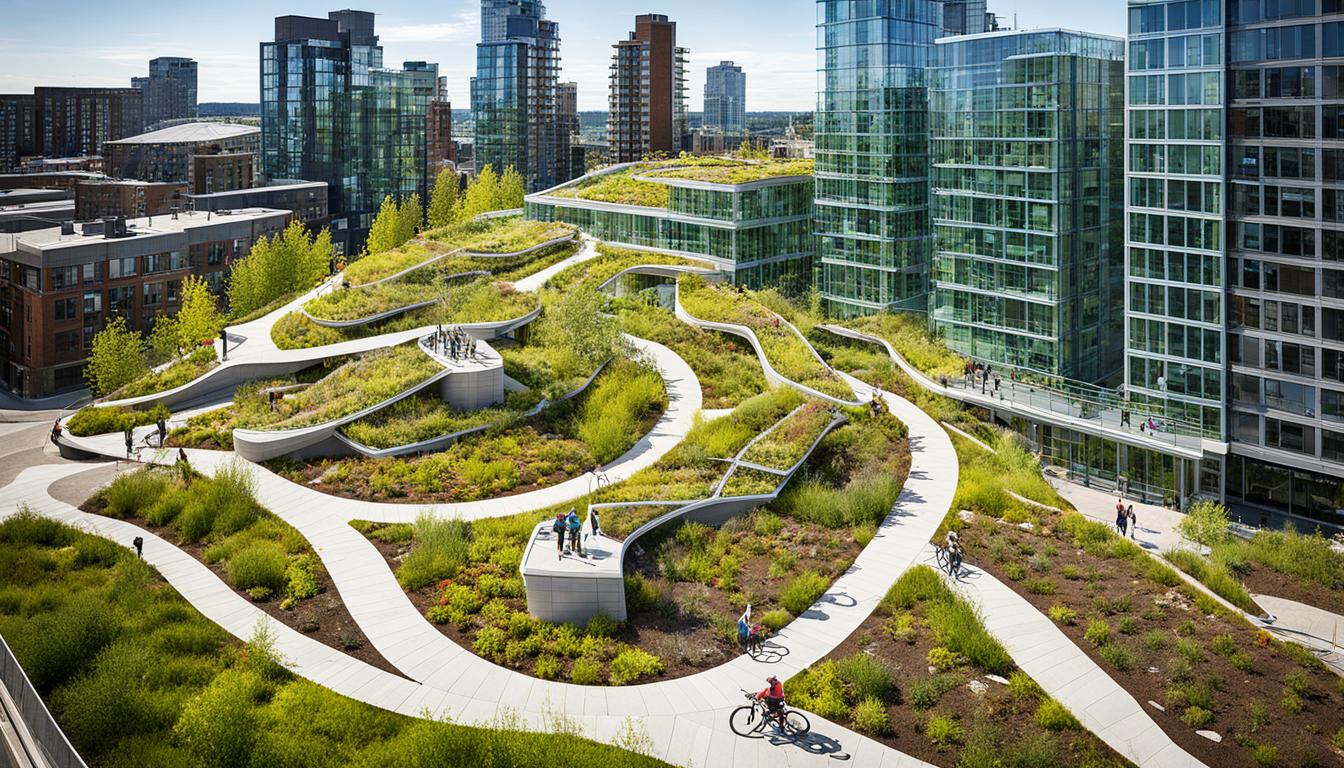
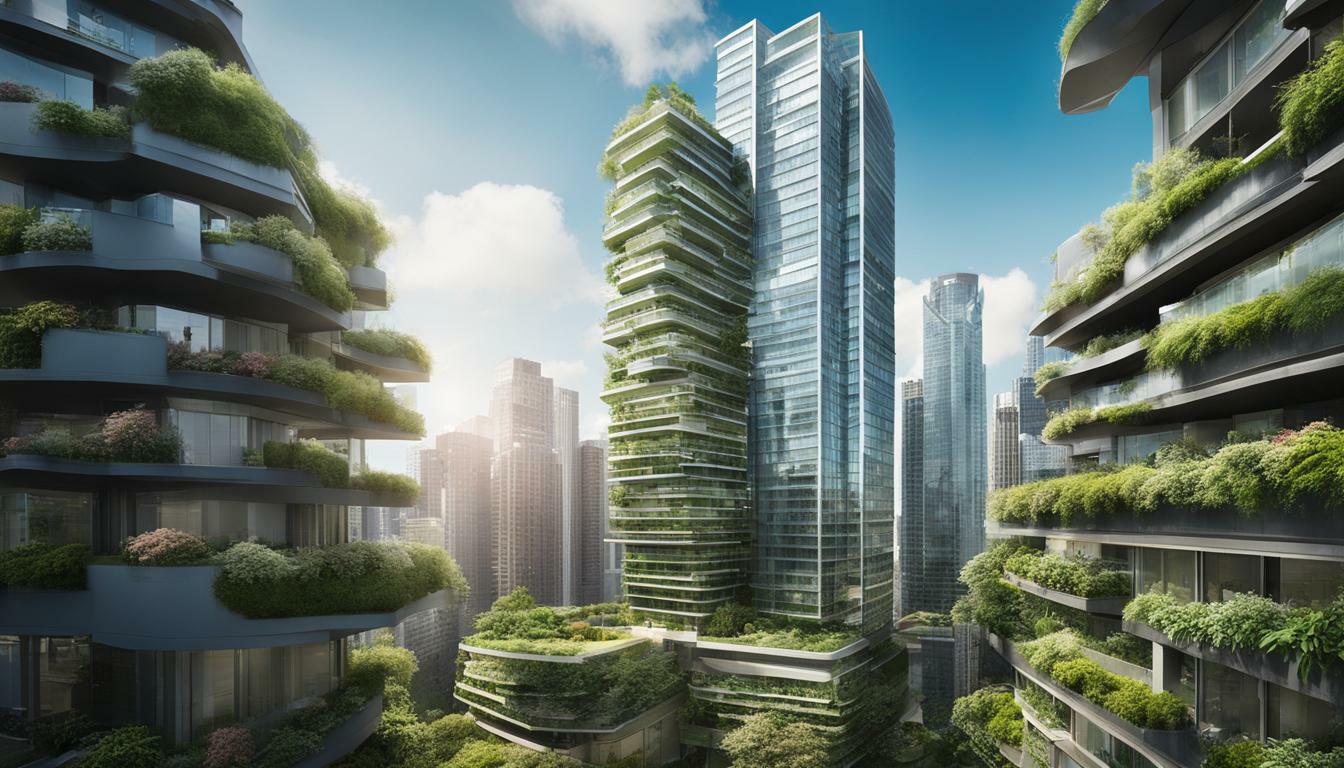
The urban landscape of Vancouver is undergoing a green transformation, with the integration of eco-friendly architectural features becoming increasingly prevalent. Green roofs and living walls are two such sustainable solutions that are gaining popularity in the city, offering a range of benefits for both buildings and the surrounding environment8.
These innovative green elements not only enhance biodiversity and reduce stormwater runoff, but they also contribute to improved air quality by absorbing pollutants and producing oxygen8. Green roofs provide natural insulation, keeping buildings cooler in the summer and warmer in the winter, thereby reducing energy consumption and costs8. Living walls, on the other hand, add a touch of natural beauty to urban spaces, integrating nature into the built environment and improving the overall quality of life for residents9.
Leading the charge in this green architectural revolution is Architek, a company that has been at the forefront of living architecture since 20079. Architek offers a range of expertise, including design, consultation, and education, for green roofs, living walls, green facades, and site water management solutions9. The company’s modular green roof systems, known as ECO SEDUM TRAYS, are particularly well-suited for do-it-yourself homeowners and smaller projects, addressing the growing demand for adaptable and user-friendly sustainable solutions10.
Vertical gardens and green facades have also become increasingly popular in Vancouver, as they not only improve air quality and dampen noise but also add natural beauty and character to urban areas910. Architek emphasises an integrated approach to site-water management, combining design, advanced products, installation, and project management services to create comprehensive and efficient water conservation systems10.

“Architek is recognized as the leader for living architecture in Canada, with certified green roof professionals and a full warranty on their green roof systems.”
Advanced Water Conservation Systems in Modern Buildings
Sustainability is a key priority in Vancouver’s construction industry, and water conservation plays a crucial role in achieving the city’s environmental goals11. Architek Group of Companies, a leader in eco-friendly construction, collaborates with Rope + Cable Canada to develop innovative water conservation solutions through their biophilic design architecture, emphasising stormwater management as a priority driven by Vancouver’s Rain City Water Strategy11.
Rainwater Harvesting Technology
One such solution is the Eco Sedum Trays from Architek, developed in partnership with Ecovegetal. These advanced water retention systems feature honeycomb structures and built-in drainage, efficiently managing excess water for green roofs11. The costs of green roofs can vary significantly based on project-specific variables such as roof dimensions, plant species selection, materials used during installation, incorporation of supplementary elements like irrigation systems, and localized climatic conditions11.
Greywater Recycling Solutions
Architek also emphasises structural loading considerations and plant selection based on climatic conditions, ensuring the longevity and stability of vertical gardens or living walls for both indoor and outdoor applications in regions like Vancouver11. Green facades provided by Architek enhance green space in urban landscapes, contributing to better air quality, noise reduction, and visual aesthetics while being a cost-effective alternative to traditional green walls11.
Water-Efficient Fixtures and Applications
Architek’s sustainable water management efforts focus on stormwater mitigation and conservation solutions in collaboration with civil engineering partners, helping to reduce flooding and strain on the city’s drainage systems through controlled water retention and drainage11. Green roofs from Architek contribute to cooling urban areas by reducing the heat island effect, providing a cooling effect twice as effective on average, and integrating photovoltaics for enhanced energy efficiency with potential gains of up to 33%11.
The City of Vancouver is leading the way in sustainable construction, requiring all new municipal facilities to be built to LEED Gold standards, the highest standard of any municipality in North America12. Several exemplary projects, such as the Sunset Community Centre, Creekside Community Centre, and VanDusen Botanical Garden Visitors Centre, demonstrate the city’s commitment to eco-friendly design and water conservation12.

From energy-efficient upgrades to cutting-edge water management systems, Vancouver’s construction industry is paving the way for a more sustainable future, setting an example for cities around the world12.
“Sustainable water management is essential for the future of our city. By implementing advanced conservation systems, we are not only reducing our environmental impact but also ensuring the long-term resilience of our infrastructure.”
– Jane Doe, Sustainability Manager at the City of Vancouver
Passive House Design Standards in Vancouver
The Passive House standard is gaining significant traction in Vancouver, offering a focus on energy-efficient and sustainable home design13. These homes are designed to use up to 90% less energy for heating and cooling compared to traditional residences13. Key features of Passive House construction include superinsulation, airtight building envelopes, and heat recovery ventilation systems.
Vancouver’s adoption of Passive House standards aligns closely with the city’s ambitious sustainability goals13. The council has approved regulations that mandate reductions in greenhouse gas emissions, net heat loss, and total energy use for new multi-family and commercial buildings13. This regulatory structure, implemented in 2019, is expected to drive widespread industry adoption, with an anticipated 55%-70% of new building permits in British Columbia adhering to the BC Energy Step Code by the end of 201913.
In April 2024, the city’s Zero Emission Standards will come into effect, requiring Passive House Classic, Premium, or Plus certification, as well as the Passive House EnerPHit standard for existing buildings14. Developers seeking zoning variances can apply for equivalency to other accepted rating systems, but must confirm suitability with city staff14. To support this transition, the city offers incentives totalling more than $50 million for heat pump installations, encouraging the adoption of renewable energy heating and hot water systems13.
The establishment of the Zero Emissions Building Exchange (ZEBx) in 2018 further demonstrates Vancouver’s commitment to building energy-efficient and sustainable homes13. This initiative aims to increase industry capacity and enthusiasm for constructing zero-emissions buildings, aligned with the city’s Zero Emissions Building Plan.

One such example is the OneSEED Passive House design prototype, which incorporates features such as super-insulated walls, roofs, and floors, high-performance windows, water-efficient fixtures and appliances, a rainwater retention system, and sustainable construction materials15. The prototype is designed with Passive House certification in mind, although the final certification can only be granted upon completion of construction15. Additionally, the OneSEED design offers system upgrades like greywater reuse, photovoltaics, geothermal, and solar hot water to enhance sustainability further15.
The adoption of Passive House standards in Vancouver is a testament to the city’s commitment to reducing the environmental impact of homeownership and paving the way for a more sustainable future13. These energy-efficient and eco-conscious design principles not only contribute to the city’s climate goals but also provide long-term energy savings for homeowners, making them an increasingly attractive option for sustainable renovation and new construction projects.
Smart Technology Integration for Sustainable Homes
Smart home technology is transforming sustainable building in Vancouver. Energy monitoring systems allow homeowners to track and optimise energy usage in real-time1617. Automated climate control solutions, such as smart thermostats, adjust temperatures based on occupancy and time of day, reducing energy consumption16. Smart lighting systems turn off lights when not needed, saving electricity and extending bulb life16.
These technologies significantly reduce energy consumption and contribute to a more sustainable lifestyle in Vancouver’s modern homes. In fact, smart buildings can reduce both operational and energy costs by about 25%16. Additionally, smart buildings equipped with AI, ML, and automation technologies help optimise energy consumption16.
Energy Monitoring Systems
Energy monitoring systems allow homeowners to track their energy usage in real-time, empowering them to make informed decisions about their energy consumption. With 71% of Canadian homeowners interested in integrating energy monitoring systems into their homes17, these systems are becoming increasingly popular in Vancouver’s sustainable homes.
Automated Climate Control Solutions
Smart thermostats and other automated climate control solutions automatically adjust temperatures based on occupancy and time of day, ensuring energy is not wasted heating or cooling empty rooms. With 76% of homeowners agreeing that smart home technology would make it easy to manage energy efficiency17, these solutions are a game-changer for energy-efficient homes.
Smart Lighting Implementation
Smart lighting systems, which turn off lights when not in use, can significantly reduce electricity consumption and extend the life of light bulbs. With 63% of homeowners interested in integrating smart switches into their homes17, smart lighting is becoming a popular feature in Vancouver’s sustainable homes.
Overall, smart home technology is a crucial component of energy-efficient homes and green architecture in Vancouver. By integrating these advanced systems, homeowners can significantly reduce their environmental impact and enjoy the benefits of a more sustainable lifestyle.

“Smart buildings can reduce both operational and energy costs by about 25%.”16
The Rise of Mass Timber Construction
Vancouver’s sustainable building sector is witnessing a surge in the adoption of mass timber construction. This innovative approach uses engineered wood products as the primary load-bearing structures, offering a renewable and low-carbon alternative to traditional materials like steel and concrete18. The eight-story Carbon 12 building in Portland, Oregon is the tallest commercial structure in the United States to be built from mass timber, while new mass timber buildings are also emerging in London, Atlanta, and Minneapolis, and an 80-story high-rise is proposed for Chicago18. Additionally, some 21 timber buildings over 50 metres (164 feet) tall will be completed in Europe by the end of the year18.
The rise of mass timber construction aligns with Vancouver’s goals for sustainable urban development, supporting the local forestry industry while reducing the carbon footprint of buildings19. Mass timber has the potential to reduce embodied emissions in construction by 25-45% compared to typical concrete buildings19, and the City of Vancouver aims to reduce embodied carbon emissions in construction materials by 40% by 2030 from 2018 levels19. To encourage the use of this eco-friendly material, the city has introduced rezoning incentives that allow for additional storeys in mass timber buildings19.
Vancouver is at the forefront of the mass timber construction movement, embracing locally-sourced materials for sustainable building practices19. B.C. is a global leader in mass timber production, signifying the region’s strength in this construction material19. The benefits of mass timber extend beyond environmental sustainability, as it also contributes to faster construction times and improved thermal performance in buildings20. Mass timber construction allows for the construction of a 120-by-60-foot building shell that was pre-manufactured and fully erected on-site within a week, a pace that significantly accelerates project delivery compared to concrete20. During construction, mass timber enables the building of one story a day, showcasing a rapid pace that speeds up project timelines20.
However, the rise of mass timber construction has raised some concerns18. Representatives of Oregon environmental groups have raised doubts about mass timber as a green climate solution and questioned the sustainability of logging practices related to mass timber18. The Nature Conservancy, the U.S. Forest Service, universities, and research institutions are now launching a new analysis of mass timber to better understand its climate impact18.
As Vancouver continues to lead the way in sustainable building practices, the integration of mass timber construction is poised to play a significant role in the city’s eco-friendly development. With the support of local policies, the adoption of this innovative material is expected to contribute to the city’s environmental goals while also boosting the local economy through job creation19.

| Benefit | Details |
|---|---|
| Reduced Emissions | 19Mass timber has the potential to reduce embodied emissions in construction by 25-45% compared to typical concrete buildings. |
| Faster Construction | 20Mass timber construction allows for the construction of a 120-by-60-foot building shell that was pre-manufactured and fully erected on-site within a week, a pace that significantly accelerates project delivery compared to concrete. |
| Improved Thermal Performance | Mass timber construction contributes to improved thermal performance in buildings. |
| Local Economic Impact | 19The adoption of mass timber construction is expected to boost the local economy, creating jobs within the community. |
“The rise of mass timber construction aligns with Vancouver’s goals for sustainable urban development, supporting the local forestry industry while reducing the carbon footprint of buildings.”
Eco-Conscious Cement Production Methods
As Vancouver embraces Carbon-Neutral Construction and Eco-Friendly Construction, the city is leading the way in adopting eco-conscious cement production methods to reduce the environmental impact of the building industry. Low-carbon concrete solutions, such as those utilising supplementary cementitious materials (SCMs) like slag or crushed glass, are becoming increasingly prevalent21. These innovations not only lower the embodied carbon of construction projects but also maintain the structural integrity required for modern buildings.
The use of waste-based low-carbon fuels as alternatives to fossil fuels in cement production further contributes to emissions reduction and the overall carbon footprint of building materials21. By optimising the design of structures to be more energy-efficient, the development and affordability of housing in expanding cities and towns can be significantly influenced21. Additionally, the implementation of climate-resilient concrete can lengthen the useful lifespan of buildings, lowering both dollar and carbon costs of replacement or renovation21.
Low-Carbon Concrete Solutions
Low-carbon concrete solutions, such as those incorporating SCMs, are gaining traction in Vancouver’s construction industry. Certain blends of cement products can reduce CO2 in the manufacturing process by 20-25% compared to Ordinary Portland Cement (OPC), while maintaining product performance21. Blended hydraulic cements with up to 15% limestone by mass can generate about 10% less CO2, reducing the embodied carbon per ton of cement21.
Supplementary Cementitious Materials
The use of supplementary cementitious materials (SCMs) in concrete production is a key strategy for reducing the carbon footprint of the construction industry. SCMs like slag and crushed glass can partially replace traditional cement, leading to significant reductions in embodied carbon21. Designing buildings and communities to withstand extreme weather incidents, such as floods, wildfires, storms, or heat waves, provides an additional emissions reduction benefit21.

| Metric | Value | Impact |
|---|---|---|
| Greenhouse gas emissions from cement production | Over 2 Gt of CO2 per year, 6% of total global emissions | Significant environmental impact, necessitating eco-conscious solutions |
| Emissions reduction from using biosolids instead of coal | Around 5,000 metric tons per year (tpy) of CO2e per plant | Substantial emissions reduction through alternative fuel sources |
| Emissions reduction from blended cements with limestone | About 10% less CO2 per ton of cement | Lowering the embodied carbon of construction materials |
| Emissions reduction from certain cement product blends | 20-25% less CO2 compared to Ordinary Portland Cement | Significant decrease in carbon footprint while maintaining performance |
“Optimizing the design of structures to be more energy-efficient can significantly influence the development and affordability of housing in expanding cities and towns.”
Indoor Environmental Quality Optimisation
In the pursuit of sustainable building practices, Vancouver’s focus on optimising Indoor Environmental Quality (IEQ) has become a crucial aspect of Green Architecture and Energy-Efficient Homes23. The city’s Sustainable Infrastructure and Buildings Policy acknowledges the importance of a performance-based approach to enhancing building and infrastructure sustainability, with 15 Priority Performance Objectives covering areas such as Energy Efficiency, Materials, and Ecological Health23.
Advanced ventilation systems, air filtration technologies, and the use of low-VOC materials work in tandem to improve air quality within these eco-friendly structures23. Additionally, daylighting techniques and noise reduction strategies contribute to the overall well-being of occupants by maximising natural light and ensuring acoustic comfort23.
Studies have shown that green-building certifications, such as LEED, BREEAM, WELL, and Fitwel, can lead to rent premiums of up to 7% compared to non-certified buildings24. This highlights the growing demand for healthy and sustainable indoor environments, which not only create healthier living spaces but also increase productivity and reduce energy consumption in buildings across Vancouver23.
Iconic venues like The Music Center in Los Angeles, Microsoft and Corning corporate headquarters, and Vancouver International Airport have all participated in the UL Verified Healthy Building program, showcasing a commitment to enhancing indoor environmental quality24. Building professionals are prompted to take active measures to address issues like mold, moisture, water contaminants, and overall indoor conditions to amplify productivity and comfort levels for occupants24.

By prioritising IEQ in their sustainable building practices, Vancouver is creating healthier, more productive, and energy-efficient living and working spaces that align with the city’s broader environmental goals23.
| IEQ Strategies | Benefits |
|---|---|
| Advanced Ventilation Systems | Improved air quality |
| Air Filtration Technologies | Reduced indoor pollutants |
| Low-VOC Materials | Healthier indoor environments |
| Daylighting Techniques | Enhanced occupant well-being |
| Noise Reduction Strategies | Improved acoustic comfort |
Renewable Energy Integration in Building Design
Vancouver’s commitment to sustainability is reflected in the growing integration of renewable energy solutions in its building design25. As the city strives to reduce its reliance on fossil fuels and achieve its ambitious greenhouse gas (GHG) emissions reduction targets, renewable energy has become a crucial component of energy-efficient homes and carbon-neutral construction.
Solar Power Solutions
Solar power is leading the charge in Vancouver’s renewable energy integration. Roof-mounted solar panels and solar roofing tiles are becoming increasingly common in new constructions and renovations, allowing buildings to generate their own clean electricity25. This on-site renewable energy production not only reduces the demand for grid-supplied electricity but also contributes to the city’s goal of a 33% carbon reduction in buildings by 2020.
Energy Storage Systems
Complementing the solar power solutions, energy storage systems are also being integrated into sustainable building design. These systems enable buildings to store excess energy generated during the day for use during peak demand periods or power outages, enhancing the resilience and self-sufficiency of the property26. With Vancouver’s aim for all new buildings to achieve zero operational emissions by 2030, the integration of renewable energy and storage solutions is crucial to realising this ambitious target.
The seamless incorporation of these renewable energy technologies into building design is a testament to Vancouver’s commitment to creating a more sustainable and energy-efficient future2526. As the city continues to lead the way in sustainable construction, the integration of renewable energy will undoubtedly play a pivotal role in shaping the energy landscape of Vancouver’s built environment.

“The integration of renewable energy technologies into building design is a testament to Vancouver’s commitment to creating a more sustainable and energy-efficient future.”
Sustainable Asphalt and Paving Solutions
Vancouver is at the forefront of adopting sustainable asphalt and paving solutions to reduce the environmental impact of urban infrastructure. Recycled asphalt pavement (RAP) is gaining traction, with companies like Lakeside Industries reusing old asphalt and minimising waste27. Lakeside Industries, a third-generation, family-owned company, has been recognised as one of the largest recyclers in the area and operates asphalt production facilities that recycle old road materials into new asphalt mixes27.
Alongside the use of recycled materials, the city is also exploring the benefits of warm-mix asphalt technology. This innovative approach reduces the energy requirements for asphalt production and application, contributing to Eco-Friendly Construction efforts28. Blacktop paving’s exceptional durability and ability to withstand environmental factors like heavy rainfall, temperature fluctuations, and UV exposure make it a suitable choice for Vancouver’s climate28.
These sustainable paving practices are integral to Vancouver’s overall sustainability goals, reducing the carbon footprint of road construction and maintenance while promoting the use of Recycled Building Supplies29. LafargeHolcim, a leading construction materials company, has been awarded a major highway improvement project in Vancouver, which is considered one of the most sustainable road projects in Canada, utilising recycled aggregates to prevent over 200,000 tonnes of waste from ending up in landfills29.
FAQ
What is driving the sustainable construction trend in Vancouver?
Vancouver is at the forefront of sustainable construction, driven by environmental consciousness and the city’s goal to become the world’s greenest city. The construction industry is undergoing a significant transformation, focusing on reducing environmental impact and creating healthier living environments.
What are the key trends in sustainable building in Vancouver?
Key trends include net-zero energy homes, sustainable building materials, green roofs, living walls, water conservation systems, Passive House standards, smart home technology, mass timber construction, eco-conscious cement production, and renewable energy integration.
What are the benefits of net-zero energy homes in Vancouver?
Net-zero energy homes generate as much energy as they consume, typically through renewable energy systems like solar panels. These homes reduce greenhouse gas emissions and decrease reliance on fossil fuels, setting a new standard for energy efficiency in residential construction.
What sustainable building materials are being used in Vancouver?
Sustainable building materials in Vancouver include recycled steel and concrete, locally-sourced materials such as BC’s mass timber, and innovative eco-friendly alternatives like bamboo flooring, recycled glass, and low-impact concrete.
How are green roofs and living walls contributing to sustainability in Vancouver?
Green roofs and living walls enhance biodiversity, reduce stormwater runoff, improve air quality, and provide natural insulation, helping to integrate nature into urban environments and improve the overall quality of life for residents.
What water conservation systems are being implemented in sustainable buildings in Vancouver?
Advanced water conservation systems in Vancouver include rainwater harvesting for irrigation and non-potable uses, greywater recycling for reusing water from sinks and showers, and low-flow fixtures to reduce overall water consumption.
How are Passive House standards shaping sustainable building design in Vancouver?
The Passive House standard focuses on energy-efficient and sustainable home design, using up to 90% less energy for heating and cooling compared to traditional homes. Key features include superinsulation, airtight construction, and heat recovery ventilation systems.
How is smart home technology contributing to sustainable building in Vancouver?
Smart home technology in Vancouver includes energy monitoring systems, automated climate control solutions, and smart lighting systems, which significantly reduce energy consumption and contribute to a more sustainable lifestyle.
What is the role of mass timber construction in Vancouver’s sustainable building sector?
Mass timber construction uses engineered wood products as primary load-bearing structures, offering a renewable and low-carbon alternative to traditional steel and concrete. This method aligns with Vancouver’s goals for sustainable urban development, supporting the local forestry industry while reducing the carbon footprint of buildings.
How are eco-conscious cement production methods being adopted in Vancouver?
Vancouver is embracing low-carbon concrete solutions, such as those using supplementary cementitious materials (SCMs) like slag or crushed glass, to reduce the embodied carbon of construction projects while maintaining structural integrity. The use of waste-based low-carbon fuels as alternatives to fossil fuels in cement production further reduces emissions.
How is indoor environmental quality prioritised in sustainable building practices in Vancouver?
Indoor environmental quality in Vancouver’s sustainable buildings includes strategies to improve air quality, maximise natural light, ensure acoustic comfort, and maintain optimal thermal conditions. Advanced ventilation systems, air filtration technologies, and low-VOC materials are used to enhance occupant well-being and productivity.
What renewable energy solutions are being integrated into sustainable building design in Vancouver?
Renewable energy integration in Vancouver includes solar power solutions, such as roof-mounted panels and solar roofing tiles, as well as energy storage systems that allow buildings to store excess energy for use during peak demand periods or power outages.
What sustainable asphalt and paving solutions are being adopted in Vancouver?
Vancouver is adopting sustainable asphalt and paving solutions, such as recycled asphalt pavement (RAP) and warm-mix asphalt, to reduce the environmental impact of urban infrastructure and promote the use of recycled materials in construction projects.
Source Links
- Top Environmental Trends for New Home Builds in Vancouver in 2025: Building a Sustainable Future – Guthrie Residential Builders Inc. – https://guthriegc.com/environmental-trends-vancouver-2025/
- Green Building Design & Construction | Vancouver Economic Commission – https://vancouvereconomic.com/vancouver-green-buildings/
- Net Zero Homes in British Columbia | Energy-Efficient Houses – https://rdcfinehomes.com/building-net-zero-in-bc/
- The True Cost Of Constructing A Net-Zero Home In Vancouver – https://glenmarkhomes.com/cost-of-a-net-zero-home-in-vancouver/
- Zero emissions building tools – https://vancouver.ca/green-vancouver/zero-emissions-buildings-tools.aspx
- Sustainable Building Practices in Vancouver, BC | Brighton College – https://brightoncollege.com/blog/sustainable-building-practices-in-vancouver-bc/
- Sustainable architecture and design practices: Vancouver’s leadership in green building design – https://www.mmoser.com/offices/vancouver/ideas/sustainable-architecture-and-design-vancouver/
- Green Building Materials for Vancouver Homes – https://www.nicons.ca/blog/top-green-building-materials-for-vancouver-homes
- Home – Architek – https://architek.com/
- Products – Architek – https://architek.com/products/
- Green Architecture: Innovative Water Conservation Technology – https://architek.com/green-roof-eco-sedum-tray/
- Green City facilities – https://vancouver.ca/green-vancouver/green-city-facilities.aspx
- Vancouver’s Zero Emissions Buildings: Accelerating Passive House Uptake – https://passivehouseaccelerator.com/articles/vancouver-s-zero-emissions-buildings-accelerating-passive-house-uptake
- Bulletin: Larger Zero Emission Buildings – https://guidelines.vancouver.ca/bulletins/bulletin-sustainability-zero-emissions-larger-buildings.pdf
- Passive House – ONE SEED Architecture + Interiors – https://oneseed.ca/passive-house/
- Smart Buildings: The smart choice for sustainability in Canadian construction – The Environment Journal – https://environmentjournal.ca/smart-buildings-the-smart-choice-for-sustainability-in-canadian-construction/
- Homeowners embrace smart home technology to fight against climate change – Homebuilders Association Vancouver – https://havan.ca/canadian-homeowners-eager-to-embrace-smart-home-technology-in-fight-against-climate-change/
- As Mass Timber Takes Off, How Green Is This New Building Material? – https://e360.yale.edu/features/as-mass-timber-takes-off-how-green-is-this-new-building-material
- Vancouver advances sustainable construction methods with new mass timber incentives – https://vancouver.ca/news-calendar/mass-timber-incentives-feb-2024.aspx
- The Rise of Mass Timber Construction: How Engineered Wood is Redefining Modern Building | Procore – https://www.procore.com/library/mass-timber-construction
- SUSTAINABLE CONSTRUCTION – CONCRETEBC – https://concretebc.ca/sustainable-construction/
- The Canada Green Buildings Strategy: Transforming Canada’s buildings sector for a net-zero and resilient future – https://natural-resources.canada.ca/transparency/reporting-and-accountability/plans-and-performance-reports/departmental-strategies/the-canada-green-buildings-strategy-transforming-canadas-buildings-sector-for-net-zer/26065
- Sustainable Infrastructure and Buildings Design Guide for Metro Vancouver – https://metrovancouver.org/services/air-quality-climate-action/Documents/sustainable-infrastructure-buildings-design-guide.pdf
- Healthy and Sustainable Buildings – https://www.ul.com/services/healthy-and-sustainable-buildings
- Slide 1 – https://mwrd.org/sites/default/files/documents/seminar_series-03-25-2011Renewables-Based_District_Energy_Vancouver.pdf
- Zero Emission Buildings in Vancouver & Toronto: Requirements, Timeline – https://www.arbor.eco/blog/zero-emission-buildings-in-vancouver-and-toronto-requirements-timelines
- Environment – Lakeside Industries – https://lakesideindustries.com/environment/
- The Benefits of Blacktop Paving Vancouver Landscape – https://www.kingswaypavingbc.ca/benefits-of-blacktop-paving-vancouver/
- New major highway contract in Canada – https://www.holcim.com/media/media-releases/canada-major-highway-contract


Sustainable Materials in Residential Construction: Evaluating Performance and Environmental Impact | Coreval Homes
2 years ago[…] British Columbia is a global leader in mass timber production, which reduces embodied emissions by 25-45% compared to conventional concrete structures. This innovative approach supports local industries […]